
2026 Best 100% ePTFE Membrane for Global Buyers?
Choosing the 2026 best 100% Eptfe Membrane requires more than comparing prices or advertising claims. Global buyers need evidence about pore structure, tensile strength, chemical resistance, air permeability, and long-term stability. A membrane may perform well in a laboratory yet struggle in a dusty factory, coastal climate, or high-humidity installation.
Robert W. Gore, a leading innovator in expanded polytetrafluoroethylene technology, once said, “The best way to predict the future is to invent it.” His words remain relevant for buyers evaluating advanced filtration and protection materials. The strongest 100% Eptfe Membrane solutions combine proven manufacturing experience with measurable performance. They should also include traceable quality records, consistent thickness, and testing suited to the final application.
There is no universal winner.
This guide examines the practical factors behind a reliable 100% Eptfe Membrane, including filtration efficiency, waterproof-breathable performance, temperature tolerance, and installation behavior. It also considers supplier credibility, production capacity, technical support, and export experience. These details matter when one membrane must serve different markets and operating conditions.
Some expectations may prove wrong. A higher specification does not always deliver better field results. A lower-cost product may create replacement expenses later. Buyers should question unclear data, request samples, and compare results under realistic conditions. Independent verification remains valuable, especially when product descriptions sound perfect. Real performance is rarely perfect. That is why this overview focuses on evidence, practical experience, and careful comparison before purchasing in 2026.
What Is a 100% ePTFE Membrane and How Does It Work?
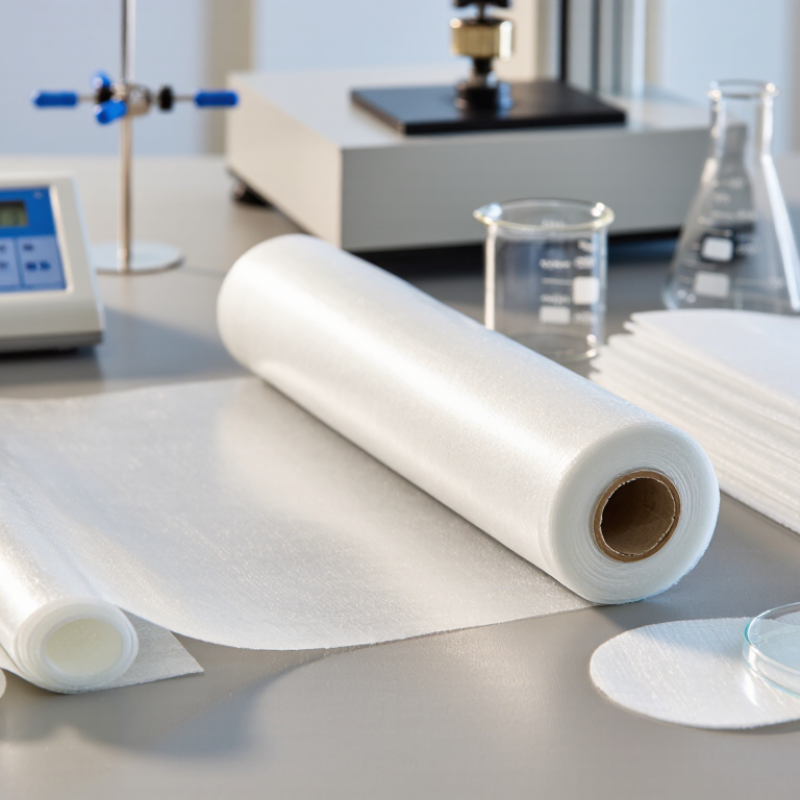
A 100% ePTFE membrane is made from expanded polytetrafluoroethylene, without a coating, fabric, or secondary polymer layer. During expansion, solid PTFE forms a fine network of nodes and fibrils. The gaps create millions of microscopic pores.
Small detail matters.
These pores allow water vapor and air to pass, while surface tension can stop liquid water. The effect depends on pore size, pressure, temperature, and contamination. A 2024 technical review in Membranes reported that ePTFE membranes commonly achieve pore sizes from submicron levels to several micrometers, depending on the manufacturing process. Smaller pores improve liquid resistance, but they can reduce airflow.
The membrane works through a pressure balance. When vapor pressure pushes outward, molecules move through the pore network. Liquid water needs greater pressure to enter. ASTM F316 testing measures bubble point and mean flow pore size, helping buyers compare actual structures instead of relying on marketing language. Industry filtration reports, including the 2024 MarketsandMarkets membrane filtration analysis, continue to identify pore control and airflow as major performance factors.
“100%” still needs verification.
Some suppliers use the term for the membrane film only, while others describe a finished laminate. Ask for polymer composition, thickness, pore-size distribution, air-permeability data, and hydrostatic-pressure results. I would also question unusually perfect figures. Real membranes vary across rolls, and installation pressure can change performance. A laboratory result is useful, but field exposure tells the harder truth.
2026 Best 100% ePTFE Membrane for Global Buyers?
What Is a 100% ePTFE Membrane and How Does It Work?
A 100% ePTFE membrane is made entirely from expanded polytetrafluoroethylene. Its microporous structure contains interconnected pores that are much smaller than liquid water droplets but large enough for water vapor and air molecules to pass through.
The chart uses a logarithmic scale to compare representative physical dimensions: a water-vapor molecule is approximately 0.0003 micrometers, commonly reported ePTFE membrane pores are typically about 0.1–0.3 micrometers, and a raindrop is approximately 1,000 micrometers. Actual pore size depends on membrane construction, processing, and the required filtration or breathability performance.
In operation, the hydrophobic PTFE surface resists liquid water penetration while allowing moisture vapor to diffuse through the pore network. Buyers should also evaluate pore-size distribution, thickness, air permeability, hydrostatic resistance, chemical compatibility, and the applicable test standards before selecting a membrane.
Key Performance Properties of 100% ePTFE Membranes
A 100% ePTFE membrane is valued for its balanced performance in demanding filtration and venting environments. Its microporous structure allows gas flow while blocking liquid water and many fine particles. Pore size matters greatly. Smaller pores improve retention, but they can also increase pressure drop.
Hydrophobicity is a key property during outdoor exposure, washdown, and humid operation. Chemical resistance helps the membrane withstand many acids, solvents, and industrial vapors. However, resistance depends on concentration, temperature, and contact time. Do not treat a general compatibility chart as final proof. Real testing is safer.
Thermal stability supports applications with repeated heating cycles, but sealing materials may fail before the membrane does. Tensile strength, elongation, and flex resistance affect installation reliability. A membrane that performs well on paper may wrinkle during assembly. We have seen airflow change after uneven clamping. Small details matter.
For international purchasing, request pore-size data, air-permeability results, hydrostatic pressure, and temperature limits. Ask how testing was performed. Units and test methods can differ between suppliers. This creates avoidable confusion. Lot-to-lot consistency also deserves attention, especially for large production orders. A practical evaluation should include the final housing, gasket, airflow rate, and cleaning process. Pure ePTFE is not automatically the best choice for every design.
How to Compare ePTFE Membranes for Different Global Applications
Choosing an ePTFE membrane starts with the application, not the material label. A battery vent needs controlled air exchange and liquid resistance. A cleanroom filter needs stable particle capture and low pressure loss. For outdoor electronics, UV exposure and temperature cycling matter more. ISO 29463 supports high-efficiency filter testing, while ASTM F316 measures pore size through bubble-point methods. These tests reveal different performance limits.
The World Health Organization’s 2021 air-quality guidelines set annual PM2.5 exposure at 5 µg/m³. This shows why efficiency claims need real test conditions. Humidity, airflow, dust loading, and mounting design can change results. A laboratory rating is not always a field result. MarketsandMarkets’ recent membrane-filtration analysis also identifies water treatment, healthcare, and industrial processing as major demand areas. Each sector requires different permeability, chemical resistance, and service-life targets. A neat comparison is tempting, but it can mislead.
Tips: Request bubble point, air permeability, pressure-drop, and water-entry-pressure data. Check the test temperature and humidity. Ask for aging results, not only new-sample results. Compare the complete vent or filter assembly. I would also challenge “100% waterproof” wording, because sealing defects often decide actual performance.
Global Buyer Guide to Quality, Compliance, and Supplier Selection
For global buyers, “100% ePTFE” needs precise definition. It may describe the membrane material, not the complete laminate. Ask whether support fabrics, coatings, adhesives, or sealants are included. A reliable specification should list pore size, thickness, air permeability, hydrostatic pressure, tensile strength, and operating temperature.
Quality evidence matters more than attractive samples. Request recent batch records, certificates of analysis, and test methods used for each value. Check whether testing follows recognized standards, such as ISO methods, where applicable. Review REACH, RoHS, or other market-specific declarations carefully. Compliance depends on the final product and destination country.
Look closely at production control. Can the supplier provide lot traceability from resin to finished rolls? Are storage conditions documented? Does the supplier notify buyers before changing materials or equipment? Sample testing should include bending, washing, pressure exposure, and temperature cycling when relevant. Small differences can affect sealing and airflow.
Do not trust one perfect datasheet. Real production varies. That is worth admitting. An experienced supplier should explain normal tolerances, failed-batch procedures, and corrective actions without hiding weak results. Factory audits, video inspections, and independent laboratory checks add useful evidence. Clear communication also matters, especially when technical terms change across languages. Choose the supplier that documents limits honestly, responds with measurable answers, and can maintain consistent quality across repeated international shipments.
2026 Market Trends in 100% ePTFE Membrane Procurement
In 2026, global buyers are examining 100% ePTFE membranes beyond simple price comparisons. They want stable pore structure, reliable air permeability, and consistent liquid resistance. A pure ePTFE membrane can support filtration, venting, and protective applications. However, performance depends on thickness, pore size, substrate design, and processing conditions.
Procurement teams increasingly request complete technical data before approving samples. Useful details include bubble point, water entry pressure, tensile strength, thermal limits, and test methods. Batch-level inspection is becoming more important. Small changes in stretching can affect pore uniformity. A membrane may pass laboratory testing but behave differently after lamination or cutting. This remains an uncomfortable gap in many purchasing processes.
Supply reliability is another major 2026 trend. Buyers are checking production capacity, raw material traceability, packaging quality, and backup logistics. They also prefer suppliers that provide samples from regular production, not specially prepared batches. Digital documentation can improve communication across regions, but it cannot replace physical verification. Some procurement plans still focus too heavily on unit cost. That approach may ignore installation losses, rejected rolls, and delayed qualification. Better decisions combine technical evidence with field experience, while leaving room to question incomplete data.
| Procurement Dimension | Recommended Reference Specification | Typical 100% ePTFE Membrane Range | Why It Matters to Global Buyers | Verification Method or Document | 2026 Procurement Trend |
|---|---|---|---|---|---|
| Material Composition | 100% expanded polytetrafluoroethylene (ePTFE) | Unfilled, non-laminated ePTFE membrane; no textile support, coating, or polymer blend | Confirms that the purchased material is a true standalone membrane rather than a composite construction | Supplier material declaration, SDS, technical data sheet, and lot-level certificate of analysis | Increasing traceability |
| Pore Structure | Application-specific mean or nominal pore size | Approximately 0.05–10 µm, depending on filtration, venting, or separation requirements | Pore size affects retention, airflow, liquid-entry resistance, and pressure drop | Bubble-point testing, capillary-flow porometry, or the supplier's validated pore-size method | More performance-based buying |
| Membrane Thickness | Specified by tolerance, not nominal value alone | Common commercial ranges are approximately 10–250 µm | Thickness influences mechanical strength, permeability, flexibility, and package volume | Micrometer or optical thickness measurement; request minimum, maximum, and average values | Tighter tolerances |
| Air Permeability | Use a defined test pressure and test area | Highly grade-dependent; commonly reported in L/(m²·s), L/min, or Gurley seconds | Results from different test methods are not directly comparable without pressure, area, and unit conversion | ASTM D737 or ISO 9237, with test pressure and conditioning stated | Standardized reporting |
| Liquid Water Entry Pressure | Select a minimum value for the end use | Often reported from roughly 0.05 to above 1.0 MPa, depending on pore size and structure | Higher entry pressure generally supports stronger protection against liquid-water intrusion | Supplier test report identifying liquid, ramp rate, sample orientation, and endpoint definition | Critical for outdoor electronics |
| Bubble Point | Use as a comparative pore-integrity indicator | Typically increases as the largest effective pore becomes smaller | Helps identify defects, oversized pores, and lot-to-lot variation in microporous membranes | ASTM F316 or an equivalent validated capillary-flow/bubble-point procedure | More incoming inspection |
| Temperature Capability | Separate continuous-use temperature from short-term exposure | PTFE melting point is approximately 327°C; practical continuous-use limits are application- and design-dependent | Membrane performance can change before the polymer reaches its melting point because of creep, shrinkage, or assembly conditions | Supplier temperature curve, dimensional-stability data, and application-specific aging test | More application validation |
| Chemical Resistance | Confirm compatibility with the actual chemical and concentration | Generally resistant to many acids, bases, solvents, oils, and gases; molten alkali metals and certain highly reactive fluorinating conditions require review | Resistance depends on temperature, exposure time, pressure, contamination, and mechanical stress | Chemical compatibility statement plus immersion, permeation, or aging data where required | Application-specific qualification |
| Mechanical Properties | Specify tensile strength, elongation, tear resistance, and handling direction | Values vary substantially with thickness, porosity, stretching ratio, and machine/transverse direction | Thin membranes can be chemically stable but mechanically vulnerable during slitting, forming, and installation | ASTM D882 for tensile properties; include conditioning and test direction | Durability over price |
| Cleanliness and Extractables | Define particulate, ionic, and organic contamination limits | Must be established according to the target industry; no universal cleanliness level applies | Critical for semiconductor, laboratory, pharmaceutical, medical, and high-purity gas applications | Cleanroom packaging statement, extractables profile, particulate analysis, and batch certificate | Growth in high-purity sourcing |
| Flammability and Safety | Evaluate the complete assembly, not only the membrane polymer | PTFE is nonflammable in normal use but can decompose at excessive temperatures and release hazardous fumes | Safety classification depends on thickness, mounting, airflow, ignition source, and the finished product design | Safety data sheet, thermal-decomposition guidance, and finished-product flammability testing where applicable | More regulatory documentation |
| Roll and Sheet Supply | Confirm width, length, winding direction, splices, and core dimensions | Available formats vary by manufacturing process; commercial rolls may contain production joints or edge trim | Roll geometry directly affects yield, automated converting, storage, and total landed cost | Packaging specification, roll map, inspection standard, and agreed defect classification | Higher supply-chain visibility |
| Dimensional Stability | Specify shrinkage limits at the intended process temperature | Depends on orientation, pore structure, tension history, and thermal exposure | Important for sealing, lamination-free assemblies, pleating, die cutting, and precision vent designs | Thermal shrinkage test using defined temperature, dwell time, direction, and sample size | Process compatibility focus |
| Quality Management | Require documented lot release and change control | At minimum, the supplier should control raw material identity, pore structure, thickness, defects, and packaging | Consistent documentation reduces qualification risk for international buyers and regulated applications | Quality manual, certificate of analysis, nonconformance process, audit records, and change-notification procedure | Supplier qualification first |
| Global Logistics | Assess shelf life, humidity protection, customs classification, and delivery reliability | Store clean, dry, and protected from crushing, contamination, and excessive tension | Correct packaging and predictable lead time are essential because microporous membranes can be damaged during handling | Packaging validation, export documents, delivery-performance records, and agreed incoterms | Resilience over lowest quote |
| Buyer note: The numerical ranges above are general procurement reference ranges for standalone 100% ePTFE membranes. Final acceptance criteria should be agreed through application testing, a controlled specification, and lot-level verification because ePTFE performance varies with pore structure, thickness, orientation, processing history, and test method. | |||||
