
2026 Top Salinity Meter Types for Global Buyers

Choosing a Salinity Meter is not simply a matter of comparing display screens or prices. The right instrument depends on the sample, measurement range, operating conditions, and required accuracy. A handheld meter beside a hatchery tank faces different demands from an inline sensor monitoring a rinse-water pipeline. Small details matter: temperature compensation, probe cleaning, calibration solutions, and replacement-part availability can all affect dependable readings.

Physicist and measurement pioneer William Thomson, Lord Kelvin, expressed a useful principle: “When you can measure what you are speaking about, and express it in numbers, you know something about it.” For global buyers, that idea begins with understanding what each instrument actually measures. Conductivity meters infer salinity from electrical conductivity; refractometers estimate it through light refraction. Hydrometers use density, while laboratory methods can support more controlled analysis. These approaches are not interchangeable in every sample. A reading may also shift with temperature, dissolved substances, or poor calibration.

This guide compares the main Salinity Meter types and the practical trade-offs behind them. It considers portability, measurement range, maintenance, data handling, and suitability for field or process use. Buyers should check specifications against their own samples, not rely on a product label alone. No meter is maintenance-free. Even a well-built instrument can mislead when its probe is dirty or its calibration is overdue. The best choice is the one whose method, support, and care requirements fit the work—though that fit may need review as operating conditions change.
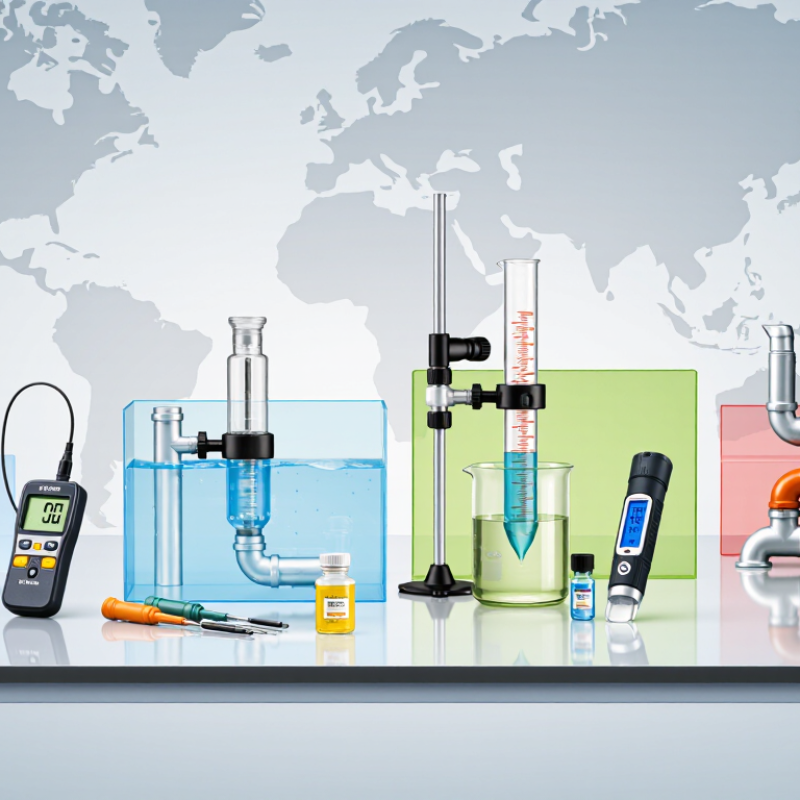
2026 Top Salinity Meter Types for Global Buyers

Core Measurement Methods Used in Salinity Meters

2026 Top Salinity Meter Types for Global Buyers

Core Measurement Methods Used in Salinity Meters

Conductivity is the most common method in portable salinity meters. Electrodes measure how readily a sample carries current; the meter then uses temperature and a conversion model to estimate salinity. UNESCO’s 1983 technical papers define the Practical Salinity Scale 1978, which relates seawater conductivity to practical salinity. NOAA describes average ocean salinity as about 35 parts per thousand. But that seawater reference is not a universal calibration point for concentrated brines or unusual process samples. Conductivity cells also need clean electrodes: a thin film of residue can shift readings.

Optical meters estimate salinity from refractive index, while hydrometers infer it from liquid density. Both can be useful for quick checks, but suspended matter, temperature, and sample composition can complicate interpretation. ISO 7888:1985 specifies conductivity measurement for water quality, underscoring the need for controlled measurement conditions. Still, a standard method does not remove every field error. The sample itself matters.

Conductivity-Based Meters for Routine Salinity Testing

Conductivity meters are widely used for routine salinity checks because they respond quickly to dissolved ions in water. A probe placed in a sample measures electrical conductivity, which the meter converts into a salinity estimate. Easy to use. Yet that estimate depends on temperature compensation and the selected measurement scale.

For repeatable results, rinse the probe with clean water between samples, then blot it gently instead of wiping the sensing surface. Check calibration with a suitable conductivity standard, especially after storage or heavy field use. A cold sample can behave differently from a warm one, so automatic temperature compensation helps, but it cannot correct every sampling mistake. Record sample temperature and units alongside each result.

Conductivity-based meters suit aquaculture checks, irrigation water, and process monitoring where trends matter. Buyers should compare measurement range, accuracy, response time, probe durability, and available calibration support. High sediment, unusual dissolved minerals, or changing water chemistry can distort the relationship between conductivity and salinity. The reading may look precise. It still needs context. For critical decisions, confirm results with a validated method and follow the instrument’s instructions; field routines are rarely perfect. A scratched probe or rushed rinse can quietly skew a data log.

Optical and Refractometer Meters for Field Measurements

For field measurements, optical salinity meters and refractometers offer a quick way to assess water without carrying bulky equipment. Many refractometers estimate salinity by measuring how light bends through a sample. Digital optical meters use the same basic principle, though features and scales vary. A drop of water on the prism may be enough. Small details matter.

For a more reliable reading, clean the prism, add a representative sample, and allow the instrument to match the sample’s temperature when its instructions require it. Check calibration with the recommended reference solution, not just a quick rinse. Salt crystals, fingerprints, and trapped air can shift readings. That is easy to miss.

Results can also depend on the scale used, such as practical salinity or a salt-concentration scale, so confirm units before comparing readings. Optical instruments do not identify which dissolved salts are present. For changing temperatures or unusual water chemistry, verify results with a suitable reference method.

Field work is rarely perfect; a scratched prism or rushed sampling can matter more than expected. Keep the lens protected, record temperature and location, and repeat a reading when it looks inconsistent.

Specialized Meters for Soil, Aquaculture, and Industrial Use

2026 Top Salinity Meter Types for Global Buyers

Soil salinity meters suit field checks, irrigation management, and soil surveys. Some estimate bulk electrical conductivity directly; others measure prepared soil extracts. These readings are not interchangeable. Compare samples at consistent depths and moisture levels, and record the method. FAO’s 2021 Global Map of Salt-Affected Soils estimates that 1.381 billion hectares are affected by salinity or sodicity. That scale makes repeatable measurements useful, but a single reading cannot explain crop stress. Small details matter.

Aquaculture operators often choose waterproof handheld or continuous conductivity meters, with salinity and temperature readings for ponds, tanks, or coastal farms. FAO’s 2024 SOFIA report says aquaculture produced 94.4 million tonnes of aquatic animals in 2022, or 51% of total aquatic animal production. Industrial users need a different tool: inline or rugged portable meters for brines, cooling systems, and process water. Check the measurement range, temperature limits, and sensor materials against the actual fluid. Conductivity-to-salinity conversions assume a particular ionic mix, so unusual process liquids can mislead. Not always. Calibration and occasional lab comparison help reveal that gap, though they add time to busy routines.

2026 Top Salinity Meter Types for Global Buyers - Specialized Meters for Soil, Aquaculture, and Industrial Use

Meter type Measurement principle Common measurement range* Typical applications Buyer considerations
Soil EC probe meter Electrode-based electrical conductivity measurement in soil or a prepared soil-water sample. Often approximately 0–20 dS/m; range depends on probe and measurement method. Agriculture, irrigation management, greenhouse growing, and soil salinity surveys. Check whether it measures bulk soil EC or a soil extract. Results depend on soil moisture, temperature, and the extraction protocol.
Portable conductivity/salinity meter Contact conductivity cell; salinity is calculated from conductivity and temperature using a selected scale or algorithm. Common conductivity ranges span about 0–20 to 0–200 mS/cm, depending on the instrument. Field water testing, aquaculture checks, laboratories, and general process sampling. Confirm the available output: conductivity, practical salinity, or a concentration unit such as ppt. Verify temperature compensation and calibration options.
Optical refractometer Measures refractive index and converts it to a salinity reading using a calibration scale. Common handheld scales cover seawater-strength samples, often around 0–100 ppt NaCl-equivalent; scale varies by model. Quick spot checks of brine, seawater, and aquarium or hatchery water. Simple and portable, but readings can be affected by sample temperature and dissolved substances other than salt. Check the scale and calibration method.
Multiparameter water meter Interchangeable or integrated probes measure conductivity and temperature, often alongside pH and dissolved oxygen. Conductivity range is probe-dependent; salinity ranges commonly include freshwater through seawater conditions. Aquaculture ponds, hatcheries, field monitoring, and environmental water surveys. Useful when several water-quality parameters are needed. Check probe compatibility, logging features, calibration procedures, and sensor replacement costs.
Inline contacting conductivity sensor Electrodes in contact with the process liquid measure conductivity continuously. Available ranges vary widely, from low-conductivity water to concentrated process solutions. Water treatment, rinse monitoring, food processing, and chemical process control. Select cell constant and materials for the expected conductivity, temperature, and chemical compatibility. Confirm installation and cleaning requirements.
Inductive (toroidal) conductivity sensor Electromagnetic coupling measures conductivity without exposed electrodes contacting the liquid. Typically selected for medium-to-high conductivity process streams; exact range is sensor-specific. Corrosive, dirty, or scaling liquids, including some chemical and industrial wastewater processes. Less vulnerable to electrode coating, but generally unsuitable for very low-conductivity samples. Check pipe dimensions and minimum conductivity limits.
Bench conductivity meter Laboratory conductivity cell paired with a meter that may calculate salinity and compensate for temperature. Depends on the selected cell; models are available for low-conductivity water through high-salinity samples. Quality control laboratories, research, water analysis, and reference measurements. Prioritize suitable calibration standards, cell range, temperature probe, data recording, and the required reporting scale.

*Ranges are indicative examples, not universal specifications. Check the instrument’s stated range and method. Practical salinity (often reported as PSU) is dimensionless; it is not interchangeable with ppt concentration or soil EC in dS/m.

How Global Buyers Compare Accuracy, Range, and Calibration

Global buyers should compare salinity meters by measurement principle, not display resolution alone. Conductivity-based handheld meters suit frequent checks across changing water conditions. Refractometers offer quick spot readings, while laboratory salinometers support demanding oceanographic measurements. The USGS Water Science School places average ocean salinity near 35 parts per thousand, with typical open-ocean values around 33–37 ppt. Range matters: a seawater-focused meter may perform poorly on concentrated brines.

The IOC’s TEOS-10 Manual explains that Practical Salinity is derived from conductivity, making temperature control and compensation important comparison points. Check stated accuracy across your actual working range, not just at one test value. Calibration with a certified reference solution close to the sample’s salinity can reveal drift. Small differences matter.

Field conditions complicate neat specifications. Salt crystals on a probe, trapped bubbles, or a sample warming in sunlight can shift readings. A display may look precise without being accurate. Buyers should compare calibration procedures, maintenance needs, and repeatability alongside the measurement range. I would still question any specification that omits test conditions; that omission is easy to overlook.

2026 Top Salinity Meter Types for Global Buyers

Compare representative scale ranges and display increments. Actual specifications vary by instrument and manufacturer.

How to compare: A finer display increment does not guarantee greater accuracy. Check the stated accuracy at your operating temperature and across your target range. Conductivity meters are commonly checked with a suitable conductivity standard; refractometers are commonly zero-checked with distilled or deionized water and verified with an appropriate reference; hydrometers should be checked against a reference and used with temperature correction. Ranges and increments shown are representative examples, not universal specifications. Conductivity instruments may report PSU or ppt; these scales are not strictly interchangeable.