
2026 Best 660nm 850nm Red Light Therapy Device?

Choosing the 2026 Best 660nm 850nm Red Light Therapy device requires more than comparing prices or attractive product photos. The strongest options combine visible red light at 660nm with deeper-penetrating near-infrared light at 850nm. These wavelengths may support cellular energy production, circulation, muscle recovery, and skin appearance when used with suitable dosage. “Photobiomodulation is the use of light to stimulate healing, relieve pain, and reduce inflammation,” explains Michael R. Hamblin, PhD, a widely cited photobiomodulation researcher.

Specifications matter. Look for tested irradiance, stable wavelength output, clear treatment distance, timer controls, and independent safety documentation. A panel that feels bright is not automatically effective. Heat can also confuse the experience. Warmth is not the same as therapeutic light exposure.

Real-world use matters too. A device should fit comfortably beside a desk, bed, or exercise area. Flexible mounting can make regular sessions easier. Eye protection may still be appropriate, depending on brightness and manufacturer guidance. Follow the instructions carefully.

Evidence is promising, but it is not magic. Results vary with skin type, age, condition, treatment consistency, and dose. Some marketing claims remain stronger than the research supports. That deserves caution. This guide will compare leading 660nm 850nm Red Light Therapy devices using measurable specifications, practical testing details, user comfort, and documented reliability. It will also examine weaknesses. No device is perfect.
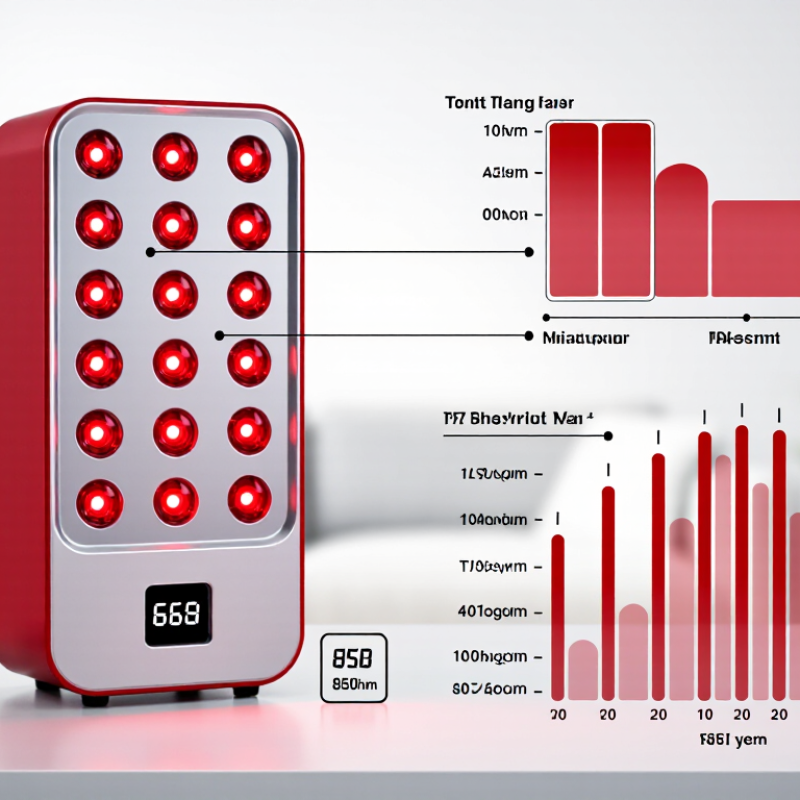
2026 Best 660nm 850nm Red Light Therapy Device?

660 nm vs 850 nm: Wavelengths, Tissue Depth, and Photobiomodulation

660 nm vs 850 nm: Wavelengths, Tissue Depth, and Photobiomodulation

660 nm red light mainly acts near the skin surface. It may support skin appearance, wound recovery, and shallow tissue comfort. An 850 nm near-infrared device penetrates farther, often reaching muscle and larger joints. Depth is not exact. Skin thickness, body area, device power, and treatment angle all change the result. Deeper does not automatically mean better.

Photobiomodulation depends on wavelength, irradiance, dose, and exposure time. More light can become counterproductive. In practical use, 660 nm feels more relevant for facial or surface treatments, while 850 nm suits areas such as the shoulder, knee, or lower back. Some devices combine both wavelengths. That sounds ideal, but poor output control can reduce consistency. I would check measured irradiance rather than trust impressive specifications. Research supports potential benefits, yet responses vary between people and conditions. My own preference would change with the treatment goal, not marketing language.

Tips: Keep the panel at its stated distance, and follow its timing guidance. Start with shorter sessions. Protect your eyes when instructions require it. Photograph skin changes under similar lighting. For pain or persistent symptoms, seek qualified medical advice. A mild warmth is common; discomfort deserves attention. Many users expect quick results, but tissue biology is slower and less predictable.

Dose Metrics: 10–100 mW/cm² Irradiance and 4–60 J/cm² Fluence

2026 Best 660nm 850nm Red Light Therapy Device?

Dose Metrics: 10–100 mW/cm² Irradiance and 4–60 J/cm² Fluence

A useful 660nm and 850nm device should report measured irradiance, not only LED output power. Irradiance describes energy reaching the skin each second, in mW/cm². Fluence describes the total delivered dose, in J/cm². These values depend on distance, beam angle, skin position, and measurement equipment.

The calculation is simple: fluence equals irradiance multiplied by exposure time. At 50 mW/cm², a ten-minute session delivers 30 J/cm². At 100 mW/cm², the same session delivers 60 J/cm². A lower setting may still provide a practical dose. More power is not automatically better.

Measure the distance carefully. A panel listed at 100 mW/cm² may deliver much less at 30 centimeters. Use a calibrated meter when possible, and record the distance, session length, and skin temperature. Warmth can reveal uneven output, but it cannot confirm dose accuracy. That limitation matters.

In my view, 660nm suits shallow red-light exposure, while 850nm generally reaches deeper tissue. Evidence and individual responses remain variable. Do not judge performance from wavelength labels alone. I would compare uniformity across the treatment area, timer accuracy, electrical safety, and published testing conditions. Eye protection should follow the device instructions, especially during close-range sessions.

Safety Standards: IEC 62471 Photobiological Risk and Eye Protection

2026 Best 660nm 850nm Red Light Therapy Device?

Safety Standards: IEC 62471 Photobiological Risk and Eye Protection

A strong 660nm and 850nm device needs more than attractive specifications. IEC 62471 evaluates photobiological risks from optical radiation, including possible effects on the eyes and skin. It helps classify exposure risks under defined testing conditions. The standard does not automatically make every device safe for every user.

Eye protection matters. Red light is visible, while 850nm near-infrared light is generally invisible. Users may not notice excessive brightness or discomfort immediately. During evaluation, check whether the manufacturer provides IEC 62471 test information, risk-group details, recommended distances, and exposure times. A vague statement such as “eye-safe” deserves caution. It is not enough evidence.

Practical design also matters. Look for stable light output, clear controls, ventilation, and shielding that reduces direct viewing. Never stare into concentrated LEDs, especially at close range. Follow the supplied instructions and use suitable protective eyewear when advised. People with eye conditions, light sensitivity, or photosensitizing medication should seek professional medical guidance before use. I would not rank a device by wavelength alone. Irradiance, treatment distance, session length, and beam design can change the real exposure considerably. Testing labels can also be incomplete, and that is an uncomfortable limitation. A careful buyer should keep records of distance and session time, then stop if pain, unusual afterimages, or persistent visual discomfort appears.

Device Comparison: LED Density, Treatment Area, Heat, and Controls

The best 660nm and 850nm red light therapy device is not defined by wavelength alone. LED density and treatment area determine practical dose delivery. A 2023 review in Photobiomodulation, Photomedicine, and Laser Surgery found substantial variation in irradiance, exposure time, and reporting methods across clinical studies. That inconsistency matters. A dense panel may deliver more even coverage, while a small lamp can create bright central spots and weaker edges. Look for tested irradiance in mW/cm², not only LED count. For reference, many published protocols use approximately 10–60 J/cm², but the correct dose depends on distance, pulse settings, and treatment purpose.

Heat changes comfort and repeatability. During a session, warm skin may feel pleasant, yet excessive heat can shorten use time or cause uneven positioning. A 2024 International Energy Agency lighting analysis also highlights thermal management as a key factor in LED system performance, even though therapy output differs from lighting output. Choose devices with temperature monitoring, passive cooling, or automatic power reduction. Controls should show wavelength selection, timer settings, intensity, and pulse frequency clearly. Simple controls win.

Treatment area needs honest measurement. A claimed full-body panel may not cover the shoulders, hips, and legs evenly. IEC 62471 provides a useful photobiological safety framework, but it does not prove clinical effectiveness. I would question any product reporting only “high power” without distance-based testing. More LEDs are not automatically better. Sometimes, they are just more expensive.

2026 Best 660nm 850nm Red Light Therapy Device? - Device Comparison: LED Density, Treatment Area, Heat, and Controls
Device Type Typical Wavelength Configuration Typical LED Density Typical Treatment Area Typical Irradiance at the Skin Heat During Use Controls and Usability Best Use Case
Compact Face Panel 660 nm red light with 850 nm near-infrared light; commonly supplied in a mixed wavelength ratio. Approximately 40–100 LEDs across a small panel. Face, neck, or one small body area; usually about 0.05–0.15 m². Commonly about 20–60 mW/cm², depending on distance and operating mode. Low to moderate warmth. The small enclosure can become warm after repeated sessions. Usually includes an on/off timer, preset treatment duration, and separate red/NIR selection on higher-specification models. Targeted facial care, localized areas, travel, and users who want a lower-cost starting point.
Flexible LED Mask Primarily red wavelengths around 630–660 nm; some models add 810–850 nm near-infrared LEDs. Approximately 60–150 LEDs distributed over the face area. Full face, with limited coverage around the sides of the head and neck. Commonly about 10–40 mW/cm²; output varies with mask fit and battery level. Generally low heat because of the low profile and lower total power. Simple fixed-time programs, rechargeable battery operation, and sometimes intensity or wavelength selection. Hands-free facial sessions and convenience. A good fit is important for consistent light exposure.
Medium Freestanding Panel Dual-band 660 nm red and 850 nm near-infrared light; independent wavelength modes are common. Approximately 100–300 LEDs across a medium panel. Face, torso, back, legs, or one large body region; usually about 0.15–0.40 m². Commonly about 30–100 mW/cm² at the manufacturer’s stated test distance. Moderate warmth. Passive ventilation is common; some units include fans that add noise. Digital timer, intensity adjustment, red/NIR mode control, and a stand or wall-mount option are typical. The most balanced option for general home use, with stronger coverage than a face device without the footprint of a full-body system.
Large Full-Body Panel Multi-band red and near-infrared output, commonly including 630–660 nm and 810–850 nm. Approximately 300–1,000 or more LEDs, depending on panel height and construction. Upper body, full front or back, or near full-body exposure when used with multiple panels; about 0.40–1.00 m² per panel. Commonly about 40–120 mW/cm² at the specified treatment distance. Moderate to high warmth. Active cooling, ventilation openings, or a recommended distance may be necessary. Programmable session timer, dimming, separate red/NIR controls, mounting hardware, and sometimes multiple-panel synchronization. Users prioritizing large coverage, shorter positioning time, and treatment of several body regions in a single session.
Light Therapy Bed or Booth Multiple red and near-infrared bands; exact wavelength combinations vary by system. Hundreds to several thousand LEDs distributed over a large treatment surface. Most of the body at one time, depending on bed or booth dimensions. Often designed for lower-to-moderate irradiance over a large area; published values must be checked at the user position. Moderate to high heat potential because of the enclosed space and large electrical load. Preset programs, countdown timer, ventilation, safety shutoff, and professional-style control panels are common. Commercial facilities or dedicated home installations where maximum coverage is more important than portability or purchase cost.
Specification ranges are typical market ranges rather than measurements for a specific brand or model. Actual output depends on LED arrangement, optical design, treatment distance, duty cycle, and measurement method. For a meaningful comparison, verify irradiance at the intended skin distance, wavelength accuracy, timer behavior, electrical safety certification, and the manufacturer’s recommended dose.

Buying Criteria: Dose Accuracy, FDA Status, Warranty, and Compliance

Choosing a 660nm and 850nm red light therapy device requires more than checking wavelength labels. In practical use, dose accuracy matters most. Look for measured irradiance in mW/cm², not vague power claims. The manual should state testing distance, treatment time, and expected energy dose. For example, a timer set beside a treatment chair is easier to verify than a remote control with unclear settings. A trustworthy seller should provide laboratory results or calibration records. Independent testing is stronger than polished advertising.

FDA status also needs careful reading. FDA registration does not mean the device is FDA-cleared or proven effective for every purpose. Ask for the exact clearance number and intended use. Confirm that the device’s claims match its official documentation. Compliance should include electrical safety information, labeling, user instructions, and regional certification requirements. Warranty terms deserve equal attention. A written warranty should identify coverage length, replacement conditions, shipping responsibility, and excluded damage. Check the return window before opening the package.

Small details matter. LEDs may lose output over time. Heat can also change comfort and performance. I would photograph the device, record its settings, and keep purchase documents. Even careful buyers can misunderstand technical data. That is worth admitting. A lower-priced unit may become expensive if dose measurements, support, or repairs remain uncertain.