7 Best Heavy Duty Sliding and Folding Doors for Buyers
Choosing a heavy-duty door involves more than finding a wide opening and a strong frame. The right system must suit the building, the available clearance, and the way people use the space each day. Heavy-Duty Sliding & Folding Doors can connect a patio, warehouse, or commercial entrance, but their performance depends on details such as panel weight, track design, hardware, and installation quality.
This guide looks at seven options through practical buying considerations, including materials, opening style, weather resistance, maintenance, and likely applications. A sliding system may preserve floor space, while folding panels can create a broader opening when fully drawn back. Neither choice is automatically better. Measure the opening carefully, check how much room the panels need, and confirm that the supporting structure can handle the selected system. Small details matter.
Product descriptions can make different doors sound equally durable, so compare specifications rather than relying on labels alone. Look for clear information about load capacity, finishes, locking hardware, and available panel sizes. Ask the supplier about installation requirements and replacement parts, especially for frequently used entrances. The seven selections offer useful starting points, not a universal ranking for every project. That trade-off matters. A door that suits a sheltered home patio may not meet the demands of a busy commercial opening. Verify current product details with the manufacturer, and consider professional advice when measurements or structural requirements are uncertain.
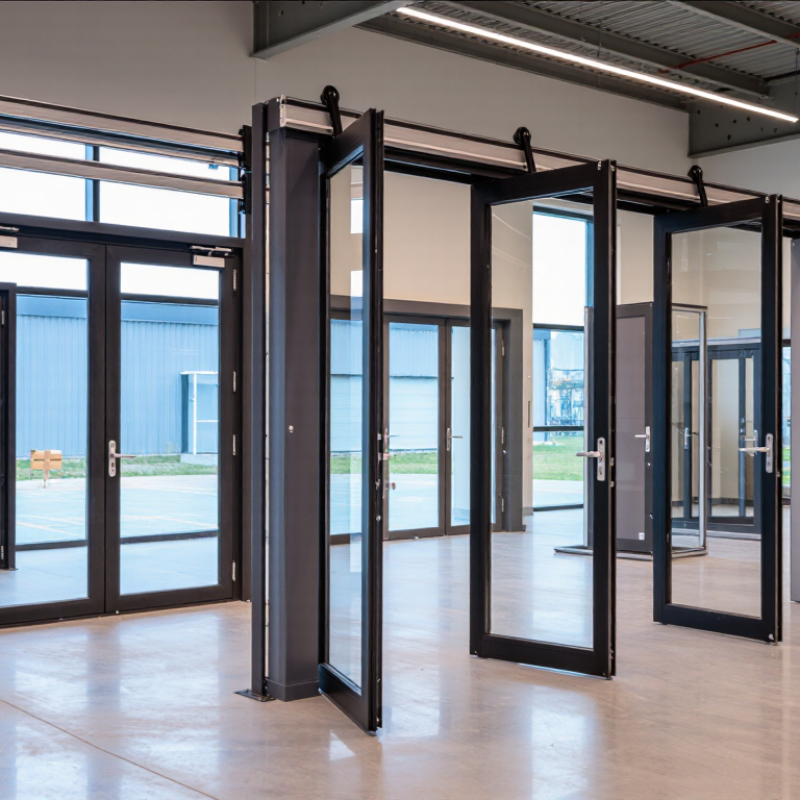
Understanding Heavy-Duty Sliding and Folding Doors
Heavy-duty sliding and folding doors are designed for wider openings, heavier panels, and frequent use. But “heavy-duty” is not a universal rating. Compare each system’s stated panel weight, maximum dimensions, and recommended use before choosing.
A sliding door needs a sturdy track and enough wall space for its panels to stack. Check the floor below the track, too; even a small dip can affect smooth movement. That matters.
Folding doors gather panels at one side, so measure the clear opening and space needed for the folded stack. Look for strong hinges, reinforced connection points, and rollers suited to the panel weight.
Glazing adds light, but larger glass panels can add substantial weight; confirm that the frame and hardware are rated for the complete assembly. Weather seals and drainage details also matter where wind or rain reaches the opening.
One easy detail to miss is the finished floor height, which can leave a threshold awkwardly raised or poorly sealed. Ask the installer to verify the structural opening and installation requirements against the product specifications.
Small gaps can cause problems. Measure twice.
Comparing Materials, Load Capacity, and Hardware
Heavy-duty sliding and folding doors differ most in panel material, supported weight, and track design. Seven practical choices include aluminum-framed glass, steel-framed glass, solid hardwood, engineered timber, fiberglass, steel-clad timber, and lightweight composite panels. Aluminum resists moisture and keeps glazed panels relatively light. Steel can support robust frames, but its added weight demands suitable rollers and reinforced fixing points. Hardwood offers a substantial feel; it also needs attention to moisture and seasonal movement.
Check the door’s stated panel weight and the hardware’s rated capacity separately. The track, hangers, hinges, and fixings must all suit the complete assembly, including glazing. A large glass panel may look sleek. It can also become difficult to move if the roller rating is marginal. For a folding system, inspect hinge strength and the load carried by the lead panel. Ratings vary by configuration, so confirm them with the supplier and installer rather than relying on appearance.
Measure the opening carefully, including floor level and available stacking space. A door that clears the opening on paper may still crowd a nearby cabinet when folded. I would not choose by panel thickness alone; that shortcut can mislead. Ask for written load ratings, compatible hardware details, and guidance for the actual opening size. Good documentation matters. A smooth test movement is useful, but it cannot replace checking the specifications.
Seven Heavy-Duty Sliding and Folding Door Options for Buyers
Heavy-duty door choice begins with the opening’s width, wind exposure, and daily traffic. A reinforced-aluminum sliding door suits broad patios and frequent use. A steel-framed slider offers rigidity, though its weight demands carefully rated rollers. Thermally broken aluminum sliding doors reduce heat transfer through the frame. Check the track, too. A strong panel can still roll poorly on an undersized rail.
For wider openings, consider a wood-clad multi-slide system, an aluminum bi-fold door, or a fiberglass folding door. Wood-clad frames bring a warm interior finish but need regular maintenance. Aluminum bi-fold panels stack neatly, yet their hinges and floor track need frequent cleaning. Fiberglass folding doors resist moisture, but panel weight and hardware capacity vary by design. A lift-and-slide door raises its panels before movement, easing operation on large, heavy leaves. It can be costly. Site measurements matter more than catalogue claims.
Performance deserves equal attention. The U.S. Department of Energy’s Energy Saver guidance estimates that windows account for about 25–30% of residential heating and cooling energy use; this is not a door-only figure, but glazed doors also affect heat flow. Compare whole-unit ratings, glazing, weather seals, and installation details. Ask for tested panel weight and cycle data. In practice, even robust hardware may need adjustment after settling. That detail is easy to overlook.
Matching Door Types to Space, Climate, and Everyday Use
Heavy-duty doors should fit the room before they impress on a product sheet. Sliding doors suit narrow patios and rooms where swinging panels would block furniture or walkways. They need clear wall space for the panels to stack, though. Folding doors can open a wider span, making them useful for dining areas or sheltered outdoor connections. Their panels need room to fold, and the floor track must stay clear of grit. Measure the opening, finished floor, and nearby furniture. Measure twice.
Climate changes the shortlist. In exposed or cold locations, check the frame’s thermal performance, weather seals, drainage, and resistance to corrosion. A large glass door may still feel uncomfortable if its seals or installation are poor. For frequent daily use, examine the track, rollers, hinges, handles, and stated panel-weight capacity. Ask how often adjustment and cleaning are expected; fine dust and fallen leaves can make a smooth door drag. Details matter.
The best match is not always the widest opening. A sliding system may be easier to operate when space is limited, while folding panels may suit occasional, full-width access. Check the threshold carefully if people use the doorway often or move carts through it. One detail buyers sometimes overlook is the installer’s site measurement and support plan. A careful comparison of space, weather exposure, and real routines beats choosing by appearance alone.
Evaluating Installation, Safety, and Maintenance Needs
When comparing seven heavy-duty sliding and folding door options, look beyond panel weight and appearance. Their installation demands can differ sharply. Measure the finished opening at several points; older walls are rarely perfectly square. Record floor slope, ceiling clearance, and where the panels will stack when open. Small gaps matter.
Large glass panels need a load-rated track, secure framing, and suitable anchors—not just sturdy-looking hardware. Ask the installer how the system handles wind, repeated use, and uneven floors. Check that safety stops prevent panels from leaving the track and that fingers cannot reach pinch points. Test the locks before accepting the installation. Details get missed.
Maintenance should be realistic for the site. Tracks collect grit, especially near patios, so favor designs with accessible cleaning points. Inspect rollers, seals, fasteners, and drainage channels regularly, following the maker’s instructions. Salt air or heavy daily traffic may require more frequent checks. A simple service log helps, though it can feel fussy. A polished finish can distract from awkward cleaning access, so consider how the door will work after months of daily use.
7 Heavy-Duty Sliding and Folding Door Types
Comparative planning ratings for installation effort, safety planning, and maintenance demand. Scores are indicative (1 = lower demand, 5 = higher demand); actual requirements depend on the opening, materials, hardware, and site conditions.
Use these ratings as a checklist for comparing system complexity—not as product specifications. Confirm structural support, clearances, safety features, and maintenance instructions with the door supplier and installer.