10 Best LED Lights for Businesses in 2026
In 2026, choosing Led Lights for a business means balancing visibility, energy use, comfort, and installation costs. A bright fixture is not automatically the right one. A warehouse ceiling, a café counter, and a small office each need different light distribution. Glare on a monitor matters. So does a dim corner near the stockroom shelves. Those details affect daily work, yet they are easy to overlook when comparing product labels.
Lighting researcher Dr. George Brainard has described light as “the most powerful drug we have.” His observation is a useful reminder: lighting affects more than what people can see. For businesses, the practical goal is dependable illumination suited to each space, not a one-size-fits-all upgrade. A high-bay fixture may suit a tall workshop, while a low-profile panel may work better in an office. Neither choice is universal. That is worth remembering.
This guide looks at ten LED lighting options for businesses in 2026, from panels and tubes to high bays and outdoor fixtures. It considers brightness, color quality, energy performance, controls, warranty terms, and compatibility with existing fittings. Those specifications help narrow the field, but they cannot replace checking a room’s layout or asking a qualified installer about tricky wiring and mounting. Product claims also deserve a careful read. Some figures are hard to compare directly. Use this list as a starting point, then match each fixture to the actual space, operating hours, and maintenance needs. A small trial installation can reveal problems that a catalog photo will not.
Define Business Lighting Needs by Space, Task, and Operating Hours
A useful LED plan starts with the work, not the fixture. Map each area: focused, low-glare light for checkout counters; even illumination for aisles; and softer, adjustable light for meeting rooms. A loading bay needs clear visibility at floor level, while a display area may need accurate color. EIA’s 2012 Commercial Buildings Energy Consumption Survey attributed about 17% of commercial-building energy use to lighting. That makes room-by-room planning more than a design detail.
Operating hours change the calculation. The U.S. Department of Energy’s Energy Saver guidance says LEDs use at least 75% less energy and last up to 25 times longer than incandescent lamps. That comparison is not against every fluorescent system, so check the existing equipment before estimating savings. For spaces that sit empty between tasks, occupancy sensors or scheduled controls can prevent lights from running all night. Hours matter, too.
Record actual switch-on times for a typical week, including cleaning and weekend shifts. Then compare them with the proposed schedule; a paper timetable is rarely perfect. Note where staff dim lights, move task lamps, or complain about glare. Those details can expose a mismatch that a floor plan misses. Keep a few adjustable fixtures in areas with changing work, and review the results after installation. Good specifications help, but real operating habits should have the final say.
Compare LED Types: A-Lamps, Tubes, Panels, High Bays, and Retrofit Kits
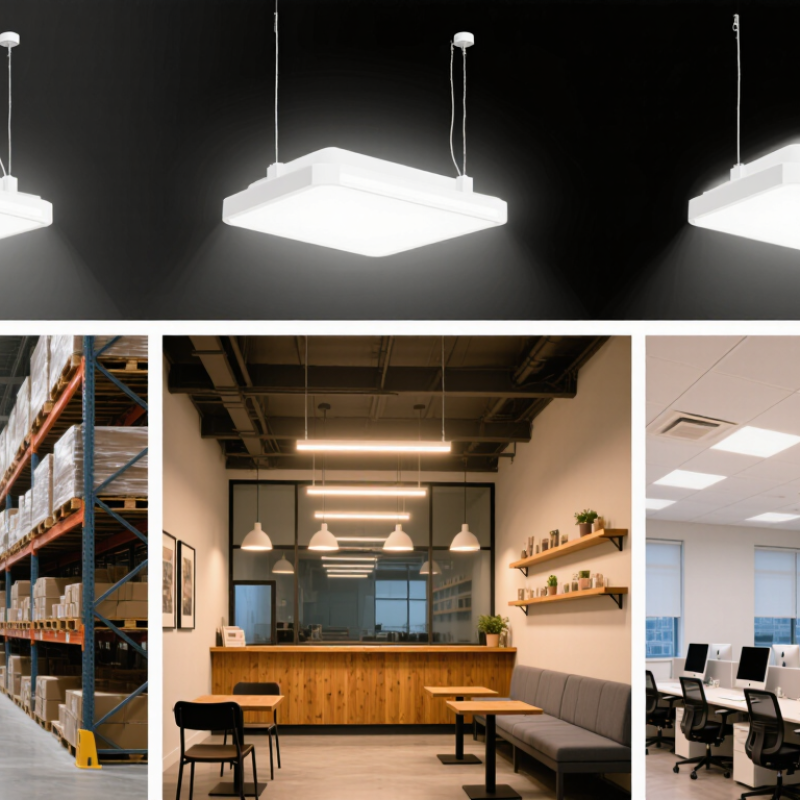
A-lamps work well in familiar screw-base fixtures, such as desk lamps or small rooms. They offer a simple swap, but they may not spread light evenly across a workbench. LED tubes suit linear fixtures in storage areas, workshops, and corridors. Check whether the fixture requires a compatible driver or a wiring change before choosing a tube. Flat panels provide broad, even light in offices and classrooms. Their clean ceiling fit is useful, though panel size and dimming compatibility still matter. Small details matter.
High bays are designed for tall ceilings in warehouses, gyms, and production spaces. Their focused output can illuminate floor-level work, but mounting height and beam angle affect coverage. Retrofit kits can update existing fixtures while keeping parts of the original housing. That can reduce replacement waste, but only when the kit matches the fixture’s dimensions, electrical setup, and heat conditions. The fit is not always perfect. Measure before ordering, and verify the manufacturer’s compatibility data.
Tips: Compare light output, color temperature, glare, and expected operating hours—not wattage alone. For a loading area, check how light reaches the floor and shelving. For offices, consider glare on monitors. If the layout is unusual, test one fixture first; estimates can miss shadows.
Measure Efficiency Against the U.S. DOE’s 75% Lower-Energy Benchmark
For businesses comparing the 10 best LED lights in 2026, the U.S. Department of Energy’s 75% lower-energy benchmark offers a useful starting point. DOE says LEDs use at least 75% less energy than incandescent lighting while producing comparable light. The comparison depends on the baseline. It does not mean every LED fixture will use 75% less energy than an existing commercial system.
Check light output in lumens, not watts alone. Then compare the wattage of fixtures delivering similar brightness in the same space. A 60-watt incandescent bulb and a 9-watt LED, for example, can provide roughly similar light. Measure actual operating hours, too. A warehouse light running overnight has a different savings profile from a hallway light used briefly.
Small details matter. Record fixture wattage, daily run time, and your electricity rate before estimating savings. Dimming, occupancy sensors, ceiling height, and maintenance needs can change results. The benchmark is helpful, but it is not a guarantee. Replacing fluorescent lighting, rather than incandescent bulbs, may produce a smaller reduction. That distinction is easy to overlook. A simple fixture-by-fixture audit gives businesses a more honest basis for comparing options.
10 Best LED Lights for Businesses in 2026 - Measure Efficiency Against the U.S. DOE’s 75% Lower-Energy Benchmark
| LED light type |
Typical business use |
Illustrative light output |
LED power |
Estimated efficacy |
Incandescent reference power |
Estimated energy reduction |
| A19 LED bulb |
Offices, reception areas, and general-purpose fixtures |
800 lm |
9 W |
89 lm/W |
50 W |
82% |
| High-output A19 LED bulb |
Retail spaces and rooms needing brighter general lighting |
1,600 lm |
15 W |
107 lm/W |
100 W |
85% |
| BR30 LED reflector bulb |
Recessed ceiling lights in shops, cafés, and offices |
1,100 lm |
12 W |
92 lm/W |
69 W |
83% |
| PAR38 LED floodlight |
Outdoor security lighting and broad-area accent lighting |
1,600 lm |
18 W |
89 lm/W |
100 W |
82% |
| LED flat panel |
Offices, classrooms, and suspended-grid ceilings |
4,000 lm |
36 W |
111 lm/W |
250 W |
86% |
| LED linear strip fixture |
Workshops, stockrooms, and utility areas |
2,200 lm |
20 W |
110 lm/W |
138 W |
86% |
| LED wall-pack fixture |
Building entrances, walkways, and perimeter lighting |
7,000 lm |
60 W |
117 lm/W |
438 W |
86% |
| LED canopy fixture |
Covered parking, fuel canopies, and loading areas |
6,000 lm |
50 W |
120 lm/W |
375 W |
87% |
| LED high-bay fixture |
Warehouses, factories, and other high-ceiling spaces |
21,000 lm |
180 W |
117 lm/W |
1,313 W |
86% |
| LED vapor-tight fixture |
Damp or dusty areas, including garages and service rooms |
5,000 lm |
40 W |
125 lm/W |
313 W |
87% |
Method: Figures are illustrative, application-based comparison values, not tested ratings for specific products. Incandescent reference power is estimated at 16 lumens per watt; energy reduction is calculated as (reference watts − LED watts) ÷ reference watts. Actual performance varies by product, optics, dimming, and installation. The U.S. Department of Energy commonly cites LEDs as using at least 75% less energy than incandescent lighting; compare rated lumens and watts on product labels when selecting fixtures.
Evaluate Lifespan Using the DOE’s “Up to 25 Times Longer” LED Estimate
The U.S. Department of Energy says LED bulbs can last up to 25 times longer than incandescent bulbs. Treat that as a comparison, not a promise for every business fixture. The result depends on the bulb, operating conditions, and the type of lamp it replaces. A warehouse light running long shifts faces different demands from a meeting-room lamp switched on briefly each day.
Check the rated life and what the rating means. Many LED lifetime estimates track when light output falls to a stated level, rather than when a lamp suddenly stops working. That distinction matters. A fixture above a loading bay may still work but provide less useful light over time. Compare rated hours, expected daily use, and replacement access before estimating savings. Also consider heat, enclosed fixtures, and frequent switching, which can affect performance. A spreadsheet can make the payback look tidy; real ceilings are less tidy. I would leave room for uncertainty and avoid assuming every LED will reach the maximum estimate.
Rank 10 Business LED Lights by Performance, Controls, and Total Cost
This ranking compares common business LED fixtures for performance, control flexibility, and total cost over time. It assumes a mixed commercial facility; a warehouse or storefront may need a different order. Installation, operating hours, and local energy rates can change the real payback.
Rank 1
Network-ready high-bay lights deliver strong output for warehouses, while dimming and occupancy controls can reduce wasted hours.
Rank 2
Sensor-equipped high-bays simplify control, though sensor placement matters.
Rank 3
Commercial linear fixtures offer even light for offices and shops, with a moderate installation cost.
Rank 4
Vapor-tight fixtures suit damp or dusty work areas and can cut maintenance visits.
Rank 5
LED troffers provide familiar, broad office lighting; check glare before buying.
Rank 6
Flat panels look clean, but low-cost models may have uneven dimming.
Rank 7
LED strips work well in back rooms and narrow aisles, though exposed fittings collect dust.
Rank 8
Canopy lights serve covered entrances and loading areas; their value depends on nightly use.
Rank 9
Floodlights cover yards and signs, but poor aiming can waste light.
Rank 10
Replacement tubes have low upfront cost, yet compatibility and labor can complicate retrofits.
A cheap fixture is not always cheap. Compare wattage, rated life, warranty terms, control costs, and expected maintenance. I would also test one fixture in the actual space first; plans rarely capture every shadow or glare problem.