10 Best LED Shop Lights for Garages in 2026?
A garage light should do more than make the room look bright. It should help you read labels, find small screws, and see a clean paint line without casting hard shadows across your workbench. Led Shop Lights vary in brightness, color, mounting style, and build quality, so choosing one can take more thought than the product photos suggest. A fixture that looks powerful online may still leave dark corners or create uncomfortable glare.
This 2026 guide compares ten options for different garage layouts and everyday tasks. It considers useful details such as light output, color temperature, installation method, linkable designs, energy use, and warranty information. We also look at practical fit: low ceilings, exposed rafters, long workbenches, and spaces where a ladder or vehicle can block the light. Small details matter. A pull chain may be convenient, while a poorly placed switch can become irritating over time. No fixture is perfect, and advertised brightness alone does not tell the whole story. Product specifications and availability can change, so check current manufacturer details before buying. Use this list as a clear starting point, then match the light to your garage, budget, and actual work habits.
How LED Shop Lights Work in Garage Environments
In a garage, an LED shop light uses an internal driver to convert household AC power into regulated current. The diodes produce light quickly, so a cold morning usually does not leave the workbench dim. But the fixture still produces heat. A metal body and open airflow help move heat away from the LED board, supporting steady output over time. Not magic.
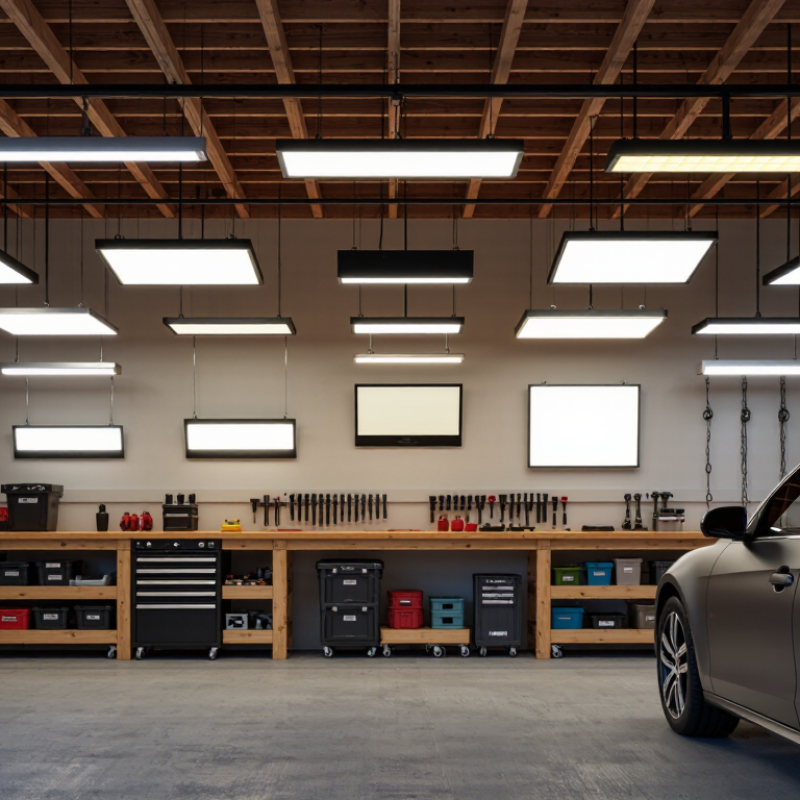
Light distribution matters as much as wattage. A long, wide fixture can spread illumination across a workbench, while a narrow beam may leave dark bands between shelves. Mounting height, ceiling color, and lens design all affect the result. For detailed repairs, compare measured lumens and color rendering, not watts alone; watts describe energy use, not visible brightness. Neutral-white light can make wire colors and tool edges easier to distinguish, though preferences vary.
Garages collect dust, vibration, and occasional moisture. Check the fixture’s environment rating and installation instructions, especially near doors or sinks. A sealed lens may reduce dust buildup, but poor heat management can shorten service life. Flicker is another practical issue: some drivers perform better than others, and dimmers may cause visible pulsing. Test the setup at your actual work height. Even a well-planned layout can leave one stubborn shadow over a cluttered bench.
How LED Shop Lights Work in Garage Environments
Light intensity decreases as distance from a fixture increases. This idealized inverse-square model shows relative illuminance at different distances.
Relative illuminance is calculated as 1 ÷ distance² and normalized to 100% at 1 meter. Real shop lights are extended fixtures, so actual light levels depend on fixture design, mounting height, beam spread, and room surfaces.
Types and Features of LED Shop Lights for Garages
Garage lighting works best when fixture type matches the task. Linkable LED strip lights suit long benches and narrow bays; their continuous rows reduce dark gaps between work zones. Wraparound fixtures spread light broadly, which helps when storage shelves create shadows. High-bay lights fit tall, open garages, but can feel harsh in a low ceiling. Portable task lights are useful for repairs. They do not replace even overhead lighting.
Compare delivered lumens, not just watts. Lumens describe visible output, while watts describe electricity use. For color, 4000K to 5000K often gives a clear, neutral look; a high color-rendering index helps reveal wire colors and paint differences. The U.S. Department of Energy’s LED lighting guidance reports at least 75% lower energy use and up to 25 times longer life than incandescent lighting. That comparison is not a direct measure against fluorescent shop fixtures. Check the fixture’s own efficacy and rated life.
Look for linkable wiring, a flicker-conscious driver, and a suitable damp-location rating if the garage gets condensation. Motion sensors can save energy, though frequent shutoffs may interrupt detailed work. Measure first. I would not choose by advertised brightness alone: a glaring spot over the hood can leave the workbench dim. A diffuser or two well-spaced rows may feel better, even if the layout looks less tidy on paper.
Ten LED Shop Lights to Consider in 2026
Ten LED Shop Lights to Consider in 2026
Choosing a shop light starts with the work area, not the product label. Linkable linear fixtures suit long benches and narrow garage bays. Integrated strip lights offer simple, even coverage. High-bay fixtures work better in tall garages, while wraparound lights spread light across shelves and walls. Motion-sensor models can help when your hands are full. Selectable color-temperature lights let you adjust the feel from warmer to cooler white. Each solves a different problem.
Dimmable fixtures are useful when bright task lighting feels harsh. Portable LED work lights can move beside a car or under a shelf. Vapor-resistant housings may suit dusty or damp work areas, but check the fixture’s stated rating. Low-profile lights fit ceilings with limited clearance. Compare beam spread, installation method, and stated light output before buying. A high lumen figure alone does not guarantee comfortable visibility; glare and shadows matter, too.
Tips: Measure the ceiling and bench first. Place lights to reduce shadows from your body. If possible, test one fixture before outfitting the whole garage. It’s easy to overlight a small space.
Choosing and Installing the Right Garage Shop Light
Choosing and installing the right garage shop light starts with the workbench, not the fixture. Measure the space and note where shadows fall when a car, shelving, or an open hood blocks ceiling light. The U.S. Department of Energy’s Energy Saver guidance says LEDs use at least 75% less energy and can last up to 25 times longer than incandescent bulbs. That comparison is not a promise of equal performance between every LED and fluorescent fixture, so compare rated lumens, wattage, and warranty details. For close work, distribute fixtures across the ceiling instead of relying on one bright strip. Neutral-white light can make wiring colors and small parts easier to distinguish.
Installation details matter. Check the fixture’s damp-location rating if the garage gets humid, and follow its listed mounting instructions. Turn off power at the breaker before hardwiring; when unsure, hire a qualified electrician. Plug-in models are simpler, but keep cords away from doors, sharp edges, and walking paths. I would also test the layout with temporary lights before drilling. It is easy to miss a shadow behind a cabinet.
Tips: Aim light toward the work surface, not directly into your eyes. Clean diffusers occasionally; dust dulls output. Leave room between fixtures, and check for flicker before committing to a full installation.
10 Best LED Shop Lights for Garages in 2026? — Choosing and Installing the Right Garage Shop Light
The entries below compare common shop-light formats rather than specific branded products. Wattage, lumen output, efficacy, color temperature, and protection ratings are representative examples; check the product datasheet and local electrical requirements before purchasing or installation.