10 Best Thermal Break Materials for Global Buyers
Choosing the right Thermal Break material can influence energy performance, condensation control, product life, and installation cost. For global buyers, the decision is rarely based on thermal conductivity alone. Climate, frame design, fire performance, mechanical loading, moisture exposure, and local standards also matter.
Building-science expert Dr. Joseph Lstiburek has described thermal bridges as “the Achilles’ heel of building envelopes.” This observation remains practical today. A small conductive path through an aluminum frame can create a cold interior surface, even when surrounding insulation performs well. Sometimes, the weakest detail decides the outcome.
This guide reviews ten widely used Thermal Break materials, including polyamide, polyurethane, phenolic resin, aerogel, EPDM, PVC, cork, fiberglass-reinforced polymer, wood, and engineered composite systems. Each material offers a different balance of insulation value, strength, durability, processing difficulty, and price. None is perfect.
That matters.
Experienced buyers should examine verified test data, not impressive marketing language. Look for declared thermal conductivity, compressive strength, dimensional stability, water absorption, temperature resistance, and compatibility with adjoining materials. Supplier traceability also deserves attention, especially for international projects.
The comparison will consider practical applications in windows, curtain walls, doors, façades, roofs, and industrial enclosures. It will also address common purchasing mistakes, such as selecting low conductivity without checking structural performance. A material may look excellent in a laboratory and disappoint on a poorly designed jobsite. That uncomfortable gap deserves honest discussion.
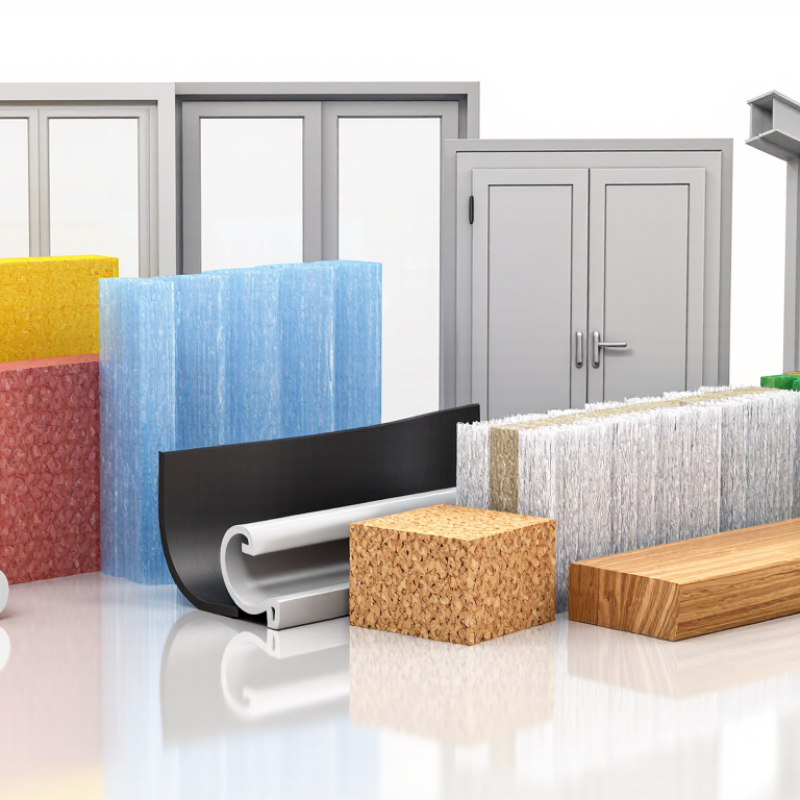
What Thermal Break Materials Are and Why They Matter
What Thermal Break Materials Are and Why They Matter
Thermal break materials reduce heat transfer through metal frames, panels, and structural connections. They sit between conductive components, interrupting the path that heat follows. Common options include polyamide, polyurethane, rigid foam, cork, and specialized composite materials. Each offers different conductivity, strength, moisture resistance, and fire performance.
A well-designed thermal break can improve indoor comfort and reduce heating or cooling demand. It also helps limit surface condensation around windows and doors. In practical projects, small gaps can create cold spots. Installation quality matters as much as the material itself. No material is perfect. A solution that performs well in a dry climate may fail under high humidity, heavy rain, or repeated temperature changes. Buyers should review tested data, not rely only on catalog claims.
Tips: Check thermal conductivity, operating temperature, water absorption, compressive strength, and fire classification. Ask for independent test reports and installation guidance. Confirm compliance with the destination market’s building requirements. Include fasteners, seals, and joints in the thermal review. A strong material can still perform poorly when the surrounding assembly is designed carelessly. Cost comparisons should include service life, replacement access, and labor. Sometimes the cheapest option becomes expensive after condensation or movement appears. Small details deserve attention.
Key Performance Criteria for Comparing Thermal Break Materials
Comparing thermal break materials requires more than checking the lowest thermal conductivity. Global buyers should examine the complete performance profile. A material with excellent insulation may deform under heavy framing pressure. Another may absorb moisture and lose efficiency inside a humid wall assembly. Check declared thermal conductivity, design R-value, service temperature, and long-term dimensional stability. Test results should reflect the intended thickness and installation conditions.
Mechanical strength matters at every connection. Review compressive strength, creep resistance, and recovery after loading. A window sill thermal break can face repeated pressure from glass, fasteners, and seasonal movement. Fire behavior also deserves close attention. Confirm the applicable reaction-to-fire classification for the destination market. Moisture resistance, chemical compatibility, and ultraviolet stability can affect service life, especially in exposed or coastal applications.
Material selection should include installation reality. Can workers cut it cleanly on site? Does it maintain contact without gaps? Small discontinuities can create thermal bridges and condensation points. Compare recycled content, transport weight, expected lifespan, and disposal requirements, but avoid trusting marketing claims without test documentation. Site reviews often reveal a less obvious issue: the best laboratory performer may be difficult to install consistently. That weakness should remain part of the purchasing decision. Evaluate standards, third-party reports, batch quality controls, and technical support before approving any of the ten leading material types.
Ten Leading Thermal Break Materials for Global Buyers
Ten leading thermal break materials help global buyers reduce heat transfer across metal frames, roofs, and wall connections. The practical choice depends on climate, load, moisture, and local building requirements.
Polyamide offers strong insulation and dimensional stability for window systems. Polyurethane provides low thermal conductivity and useful bonding performance. PVC is economical, moisture resistant, and easy to process. EPDM rubber handles movement and weather exposure well. Aerogel delivers exceptional insulation in thin sections, though its cost can limit wider use. Cork is renewable and resilient, but moisture control requires careful detailing.
Wood fiber supports bio-based designs and can improve acoustic comfort. Mineral wool resists fire and performs reliably in wall assemblies. Phenolic foam provides high insulation efficiency with limited thickness. Fiberglass-reinforced composites combine low conductivity with structural strength. During project reviews, I have seen buyers select excellent materials but overlook edge seals and installation gaps. The result was disappointing.
Test data should include thermal conductivity, water absorption, aging, fire behavior, and compressive strength. Ask whether results reflect real temperatures and humidity. A laboratory value may not match a crowded jobsite. Check product thickness, tolerances, recyclability, and regional certification before purchasing. No material wins everywhere. Teams should compare total service performance, not only the lowest quotation.
10 Best Thermal Break Materials for Global Buyers
Comparison of typical thermal conductivity values. Lower values generally indicate better resistance to heat transfer, although final performance also depends on thickness, moisture, density, joints, and installation quality.
Typical nominal values at approximately 20–25°C, expressed in W/m·K. Values can vary by grade, density, and test method; buyers should verify technical datasheets for project-specific selection.
Sourcing, Compliance, and Quality Checks for International Purchases
Choosing the best thermal break material depends on climate, profile design, fire requirements, and shipping conditions. Common options include polyamide, polyurethane, PVC, EPDM, silicone, phenolic resin, fiberglass-reinforced polyester, aerogel, cork, and mica-based composites. Polyamide and reinforced polyester suit many aluminum systems. Aerogel offers excellent insulation but can increase cost and handling risks. Cork may support lower-impact projects, yet moisture exposure needs careful control.
International sourcing requires more than comparing prices. Ask suppliers for technical data sheets, batch traceability, test reports, and declared thermal conductivity values. Confirm whether documents match the actual production grade. Check dimensions with calipers, inspect surfaces for cracks, and test compression recovery after storage.
Packaging also matters. Damp cartons can damage porous materials before installation. Compliance requirements vary by destination, so verify fire classification, chemical restrictions, recycling rules, and building standards with a qualified local reviewer. Documents alone are not enough.
Tips:
Request samples from at least two production batches. Measure density, thickness, and fit. Keep sealed samples for comparison.
Do not trust unusually low prices without testing. A small mismatch can create a cold bridge across an entire frame.
Some suppliers provide excellent reports but inconsistent lots. That weakness is easy to miss.
Record inspection results, photographs, and corrective actions before approving a larger order. Recheck assumptions when the design, climate, or installation method changes.