
7 Best Transparent LED Displays for Buyers in 2026

A Transparent Led Display can turn a glass storefront into a working visual surface without fully blocking the view behind it. That balance sounds simple. It is not. Brightness, pixel pitch, transparency rate, and viewing distance all affect what people actually see. A screen that looks vivid in a showroom may lose impact beside sunlit windows, while a fine-pitch model may be unnecessary for viewers across a lobby.

This guide compares seven transparent LED display options for buyers in 2026. It considers image quality, installation needs, control systems, support, and the practical fit for retail windows, atriums, and event spaces. The best choice depends on the glass, ambient light, audience distance, and budget—not a single headline specification. Ask suppliers for measured brightness and transparency figures, compatible mounting details, and a live demonstration under conditions similar to your site. Check warranty terms and service access, too; a difficult repair can outweigh an attractive purchase price.

There is no universal winner. Published specifications help, but they rarely show every trade-off. A transparent display may preserve visibility yet appear less bright from an angle, or look impressive while displaying dense content poorly. Even a strong shortlist needs a site check. Use these seven picks as a starting point, then confirm performance with your own space and requirements.
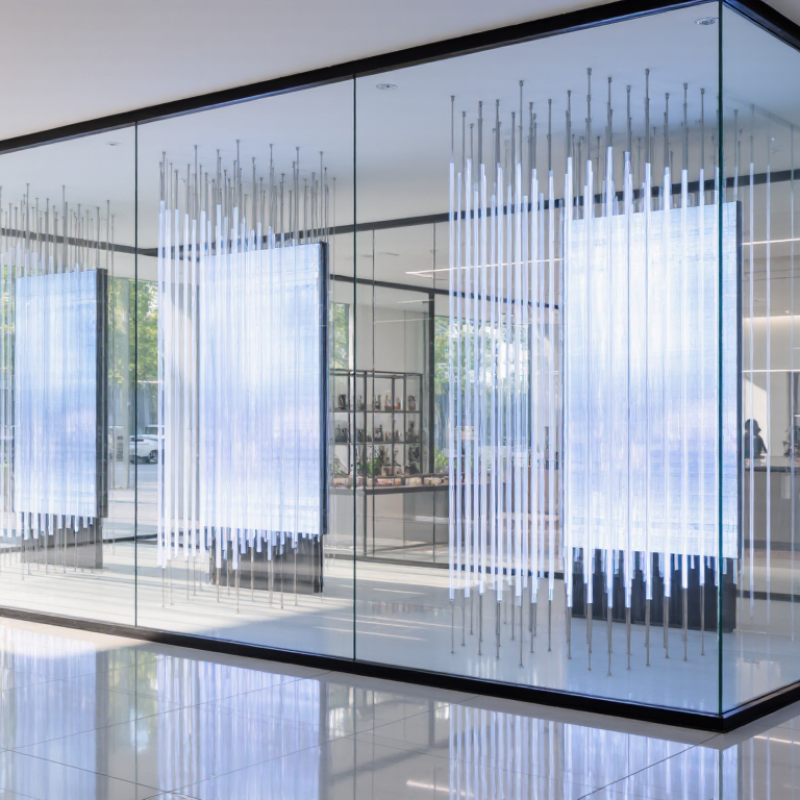
7 Best Transparent LED Displays for Buyers in 2026

Understanding Transparent LED Display Technology

Transparent LED displays use light-emitting diodes mounted on narrow bars or a mesh, leaving gaps for daylight and sightlines. Light still passes through. Their transparency depends on LED spacing, support structure, and viewing angle—not just a headline percentage. Wider gaps can preserve a storefront view, but may make close-up images look less continuous. Pixel pitch matters. A tighter pitch improves detail, while often increasing cost and reducing light transmission.

The technology suits glass façades, shop windows, and other places where a solid screen would block the view. Buyers should compare brightness in the actual installation, especially near sunlit windows. They should also check viewing distance, pixel pitch, maintenance access, and how the display handles heat. MarketsandMarkets’ Transparent Display Market report estimated the overall market at USD 4.6 billion in 2024, with a forecast of USD 10.9 billion by 2029. This covers transparent display technologies broadly, not LED products alone. Market forecasts indicate interest, not guaranteed performance or sales.

Tips: Ask for a full-size sample and view it from inside and outside. Test it with real content, including small text and dark scenes. Measure visible light transmission under site conditions; manufacturer figures may use different test methods. One detail is easy to miss: a display can look impressive in a showroom yet feel too sparse on a bright street.

Key Specifications Buyers Should Compare in 2026

A transparent LED display can look impressive in a showroom and disappoint beside a bright window. Compare brightness in nits, but ask how it was measured and at what operating level. Check pixel pitch against viewing distance: finer pitch usually helps nearby viewers, while distant signage may not need it. Numbers need context.

Look beyond the transparency percentage. A higher figure may preserve more of the view, yet reduce image density or perceived contrast. Ask for a sample video under lighting similar to your site. Compare refresh rate, grayscale performance, viewing angle, and color consistency; request test footage if possible. Also check panel weight, module dimensions, power use, cooling needs, and access for repairs. Installation details can change the real cost, and specification sheets do not always describe them clearly.

Tips: Stand at the actual viewing distance and inspect both bright and dark content. Confirm brightness after calibration, not only at maximum output. Record the required service access and mounting limits before ordering. I would not choose by transparency alone; that shortcut is tempting, but often incomplete.

Seven Leading Transparent LED Displays: Features and Differences

7 Best Transparent LED Displays for Buyers in 2026

Seven leading transparent LED displays serve different spaces. Cabinet panels suit larger façades and offer structured installation. Mesh screens are lightweight, with open gaps that preserve airflow and sightlines. LED film is thin and can fit glass, but surface condition matters. Glass-integrated modules provide a cleaner built-in look, though planning may take longer. Strip-style displays create bold lines for retail windows. Curved units follow rounded architecture but need careful alignment. Interactive transparent screens add touch response; reflections can still affect use. These are formats, not a quality ranking.

Tips: Ask for a sample viewed from both sides. Check pixel pitch, brightness, viewing distance, service access, and how the display looks in daylight. Small details matter.

A bright showroom demo can mislead. Compare displays under the lighting conditions they will actually face, and request clear power and maintenance figures. Check whether supports block the view, and confirm the glass can bear the installation load. Specifications help, but they do not tell the whole story. A short on-site test is often worth the extra effort.

Choosing a Display for Your Space and Application

Choosing a transparent LED display starts with the room. Measure the glass area, viewing distance, daylight, and sightlines before comparing pixel pitch. A bright retail window needs enough output to compete with sunlit reflections; a lobby screen may need finer detail for viewers standing close. Check what sits behind the display, too. Shelves, window frames, and cables can interrupt the image.

AVIXA’s 2024 Industry Outlook and Trends Analysis projects global professional audiovisual revenue will reach $325 billion by 2029. That growth signals more display choices, but it does not make every specification suitable for every site. The IEA’s 2023 Global Status Report for Buildings and Construction says the sector accounted for 34% of global energy demand in 2022. For a large installation, compare power draw, heat output, and operating hours—not just brightness.

Small details matter. Ask for a sample panel and view it from the actual audience distance, both in daylight and after dark. Confirm mounting depth, ventilation clearance, service access, and how the structure handles glass movement. One easy-to-miss issue: transparency percentages alone do not predict how clear a window will look once cables and framing are installed. I would treat the first layout as a test, not a promise; real façades often expose assumptions that drawings miss.

7 Best Transparent LED Displays for Buyers in 2026 — Choosing a Display for Your Space and Application

Typical transparency varies with pixel pitch, LED spacing, and product construction. The figures below are approximate midpoint estimates for comparing display formats—not guaranteed specifications for a particular product.

Use transparency as a starting point: also compare viewing distance, brightness, installation constraints, and content needs before choosing a display.

Installation, Maintenance, and Long-Term Ownership Costs

A transparent LED display costs more than its panels. Installation depends on the glass surface, mounting method, and access to power. Measure window bays carefully, including mullions and door clearances. A few centimeters can change module layout and cable routes. Check the supporting structure with a qualified installer before ordering. The screen may look light, but its frame, wiring, and service access still need planning. Site surveys are worth the time.

Installation costs can rise when crews need lifts, after-hours access, or custom brackets. Bright street-facing locations may also need higher output, which can increase electricity use. Ask for power estimates at typical brightness, not only maximum output. Small details matter. Leave room behind or beside the display for ventilation and repairs; a beautiful, tightly fitted screen can be awkward to service.

Long-term ownership includes cleaning, replacement modules, labor, energy, and possible downtime. Dust the accessible surfaces gently, and follow the supplier’s cleaning instructions rather than using harsh chemicals. Keep compatible spare modules on site if quick repairs matter. Review warranty coverage, response times, and whether labor is included. A tidy quote can still miss future access costs. Compare expected costs over several years, then revisit the assumptions: operating hours and repair needs are rarely exact.

7 Best Transparent LED Displays for Buyers in 2026 — Installation, Maintenance, and Long-Term Ownership Costs

A practical comparison of transparent LED display types by typical application, technical characteristics, installation needs, and indicative five-year costs. Recommendations depend on the building, viewing distance, daylight exposure, and local installation requirements.

Rank Display Type Best-Fit Application Typical Transparency Typical Pixel Pitch Typical Brightness Installation Considerations Maintenance Profile Indicative Installed Cost
(USD/m²)
Indicative Annual Maintenance
(USD/m²)
Estimated 5-Year Ownership Cost
(USD/m²)
1 Transparent LED mesh Large exterior façades, atriums, and architectural media walls About 40–70% Approximately 6–20 mm About 4,000–8,000 nits; project-dependent Requires engineered mounting, wind-load review, safe access for servicing, and weather-appropriate electrical connections. Inspect fixings, cables, power supplies, and modules regularly. Exterior dust and weather exposure can increase cleaning and service needs. $1,200–$3,500 $50–$150 $1,450–$4,250
2 Transparent LED film Retail windows and glass partitions where low visual obstruction is important About 80–95% Approximately 3–10 mm About 1,000–4,000 nits, depending on model and conditions Glass must be clean, smooth, and suitable for the film. Confirm visibility in direct sunlight and plan cable routing at the window edge. Use manufacturer-approved cleaning methods. Film damage or adhesive issues may require specialist repair or panel replacement. $1,500–$4,500 $60–$180 $1,800–$5,400
3 Glass-mounted transparent LED modules Storefronts and commercial glazing requiring a modular, serviceable installation About 50–80% Approximately 3.9–10 mm About 2,500–5,500 nits Needs a compatible mounting system, careful alignment, and access for module removal. Check glass loading, reflections, and heat management. Replaceable modules can simplify repairs, but connectors and mounting points should be checked during routine inspections. $1,800–$5,000 $70–$200 $2,150–$6,000
4 Cabinet-based transparent LED Permanent indoor installations, lobbies, and high-visibility retail displays About 55–75% Approximately 2.8–10 mm About 1,000–4,000 nits Plan for a rigid support frame, accurate cabinet leveling, ventilation, power distribution, and rear or front service access. Cabinet construction supports organized servicing. Keep spare modules and power supplies available for quicker repairs. $2,000–$6,000 $80–$220 $2,400–$7,100
5 Fine-pitch transparent LED Close-viewing environments such as premium retail, showrooms, and corporate spaces About 40–70% Approximately 1.5–3.9 mm About 800–2,500 nits Requires precise installation and calibration. The closer viewing distance makes flatness, alignment, and content resolution especially important. Pixel-level faults may be more noticeable at close range. Allow for calibration, careful cleaning, and access to compatible replacement modules. $4,000–$10,000 $150–$400 $4,750–$12,000
6 Outdoor high-brightness transparent LED Sunlit storefronts and exterior-facing glazing with demanding ambient-light conditions About 40–70% Approximately 6–16 mm About 4,000–7,000 nits Verify sunlight readability, weather protection, drainage, wind exposure, and local permitting. Higher brightness can increase energy demand. Plan for periodic weather-related inspections and cleaning. Service access and replacement parts should be considered before installation. $2,500–$7,000 $100–$300 $3,000–$8,500
7 Rental transparent LED panels Temporary events, exhibitions, product launches, and touring installations About 50–75% Approximately 3.9–10 mm About 3,000–5,000 nits Designed for repeated assembly, but requires compatible rigging, trained technicians, transport protection, and a check of the venue’s load limits. Frequent handling increases the importance of connector checks, module testing, and protective storage. Ownership costs depend heavily on utilization. $2,000–$5,500 $100–$350 $2,500–$7,250

Cost and specification notes: Figures are indicative planning ranges in USD per square meter, not supplier quotations. Installed cost includes an assumed display and basic mounting and installation; actual costs vary with project size, region, structural work, controls, access equipment, and electrical scope. Five-year ownership cost is estimated as installed cost plus five years of the stated annual maintenance allowance. Electricity, content production, network services, taxes, financing, major structural upgrades, and end-of-life disposal are excluded. Transparency, pixel pitch, brightness, and service requirements vary by product and configuration; confirm project-specific specifications and warranties before purchase.