
China Top 10 Zinc Die Cast Parts Manufacturers?
China has a large and varied zinc die casting industry, but choosing a supplier takes more than comparing company names. This guide to China’s top 10 Zinc Die Cast Parts manufacturers highlights the capabilities and questions buyers should examine before requesting a quote. A small housing, hinge, or connector may look simple. Its performance can depend on alloy selection, die design, wall thickness, and post-casting machining.
Details matter. Ask whether a manufacturer can share examples of similar components, explain its inspection process, and provide clear information about tolerances and surface finishes. Check how it handles tooling changes, sample approval, and production schedules. A polished website is not proof of consistent quality. Neither is a low unit price.
The companies featured in this overview should be treated as candidates for evaluation, not as a guaranteed ranking for every project. Requirements differ. A high-volume order may call for different equipment and planning than a short production run. Buyers should compare relevant experience, communication, quality records, and the full delivered cost. Request drawings-based quotations and inspect samples where practical. For demanding applications, confirm that testing and documentation match the part’s intended use. One limitation is worth noting: public information may not reveal a factory’s current capacity or recent quality performance. A shortlist is only a start. Careful verification can help turn it into a reliable sourcing decision.
What Zinc Die-Cast Parts Are: Alloys, Processes, and Applications
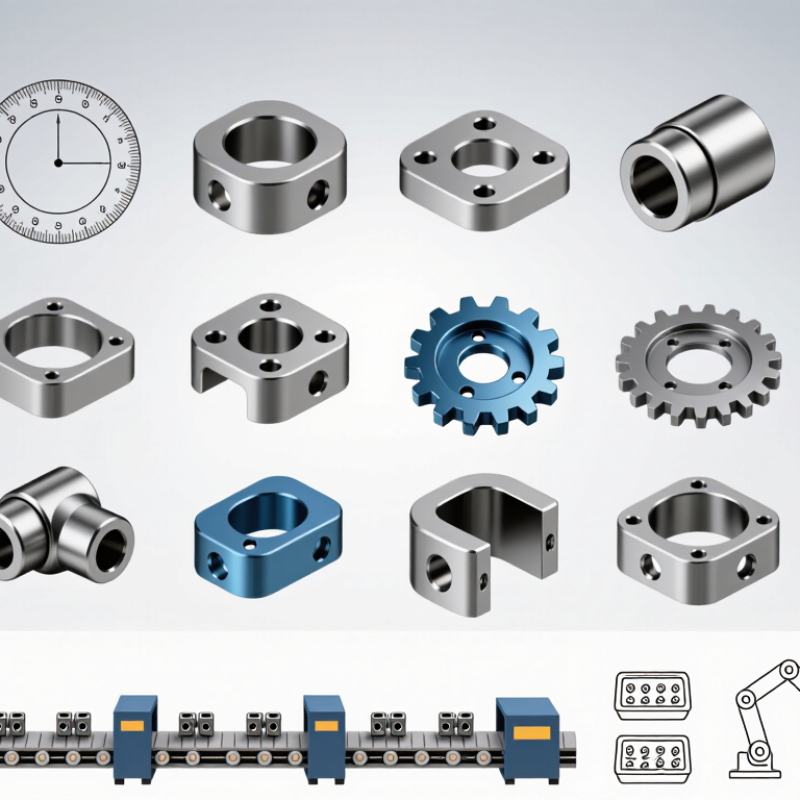
Zinc die-cast parts are metal components formed by forcing molten zinc alloy into a reusable steel mold. Common alloys contain zinc with small amounts of aluminum, magnesium, or copper. Their exact composition affects strength, hardness, and corrosion behavior, so specifications matter. The process often uses hot-chamber machines, which suit zinc’s relatively low melting temperature. Fast cycles can produce detailed shapes, thin walls, and consistent dimensions. Still, a clean-looking part is not automatically defect-free. Porosity and uneven wall thickness may affect performance.
Tips: Check the alloy grade, wall thickness, and dimensional tolerances before production. Ask for sample parts and inspection data. Small details matter.
These components appear in electrical housings, appliance fittings, automotive hardware, and door mechanisms. Zinc’s fluidity helps form fine ribs, threaded features, and smooth surfaces, sometimes reducing later machining. Plating or coating can improve appearance and surface protection, but the finish should match the part’s working environment. For example, a component exposed to moisture needs different evaluation from one used indoors. Tooling also requires careful design: sharp corners and abrupt thickness changes can complicate filling. A practical review of the drawing and intended use can reveal issues early. The process is efficient, but it is not a universal fit for every part.
Zamak 3 Melts at About 381–387°C: Key Material Properties
Zamak 3 is a widely used zinc alloy for pressure die casting, with a reported melting range of about 381–387°C. That range matters. It describes the transition from solid to liquid, not a recommended machine setting. In production, the melt is held above this interval to flow through the shot sleeve and fill thin ribs. The exact temperature depends on equipment and part design.
Zinc’s relatively low melting temperature can reduce thermal load on dies compared with many higher-melting alloys. This can support repeatable cycles and fine details. Zamak 3 also offers useful dimensional stability and a smooth cast surface, though results depend on die temperature, venting, and process control. Small pores may still appear. They can complicate plating or other finishing, so visual inspection alone is not enough.
When evaluating a manufacturer, ask for alloy identification, melt-temperature records, and inspection criteria for critical dimensions. A temperature reading can mislead if the probe is poorly placed or uncalibrated. I would not treat 381–387°C as a universal operating target; it is a material reference range, and published values vary slightly. That distinction is easy to overlook.
China’s Top 10 Zinc Die-Cast Parts Manufacturers and Their Capabilities
China’s leading zinc die-cast manufacturers vary in equipment, engineering support, and production scale. A useful top-ten comparison should look beyond quoted prices. Check whether a supplier can review part geometry, recommend draft angles, and identify thin sections before tooling begins. These steps can reduce porosity and improve consistency. Small details matter.
Many established factories use hot-chamber die casting for zinc components, then add trimming, drilling, tapping, or precision machining. Their capabilities may also include polishing, plating, powder coating, and assembly. Ask for sample parts that show the actual finish and tolerance range, not just a polished catalogue image. Quality checks should cover dimensions, surface defects, and batch consistency. Request inspection records for the features that affect fit.
Some suppliers manage tooling and production in-house; others rely on outside partners for finishing or secondary operations. That difference can affect lead time and make responsibility harder to trace. A factory visit or a detailed process review helps clarify who controls each step. Rankings can change with product type and order volume, so “top ten” is not a fixed technical measure. Even careful comparisons leave room for doubt. Use drawings, samples, and documented process details to judge whether a manufacturer fits the part.
China’s Top 10 Zinc Die-Cast Parts Manufacturers and Their Capabilities
The table below provides practical capability benchmarks for evaluating zinc die-casting suppliers. It does not rank or identify individual companies; actual capacity, tolerances, and available services vary by factory, part design, and production conditions.
| Capability Area | Typical Industry Capability | What Buyers Should Verify |
|---|---|---|
| 01. Zinc alloys | Common die-casting alloys include Zamak 3 and Zamak 5. Alloy selection affects strength, ductility, and casting behavior. | Confirm the specified alloy, applicable material standard, and whether material certificates or composition reports are available. |
| 02. Part complexity | Zinc alloys can be used for detailed, thin-walled components and parts with features such as ribs, bosses, and lettering, subject to tooling and design limits. | Review draft angles, wall transitions, gate locations, ejector marks, and achievable detail with the supplier’s tooling team. |
| 03. Dimensional tolerances | Tolerances depend on part size, geometry, tooling, and measurement method; there is no single tolerance suitable for every zinc casting. | Request a drawing-based tolerance review and agree on critical dimensions, inspection methods, and acceptance criteria before tooling. |
| 04. Production volumes | Die casting is generally suited to repeat production because dedicated dies require upfront investment; economic volume depends on part and tooling costs. | Compare expected annual demand, tooling life assumptions, cycle time, and pricing at different order quantities. |
| 05. Tooling and die design | Production typically uses reusable metal dies. Die design, cooling, venting, and maintenance influence casting quality and tool life. | Clarify tool ownership, design approval, maintenance responsibilities, expected lead time, and arrangements for spare or replacement inserts. |
| 06. Secondary machining | Drilling, tapping, trimming, and other machining operations may be used when the casting alone cannot meet feature or assembly requirements. | Confirm which operations are performed in-house, how fixtures are controlled, and how machined features are inspected. |
| 07. Surface finishing | Available finishing routes may include polishing, plating, painting, or powder coating, depending on the component and its end use. | Specify finish, appearance limits, coating thickness where relevant, corrosion requirements, and any applicable restricted-substance requirements. |
| 08. Quality inspection | Typical controls can include visual inspection, dimensional checks, process monitoring, and sampling plans; inspection scope varies by supplier and order. | Ask for the control plan, measurement equipment list, calibration records, sample inspection reports, and traceability arrangements. |
| 09. Defect prevention | Process controls are used to manage risks such as porosity, flash, incomplete filling, and surface defects. Results depend on process setup and part design. | Review the supplier’s defect criteria, corrective-action process, process-change controls, and procedures for handling nonconforming parts. |
| 10. Engineering and validation support | Supplier support may include design-for-manufacture feedback, prototype coordination, dimensional validation, and production-launch assistance. | Agree on design reviews, sample approval stages, required documentation, change control, and the contact responsible for resolving technical issues. |
Use these benchmarks as a supplier-evaluation checklist rather than as guaranteed specifications. Confirm all material, dimensional, finishing, quality, and delivery requirements in writing for the specific part.
How to Compare Manufacturers: Tooling, Tolerances, and Quality Controls
Comparing zinc die cast parts manufacturers in China starts with the tooling, not the brochure. Ask who owns the die, how many cavities it uses, and what maintenance schedule is planned. Request a tool-flow review, sample inspection records, and clear terms for repairs and expected tool life. Details matter.
Then compare tolerance claims with your drawing. A quoted ±0.05 mm means little unless the supplier identifies measurement points, gauge methods, and capability for critical features. Ask for dimensional reports from several points in a production run, not just a polished first sample. Check thin walls, shut-off lines, and threaded bosses; these areas can reveal variation early. A CMM report helps, but it cannot replace a sound sampling plan. Not just once.
Quality controls should be visible and documented. Look for alloy certificates, melt-temperature logs, first-piece approval, and checks for porosity, flash, and surface defects. Ask how nonconforming parts are isolated and corrective actions verified. A small trial order can reveal communication gaps, though it cannot predict every production issue. I would also revisit the tolerance stack after assembly. It is easy to miss when reviewing a fast quote. Compare traceability and measurement consistency alongside unit price.
Choosing a Supplier by Industry, Production Scale, and Certification Needs
China Top 10 Zinc Die Cast Parts Manufacturers?
Choosing a zinc die casting supplier starts with the part’s working conditions. A small decorative fitting has different needs from a hinge exposed to repeated force. Share the drawing, annual volume, tolerance requirements, and surface finish before comparing quotes. Ask how the supplier controls alloy composition, die temperature, and porosity. These details affect consistency, not just appearance.
Match capacity to demand. A high-volume program may need automated trimming, stable cycle times, and documented inspection records. A lower-volume project may benefit more from flexible tooling and clear sampling plans. Check whether the supplier can provide dimensional reports and material records relevant to your quality system. Certifications can help, but verify their scope and validity; a certificate alone does not prove that a specific process is well controlled. A tidy audit checklist can still miss problems on the production floor.
Tips: Request sample parts made with the proposed tooling. Inspect thin walls, threads, edges, and coating uniformity. Ask what happens when a batch fails. Get the answer in writing.
