Why Choose a Remote Condensing Unit for Your Business Needs?
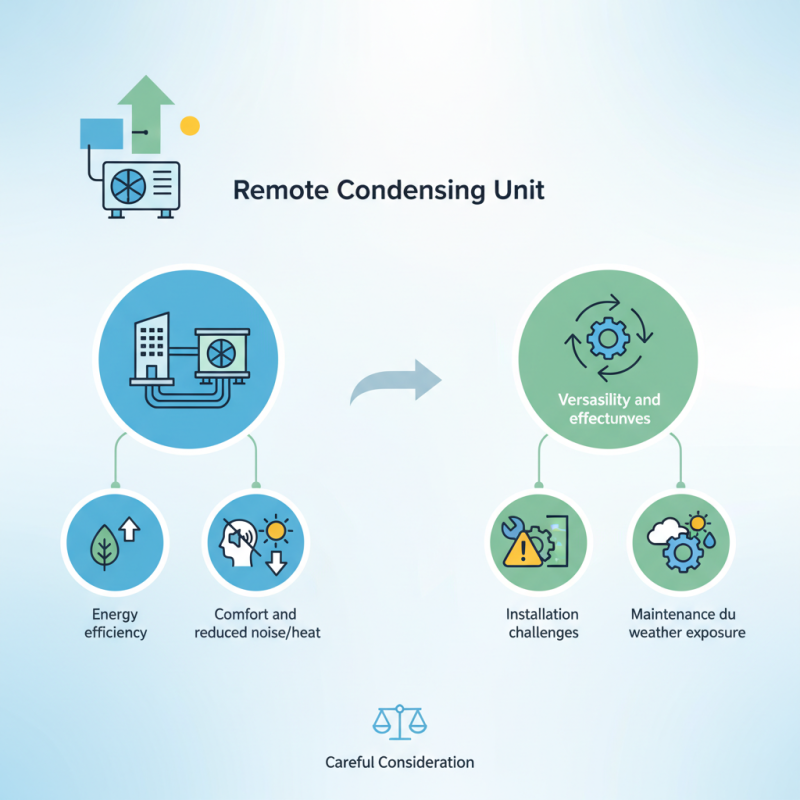
In today's competitive market, businesses need efficient cooling solutions. A Remote Condensing Unit can be a game-changer for various industries. This unit stands out due to its versatility and effectiveness.
Using a Remote Condensing Unit often reduces energy costs. It operates outside the building, minimizing noise and heat indoors. This design enhances comfort for employees and clients alike. Businesses can focus more on their core activities without distraction.
However, not every setup is perfect. Installation could present challenges based on building design and layout. Maintenance requires attention, as outdoor components are exposed to weather conditions. Choosing a Remote Condensing Unit is a decision worth careful consideration. It's essential to weigh the pros and cons before making the switch.
Advantages of Remote Condensing Units in Energy Efficiency
Remote condensing units are increasingly favored for their energy efficiency. According to the U.S. Department of Energy, implementing energy-efficient systems can lead to a 20-30% reduction in energy costs. This is crucial for businesses aiming to lower operational expenses while maintaining performance.
Remote condensing units eliminate heat from the refrigerant in a separate location. This design stabilizes indoor temperatures and reduces the workload on HVAC systems. A report by the International Institute of Refrigeration indicates that optimized heat dissipation can improve system efficiency by up to 15%. Moreover, they use less energy compared to traditional systems.
Tip: Regular maintenance can enhance efficiency. Keep the condenser coils clean to ensure optimal heat exchange.
Businesses should also consider the environmental impact. Energy-efficient options contribute to lower carbon footprints. By choosing these systems, it's possible to align with sustainability goals. Balancing cost and efficiency becomes crucial here; not all solutions fit every business need.
Tip: Evaluate your energy consumption regularly. This helps identify potential savings and improve planning for upgrades.
Comparison of Initial Costs vs. Long-Term Savings in Cooling Systems
When considering a cooling system, the initial costs often take center stage. Remote condensing units may require a higher upfront investment compared to traditional systems. However, this perspective can be misleading when assessing long-term savings. These units often boast higher energy efficiency, leading to lower energy bills over time. Many businesses overlook this aspect, focusing solely on short-term costs.
Tips: Look for units with higher SEER ratings. They might have a steeper price initially, but they pay off in energy savings.
Additionally, remote condensing units typically require less maintenance. This means businesses can save on repair costs. Regular maintenance fees can add up quickly with traditional systems. It’s important to evaluate not just the purchase price but also potential savings. Some companies might hesitate due to the initial expense. However, weighing this against future savings can reveal a more favorable scenario.
Tips: Consider total cost of ownership over time, not just upfront costs. A slightly higher initial investment can lead to substantial savings down the road.
Application of Remote Condensing Units in Various Industries
Remote condensing units (RCUs) are increasingly utilized across various industries. They excel in refrigeration processes, providing efficient cooling solutions. The food and beverage sector stands out with its significant reliance on RCUs. According to a recent report, about 35% of the industry professionals favor environmental-friendly cooling systems. RCUs meet this demand, as they often use natural refrigerants, lowering greenhouse gas emissions.
In the retail sector, refrigeration accounts for nearly 60% of energy consumption. Businesses that adopt RCUs can reduce energy costs by up to 30%. Their design allows for easier maintenance and improved airflow, reducing downtime. This efficiency translates to more savings and better service for customers.
Tip: Regular maintenance of relevant components in RCUs can significantly extend their lifespan. Proper inspections can identify potential issues early.
Furthermore, the pharmaceutical industry is adopting remote condensing units for temperature-sensitive products. Compliance with stringent guidelines necessitates reliable and accurate temperature control. RCUs have gained traction here because of their ability to maintain critical temperatures, ensuring product integrity.
Tip: Consider integrating real-time monitoring systems with your RCUs. This enhances accountability and helps track temperature changes promptly.
Why Choose a Remote Condensing Unit for Your Business Needs? - Application of Remote Condensing Units in Various Industries
| Industry | Application | Advantages of Remote Condensing Units |
| Food and Beverage | Cooling storage and refrigeration systems | Energy efficiency, space saving, and lower noise levels |
| Pharmaceuticals | Temperature-controlled environments | Reliable performance and reduced heat impact on sensitive materials |
| Hospitality | Chilled water systems for HVAC | Quiet operation, flexibility in design, and improved aesthetics |
| HVAC | Commercial building climate control | Lower costs and better energy utilization |
| Retail | Refrigeration for perishable goods | Reduced energy consumption and enhanced cooling effectiveness |
Impact of Remote Condensing Units on Environmental Sustainability
Remote condensing units (RCUs) are increasingly recognized for their role in promoting environmental sustainability. By transferring heat away from the cooled space, RCUs operate more efficiently than traditional units. According to a 2022 report from the International Energy Agency, energy efficiency improvements in cooling technology can reduce global energy demand by up to 20%. This shift directly supports climate goals by lowering greenhouse gas emissions.
Additionally, RCUs typically use refrigerants with lower global warming potential. This change aligns with the ongoing phase-out of high-GWP refrigerants mandated by international agreements, such as the Kigali Amendment. A study conducted by the Environmental Protection Agency noted that switching to low-GWP options could decrease emissions by millions of metric tons each year.
However, adopting remote condensing units is not without challenges. Some businesses may face higher upfront costs and installation complexities. There is also the need for ongoing maintenance and skilled technicians. Transitioning to more sustainable options requires careful planning and investment, making it a crucial consideration for businesses aiming for long-term viability.
Future Trends in Remote Condensing Unit Technology and Performance
Remote condensing units (RCUs) are becoming increasingly popular due to their efficiency and flexibility. As technology evolves, future trends indicate that these units will see significant improvements. According to a recent report by the International Institute of Refrigeration, the global market for RCUs is expected to reach $7 billion by 2026. This growth highlights a shift towards more sustainable and efficient cooling solutions in various industries.
Improved efficiency is a key trend. Next-generation RCUs are being designed to reduce energy consumption by as much as 30%. This reduction is achieved through advanced heat exchange designs and the use of natural refrigerants, which are less harmful to the environment. Manufacturers are also integrating IoT technology to provide real-time monitoring and predictive maintenance, helping businesses optimize performance and minimize downtime.
Tip: Regularly assess your cooling needs. Technology changes rapidly, and what was efficient yesterday may not be today. Stay informed.
Another trend is the focus on
noise reduction. As remote condensing units operate outdoors, noise levels can impact nearby environments. New designs are prioritizing
quieter operations without sacrificing performance. Innovations like sound-dampening enclosures are emerging, making these units suitable for more locations.
Tip: Explore various installation options. Strategic placement can help reduce noise pollution while maintaining cooling efficiency.