
How to Choose Cash Handling Equipment in 2026
Cash has not disappeared; it has become a more deliberate part of payment operations. The Federal Reserve’s 2024 Diary of Consumer Payment Choice reports that cash accounted for 16% of U.S. consumer payments in 2023. Worldpay’s Global Payments Report 2025 estimates that cash represented 15% of global in-store transaction value in 2024. The measures differ, but both show why retailers, banks, and hospitality teams still need reliable cash processes. Still, cash matters.
Choosing Cash Handing Equipment in 2026 is not simply a matter of buying the fastest counter. Daily transaction volume, note and coin mix, storage capacity, staff workflow, and service support all shape the right choice. A busy checkout may need a compact note counter with counterfeit-detection features. A cash office handling mixed tills may benefit more from a sorter, recycler, or secure deposit system. Small details matter.
This guide explains how to compare equipment by actual workload, not attractive specifications alone. It will cover counting accuracy, verification features, capacity, integration, maintenance, and total cost of ownership. Check whether the machine handles your most common denominations and fits the counter or back-office space available. No machine is magic. A rushed purchase can still create queues, extra recounts, or awkward handoffs. And forecasts can be wrong. Use current transaction records, supplier demonstrations, and documented service terms to make a decision your team can review and adjust.
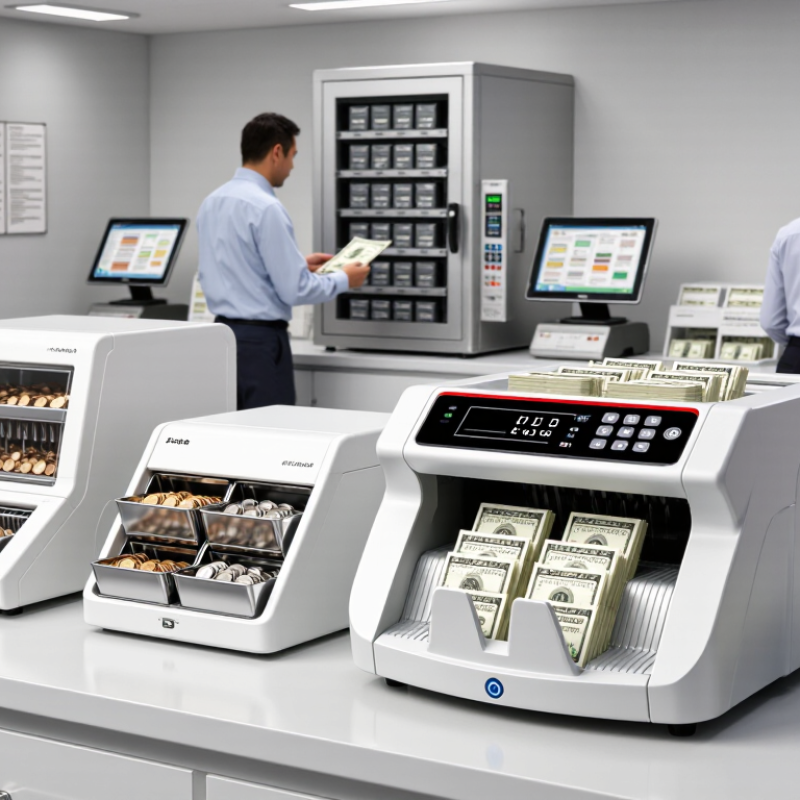
Define Cash Handling Needs and Transaction Volumes
Before choosing cash counters, recyclers, or deposit equipment, map how money moves through each shift. Record average daily receipts, peak-hour transactions, and the largest cash balance held on site. A café may process many small notes and coins at lunch, while a clinic may handle fewer, larger payments. These patterns affect counting speed, storage capacity, and how often staff replenish change. Measure real peaks, not just monthly averages.
Track denominations, till counts, cash pickups, and time spent reconciling each register. Note where delays happen: a queue at closing, a full coin tray, or repeated trips to a safe. Small details matter. If several employees share tills, choose a process that records handoffs clearly and reduces manual recounts. If cash volume rises on weekends or during seasonal events, plan for those peaks without making ordinary shifts cumbersome.
Forecasts can miss local habits. Equipment that looks efficient on paper may still interrupt the workflow. Test your estimates against several weeks of shift data, then ask cash handlers where the process feels slow or error-prone. A brief observation during a busy shift may reveal needs that transaction totals alone do not show.
Assess Equipment Types, Features, and Compatibility
Choosing cash handling equipment starts with the work it must do. A small counter may need a bill counter and a lockable cash drawer. A busy checkout area may benefit from a coin sorter, counterfeit-detection tools, or a cash recycler. Match equipment to daily cash volume, peak-hour queues, and staff needs. Not just speed.
Features matter when they reduce specific errors. Look for clear jam alerts, adjustable counting modes, batch settings, and readable displays. If staff handle mixed denominations, check that the device identifies and totals them reliably. Test it first. Use worn notes and coins your team actually receives. A fast machine that needs frequent resets can slow the line. Small detail, big effect. Ask about cleaning, consumables, service access, and simple jam recovery.
Compatibility is easy to overlook. Check drawer dimensions, power needs, network connections, and data exchange with existing checkout or accounting systems. Confirm supported file formats and workflow steps, then run a trial during a normal shift. A specification sheet cannot reveal every awkward handoff. Record setup time and error rates for a week; those results may challenge the original choice. Leave room for growth, but avoid paying for capacity you will not use.
Compare Security, Accuracy, and Workflow Benefits
How to Choose Cash Handling Equipment in 2026
Choosing cash handling equipment means balancing security, accuracy, and the pace of daily work. Start with your busiest shift, not an average day. A counter that processes a few notes each minute may struggle during a lunch rush. Compare counting speed with tested accuracy, and check how the machine flags suspect or unreadable notes. Ask how errors are cleared and whether staff can review transaction records. Useful controls include individual logins, restricted drawer access, and clear audit trails.
Workflow matters just as much. A cash recycler may reduce trips to a secure room, while a compact counter may suit a small checkout area. Measure the counter space, note where staff stand, and map how cash moves from drawer to safe. Then test equipment with your own team and typical cash volumes. No setup is perfect; a faster machine can still slow work if its interface confuses staff. That detail is easy to overlook.
Tips: Check service intervals, jam-clearing steps, and training needs before purchasing. Record a short trial’s error rate and processing time. Compare those results with your current process, not just a sales estimate. Keep a little room for human mistakes.
Evaluate Costs, Support, and Regulatory Requirements
How to Choose Cash Handling Equipment in 2026
A purchase price rarely tells the whole story. Compare installation, maintenance, software fees, consumables, staff training, and expected downtime over several years. A low-cost counter may become expensive if it needs frequent servicing or slows busy shifts. Ask vendors for itemized quotes and a written service response time. Small details matter.
Support should fit your actual operating hours. If cash is counted after closing, check when help is available and how urgent faults are handled. Ask whether technicians can diagnose issues remotely, what parts are stocked locally, and how long repairs typically take. Test the equipment with your usual mix of notes and coins before committing. Real workflows can expose awkward steps that a showroom demo misses.
Regulatory requirements depend on location and business type, so verify them with relevant authorities or a qualified adviser. Check rules for cash records, audit trails, data protection, accessibility, and equipment safety. Keep clear documentation showing who counted, reconciled, and approved cash movements. Requirements can change. I would not assume last year’s checklist is still sufficient. Also consider staff feedback: a machine that is technically compliant but confusing may invite mistakes. Ask employees to try routine tasks, then review where instructions or controls need improvement.
How to Choose Cash Handling Equipment in 2026 - Evaluate Costs, Support, and Regulatory Requirements
| Equipment | Best Suited For | Relative Upfront Cost | Ongoing Costs and Support | Key Evaluation Checks | Regulatory and Operational Considerations |
|---|---|---|---|---|---|
| Cash drawer | Retail counters and other checkout points that need secure, organized storage for notes and coins. | Low | Check replacement-key procedures, lock durability, till compatibility, and the availability of repair parts. | Confirm the drawer fits the counter and point-of-sale setup; assess opening method, compartment layout, and access controls. | No general equipment-specific cash-handling certification applies in many jurisdictions. Follow workplace cash-control procedures and any local security requirements. |
| Banknote counter | Businesses that count batches of notes regularly, such as cash offices and high-volume tills. | Low to moderate | Account for cleaning, wear-part replacement, calibration or adjustment where specified by the manufacturer, and service availability. | Test counting accuracy with the note types and conditions used in daily operations. Check for batch, add, and error-detection functions if needed. | A counter verifies quantity, not value or authenticity by itself. Staff should reconcile totals and inspect exceptions under documented procedures. |
| Coin counter and sorter | Organizations that handle enough loose coin to make manual counting slow or error-prone. | Low to moderate | Consider routine cleaning, sorting-disc or belt wear, jam-clearing access, and the cost of service visits. | Check supported coin denominations, counting speed for the actual workflow, reject handling, and whether the unit also sorts or totals coin. | If coin is weighed or measured for a commercial transaction, applicable local weights-and-measures rules may apply. A simple coin-counting function does not, by itself, establish legal-for-trade approval. |
| Counterfeit-detection device | Cashiers and cash offices that need an additional check for suspected counterfeit notes. | Low to moderate | Check software or currency-update arrangements, sensor cleaning, warranty coverage, and the process for handling failed or uncertain checks. | Confirm supported currencies and note series, test the device using appropriate procedures, and ensure staff know how to verify security features manually. | Detection aids do not guarantee authenticity. Follow current guidance and reporting procedures from the relevant authorities; requirements differ by country and currency. |
| Cash recycler | High-volume locations that need to accept, validate, store, and dispense cash from one controlled unit. | High | Include installation, software or integration charges, preventive maintenance, service response times, consumables, and downtime arrangements. | Assess transaction volume, capacity, supported notes and coins, integration with accounting systems, access permissions, and audit-log functionality. | The machine does not replace applicable cash-control, recordkeeping, or anti-money-laundering duties. Those obligations depend on the organization, activity, and jurisdiction. |
| Smart safe or cash deposit unit | Businesses that want controlled deposits, transaction records, and fewer manual cash-counting steps before collection or bank processing. | Moderate to high | Compare purchase or rental terms, connectivity and software fees, maintenance coverage, cash collection arrangements, and support outside business hours. | Review deposit limits, user permissions, receipt and reporting features, connectivity reliability, installation needs, and the process for resolving discrepancies. | Clarify who is responsible for custody, reconciliation, and records at each stage. Insurance, cash-in-transit, and data-protection requirements may apply under local rules or contracts. |
Planning note: Cost bands are relative comparisons, not quoted prices. Actual costs depend on capacity, features, installation, service terms, and location. Confirm legal, tax, security, and recordkeeping requirements with the relevant authorities or a qualified adviser in your jurisdiction.
Select, Install, and Review Equipment for 2026 Needs
Choosing cash handling equipment for 2026 starts with actual transaction patterns, not a feature list. The Federal Reserve’s 2024 Diary of Consumer Payment Choice found that cash accounted for 16% of U.S. consumer payments in 2023. That share supports keeping cash workflows reliable, while reminding operators to size equipment for their own locations. A busy grocery counter and a small service desk have different needs. Fit matters.
Compare counters, sorters, and secure storage against daily volume, note mix, space, and staff routines. Look for clear exception alerts, accessible maintenance points, and reports that support end-of-day reconciliation. Confirm the machine handles the denominations and condition of notes your site regularly receives. Then map its footprint before delivery: a few centimeters can block a drawer or narrow a staff walkway. During installation, test ordinary and peak-period batches, train each shift, and document who clears errors. A fast machine is not useful if its process is confusing.
Review performance after installation, then at regular intervals. Track counting discrepancies, jams, service interruptions, processing time, and staff feedback. Compare results with the manual process rather than relying only on vendor specifications. If errors cluster around one shift, equipment may not be the cause; training or workflow could be. That is easy to overlook. Reassess capacity when payment patterns or opening hours change, and keep a small record of why settings were adjusted. Do not treat the first configuration as permanent.
