What Is an LED Light Panel and What Types Are There?
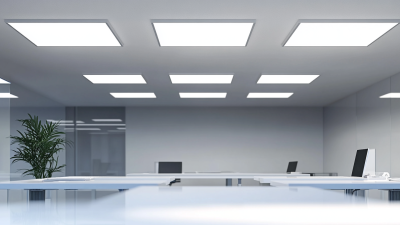
A Led Light Panel is a flat lighting device that produces broad, controlled illumination from a compact surface. It usually contains LEDs, a diffuser, a housing, and controls for brightness or color. Unlike a small point light, it spreads light across a wider area. This can soften facial shadows, reduce harsh reflections, and brighten workspaces more evenly.
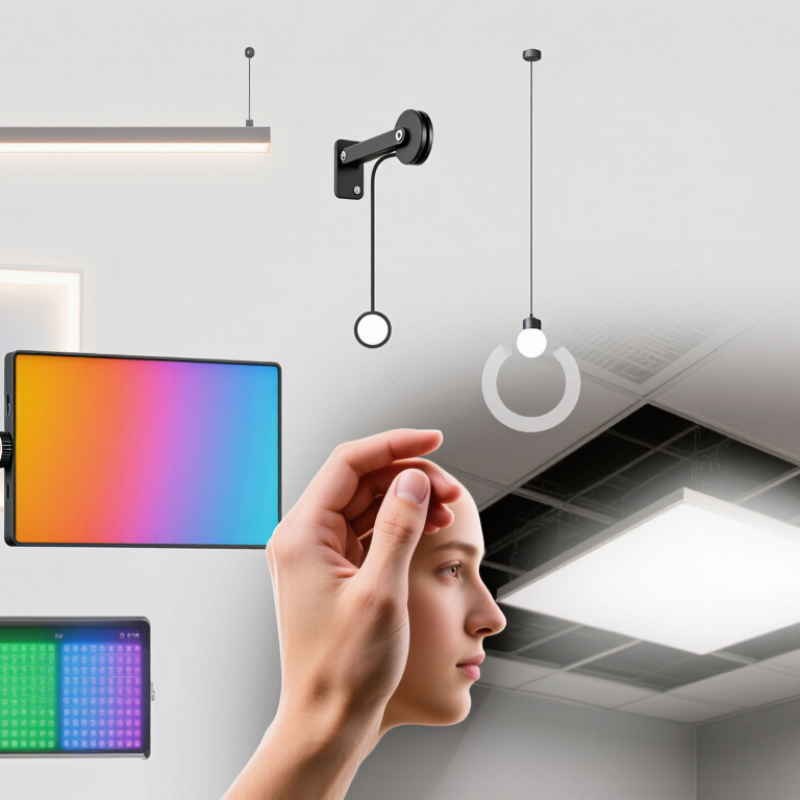
Several types serve different needs. Edge-lit panels place LEDs around the frame, creating a thin and lightweight design. Backlit panels position LEDs behind the diffuser, often delivering more consistent brightness across the surface. Photography panels may offer adjustable color temperature, such as warm tungsten tones or cooler daylight settings. RGB panels add colored light for creative backgrounds, while bi-color models blend warm and cool LEDs for flexible skin-tone control. Some office and architectural panels are designed for ceilings, not cameras, and their glare ratings deserve careful attention.
Details matter.
In practical use, panel size, brightness, beam spread, color accuracy, heat management, and mounting options affect the result. A bright panel is not automatically a better panel. Poor diffusion can still create distracting hotspots, and low color accuracy may make products or skin appear unnatural. Reliable testing should include real scenes, not only manufacturer charts. Professional users often compare output at a fixed distance and check flicker with suitable equipment. Even then, personal preference remains important. A panel that looks impressive in a showroom may feel awkward in a small room. This guide examines how Led Light Panel designs differ, where each type performs well, and which compromises deserve closer reflection.
Definition and Basic Structure of an LED Light Panel
What Is an LED Light Panel and What Types Are There?
An LED light panel is a flat lighting unit that produces light through many light-emitting diodes. Its basic structure is more layered than it appears. A typical panel includes an outer frame, a diffuser, an LED board, a heat-management layer, and a rear housing. The diffuser softens bright points and spreads light across the surface. The LED board supplies illumination, while the driver converts incoming electricity into a stable current. Without proper heat control, brightness may decline over time. Simple, but not risk-free.
Common structures include edge-lit and direct-lit panels. Edge-lit models place LEDs around the frame and guide light through a reflective plate. They are often thin and visually clean. Direct-lit panels position LEDs behind the diffuser, usually creating stronger depth and more even output.
Flexible panels use bendable materials, but their heat control can be less forgiving. In practical inspections, uneven brightness often reveals poor spacing, weak diffusion, or an aging driver. The panel may look fine at first.
Tips: Check the diffuser for yellowing or visible LED dots. Ask for measured brightness, color temperature, and flicker information. Confirm that the driver matches the panel’s voltage and installation method. A cooler housing is generally preferable, though temperature alone proves little. I would also inspect the frame and connectors, because small mechanical faults can affect long-term reliability. Avoid judging quality by thickness alone. Thin is not always better.
How LED Light Panels Produce and Distribute Light
An LED light panel is a flat luminaire that uses many light-emitting diodes behind or around a diffuser. Each diode converts electrical energy into light through electroluminescence. A driver regulates current, because LEDs can fail when voltage changes become excessive. The U.S. Department of Energy’s 2023 Solid-State Lighting R&D Opportunities report identifies laboratory LED efficacy above 200 lumens per watt, although complete panels deliver less. Optics, heat, wiring, and diffuser losses matter.
Most panels use either edge-lit or back-lit construction. Edge-lit models place LEDs along the frame and guide light across a thin plate. They are lightweight, but poor optical design can create brighter edges. Back-lit panels position LED boards behind the diffuser, producing more direct distribution. They usually need greater depth. Some panels combine direct and indirect output, sending light downward while washing the ceiling.
Distribution depends on lens shape, diffuser transmission, spacing, and mounting height. A narrow beam concentrates light on a desk, while a wide beam spreads it across a room. The Illuminating Engineering Society’s LM-79 testing method measures total lumens, color characteristics, and electrical input for complete solid-state luminaires. These measurements are more useful than diode specifications alone. No panel is perfectly uniform. Even a well-tested product may show subtle corners, glare, or color shifts. That is where real installation experience still matters. When comparing panels, review measured lumens, efficacy, color rendering, flicker, and beam distribution rather than relying on wattage alone.
Main Types of LED Light Panels
An LED light panel is a flat fixture containing many light-emitting diodes. It produces broad, even illumination from a thin housing. The main types differ in diode placement, color control, and intended use. Edge-lit panels place LEDs around the frame, guiding light through a diffuser. They stay slim and often distribute light smoothly. Direct-lit panels place LEDs behind the diffuser, usually creating stronger output and easier maintenance.
Color temperature is another important category. Fixed-daylight panels provide a consistent cool-white appearance for offices, workshops, or video backgrounds. Bi-color panels let users adjust between warm and cool white. This helps match window light or existing lamps. RGB panels create colored light, while RGBW models add a dedicated white diode for more natural illumination. Color accuracy still depends on measured output, not appearance alone.
There are also soft panels and high-output panels. Soft panels use deeper diffusion to reduce harsh shadows on faces and reflective surfaces. High-output models suit large rooms, studio sets, or situations requiring longer throw. In practice, panel size changes the softness of shadows. A small panel close to a subject can look softer than a large panel placed far away. That detail is easy to miss. I have also found that low brightness can expose uneven diffusion or weak color consistency. Checking flicker performance, heat management, mounting options, and measured color accuracy is wiser than judging the panel by brightness alone.
What Is an LED Light Panel and What Types Are There? - Main Types of LED Light Panels
| LED Light Panel Type | How It Produces Light | Typical Light Distribution | Common Applications | Main Advantages | Typical Limitations |
|---|---|---|---|---|---|
| Edge-Lit LED Panel | LEDs are positioned around the edge of a light guide plate, which distributes light across the panel surface. | Broad, soft, and relatively uniform illumination. | Offices, classrooms, retail interiors, corridors, and suspended ceiling systems. | Slim profile, low visual glare when properly diffused, and efficient use of ceiling space. | Light-guide quality is important; uneven illumination or edge brightening can occur in lower-quality designs. |
| Direct-Lit LED Panel | LEDs are arranged behind a diffuser and emit light directly toward the illuminated surface. | Wide distribution with brightness controlled by the LED layout, optical system, and diffuser. | Commercial ceilings, warehouses, workshops, offices, and general indoor lighting. | Generally simpler construction, good thermal access, and often easier maintenance. | Usually thicker than edge-lit panels; poor spacing or diffusion can create visible hotspots. |
| SMD LED Panel | Surface-mounted LED packages are placed on a circuit board and combined with a diffuser or optical layer. | Uniform area lighting when the LEDs and diffuser are properly matched. | Office panels, residential fixtures, retail lighting, and general-purpose luminaires. | Flexible design options, widely available components, and good control over color temperature and output. | Performance depends strongly on the LED package, driver, thermal design, and diffuser quality. |
| COB LED Panel | Multiple LED chips are mounted closely together on a common substrate, forming a compact light-emitting surface. | High-intensity, concentrated output that may require optics or diffusion for broad illumination. | Spotlighting, photography and video lighting, displays, accent lighting, and compact high-output fixtures. | High light density, compact size, and reduced multi-shadow effects compared with separated point sources. | Requires effective heat management; can produce glare or concentrated brightness without suitable diffusion. |
| Backlit LED Panel | LED modules are distributed across the rear of the panel, with a diffuser placed in front. | Broad and even illumination when LED spacing and diffuser depth are correctly designed. | Commercial offices, schools, healthcare areas, retail spaces, and recessed grid ceilings. | Good uniformity potential, robust light distribution, and reduced dependence on a perimeter light guide. | Often needs more depth than edge-lit construction; inadequate spacing may cause visible bright spots. |
| Color-Tunable LED Panel | Separate LED channels allow the user to adjust color temperature, brightness, or in some designs, color output. | Usually broad and diffused, with the final appearance controlled by the selected settings. | Studios, meeting rooms, hospitality areas, educational spaces, healthcare environments, and architectural interiors. | Provides flexible visual ambience and can support different tasks or time-of-day requirements. | More complex controls and drivers; maximum output or color quality may vary across the adjustment range. |
| Photography and Video LED Panel | A flat LED array uses a diffuser, reflector, or grid to create controllable continuous light for image capture. | Soft, directional, or adjustable depending on the modifier and panel design. | Portraits, interviews, product photography, streaming, film production, and video conferencing. | Instant-on operation, adjustable brightness, low heat compared with many traditional light sources, and easy positioning. | Light quality depends on color accuracy, flicker control, diffusion, and the quality of the power supply. |
Note: Actual performance varies by LED package, optical design, driver quality, thermal management, color temperature, and installation conditions.
Key Features and Performance Differences
An LED light panel is a flat luminaire that uses light-emitting diodes behind or around a diffusing surface. Its design strongly affects brightness, uniformity, heat, and lifespan. Edge-lit panels use LEDs around the frame, producing a thin profile and soft appearance. Direct-lit panels place LEDs behind the diffuser, often improving output consistency and reducing light loss. Some models also provide tunable white or RGB control, but added flexibility can increase calibration demands.
Performance differences become clearer through measured data. The U.S. Department of Energy’s Solid-State Lighting research reports show that leading LED packages can exceed 200 lumens per watt, while complete luminaires usually deliver less after optics and thermal losses. That gap matters. A bright panel may still waste light inside its housing. LM-79 testing verifies whole-fixture output, power, and color, while LM-80 and TM-21 help estimate LED lumen maintenance. Look for these reports, not only advertised wattage.
Color quality requires closer inspection. The IES TM-30 method reports fidelity and gamut separately, offering more detail than CRI alone. A panel with CRI 90 can still render skin tones differently from another panel. Flicker also deserves attention. IEEE 1789 links modulation depth and frequency with potential visual risk, although no single setting fits every user. In real rooms, glare, uneven dimming, and visible color shifts remain common weaknesses. Specifications help, but installation testing is still necessary. I have found that “uniform” often looks different at desk height.
Common Uses and Selection Considerations
An LED light panel is a flat fixture using many light-emitting diodes behind a diffuser. It creates broad, even illumination with less heat than many older lamps. Common uses include video interviews, product photography, classrooms, offices, retail displays, and visual inspection. The International Energy Agency reports that lighting uses about 15% of global electricity, so efficient panels can reduce operating demand when selected and installed correctly. Still, efficiency alone does not guarantee good light.
Selection should begin with the task. For accurate product colors, check the Color Rendering Index and, preferably, TM-30 results. A high CRI number can hide weak performance with certain colors. Look for measured illuminance in lux at the working distance, not only advertised wattage. Adjustable color temperature helps match daylight or indoor lighting. Flicker performance also matters, especially for cameras and fast-moving work. IEEE 1789 provides guidance for reducing health risks linked to temporal light modulation, although field conditions still require practical testing.
Panel types include bi-color models, daylight models, RGB or RGBW models, edge-lit panels, and direct-lit panels. Edge-lit designs often appear softer and thinner. Direct-lit designs may provide stronger output, but diffusion quality becomes critical. Check dimming range, fan noise, heat management, mounting options, and electrical safety documentation. For damp locations, confirm the IP rating. A panel may look perfect in a showroom yet feel harsh beside a window. Test it in the actual room.
Related Posts
-
Exploring the Benefits of Exceptional After Sales Support and Maintenance Costs in the Future of LED Light Panels
-
Maximizing Return on Investment with LED Light Panels through Superior Support and Cost Efficient Repairs
-
Top 10 Benefits of Using Small Led Lights for Your Home?
-
World Class Manufacturing Shining Bright with Best Parking Lot Lights Exported from China
-
Unlocking the Advantages of Strip Lights: Transforming Your Space with Style and Efficiency
-
Innovative Examples of Best Outdoor Led Lights Transforming Spaces with Energy Efficiency