
Top 10 Types of Laser Machines for Global Buyers
Choosing among the top 10 types of laser machines is not just a matter of comparing power ratings. Global buyers must match the machine to the material, production volume, required precision, and available service support. A fiber laser may mark metal quickly, while a CO2 system can suit many wood and acrylic applications. Other machine types serve different needs, from fine engraving to high-speed industrial processing.
Theodore Maiman, widely recognized for building the first working laser, is often associated with the observation, “The laser is a solution looking for a problem.” That line still prompts a useful question: what problem must your machine solve? A buyer evaluating a Laser Machine should check sample cuts, edge quality, operating costs, and replacement-part availability. Ask to see work on material similar to yours. A shiny brochure is not a production test.
Details matter. A thick steel plate, a small engraved tag, and a delicate fabric panel demand different setups. Compare laser sources, work areas, automation options, software, and operator training. Also consider extraction and routine maintenance; they affect daily operation, not just the purchase price. No machine wins everywhere. And specifications can mislead.
This guide introduces ten common machine types and explains where each may fit. It cannot replace a trial run with your own materials, and that limitation deserves attention. Use the comparisons to build a shortlist, then verify performance with a qualified supplier. The right choice is the one that reliably meets your real production needs.
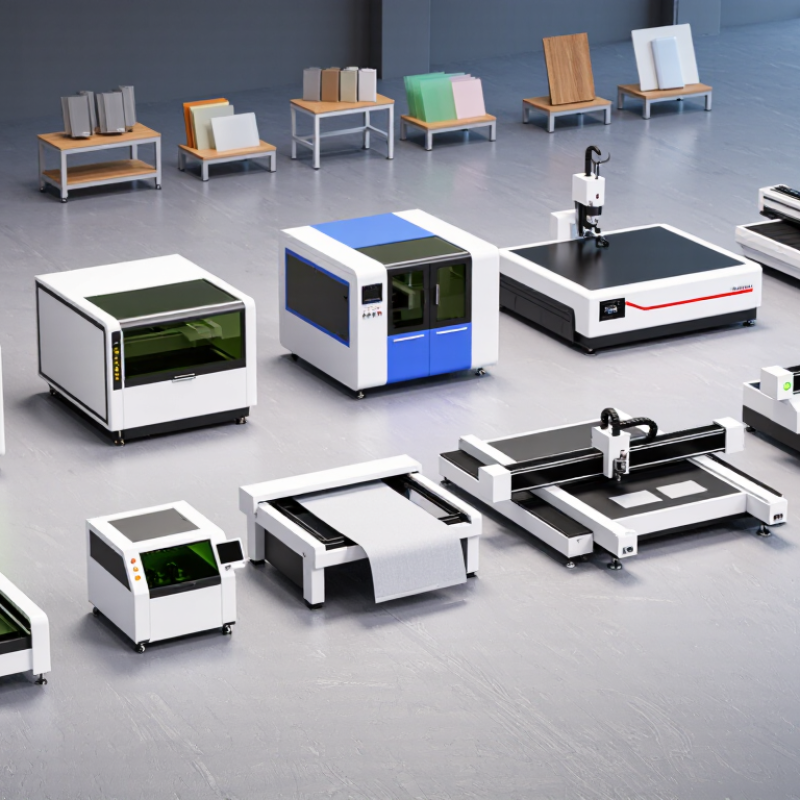
Laser Machine Fundamentals: Sources, Motion Systems, and Controls
Top 10 Types of Laser Machines for Global Buyers
A laser machine is a coordinated system, not just a powerful beam. Its source, motion platform, and control software determine what it can cut, mark, or engrave reliably. Fiber sources suit many metal jobs; CO2 sources handle materials such as wood and acrylic. Diode systems often serve lower-power tasks. These are general tendencies, not guarantees. Material thickness, surface finish, and production speed change the choice.
Motion systems shape accuracy and throughput. A gantry moves the head across a worktable, while a galvo scanner steers the beam quickly over a smaller field. Check acceleration, repeatability, working area, and extraction design—not just maximum speed. The International Federation of Robotics’ World Robotics 2024 report recorded 541,302 industrial robot installations in 2023. It also reported 4.28 million industrial robots operating worldwide. Those figures describe factory automation broadly, not laser-machine sales, but they show why integration matters.
Controls turn settings into repeatable results. Look for clear power, pulse, speed, focus, and path controls, plus alarms and safety interlocks. Test a sample using the actual material and thickness. Watch the cut edge, smoke removal, and restart behavior after a stop. Small details matter. A specification sheet can still mislead: stated accuracy may not reflect performance across the full work area. Ask for measured results and service procedures. I would also recheck lens cleanliness and focus after setup; operators sometimes assume these stay fixed.
How Laser Machines Are Classified by Source and Processing Method
Laser machines are best compared along two axes: beam source and processing method. Fortune Business Insights valued the global laser-processing market at USD 6.21 billion in 2023, reflecting its broad industrial use. Market estimates vary, though, because reports define the category differently. Fiber lasers are widely used for cutting, welding, and marking metals. CO2 systems often process wood, acrylic, and other nonmetals. Solid-state, diode, and excimer sources offer different wavelengths and pulse characteristics. The source is not the process. That distinction matters.
Processing methods include cutting, welding, marking, engraving, drilling, cleaning, cladding, micromachining, and additive manufacturing. A thin stainless-steel bracket may need a fast cutting head; a small serial code may call for pulsed marking. For buyers comparing ten machine types, check the material, thickness, required edge quality, and production rate before choosing a source. Also compare beam delivery, motion control, and cooling needs. These details affect daily operation, not just the brochure specification. Classification can still feel untidy: one machine may mark and engrave, depending on settings and the desired result.
Ten Common Types of Laser Machines and Their Applications
Laser selection begins with the material, thickness, and finish required. A CO2 laser is commonly used to cut or engrave wood, paper, fabric, and some plastics. Fiber lasers suit metal marking and cutting, from stainless-steel panels to small part numbers. Diode machines are often used for light engraving on wood and coated surfaces, though their cutting ability is limited. Small details matter. Nd:YAG lasers handle metal marking and certain welding tasks, especially where focused energy is needed.
UV lasers make fine marks on plastics and electronic components with limited heat damage. Green lasers can mark reflective metals, including copper, where other wavelengths may be less effective. Excimer systems are used for precise surface processing in fields such as electronics manufacturing. Ultrafast, or picosecond and femtosecond, lasers create tiny features in glass, ceramics, and delicate components. Their short pulses help reduce heat spread, but setup can be demanding.
Laser cutting machines are built for profile cutting in sheet metal, acrylic, or textiles; the source must match the material. Laser welding machines join thin metal parts with narrow seams, useful for components that need clean edges. Laser cleaning systems remove surface rust, paint, or residue without abrasive blasting, but settings must suit the base material. A small test coupon reveals issues that a specification sheet may miss. Not every workshop needs the most advanced system.
Top 10 Types of Laser Machines for Global Buyers - Ten Common Types of Laser Machines and Their Applications
| # | Laser Machine Type | How It Works | Common Materials | Typical Applications | Key Considerations |
|---|---|---|---|---|---|
| 1 | Fiber Laser Cutting Machine | Uses a fiber-delivered laser beam to cut sheet or plate material, often with assist gas. | Carbon steel, stainless steel, aluminum, copper, and other suitable metals. | Sheet-metal fabrication, electrical enclosures, automotive components, and machinery parts. | Well suited to metal cutting. Maximum thickness and cutting speed depend on laser power, material, and process settings. |
| 2 | CO₂ Laser Cutting Machine | Uses a gas laser beam, commonly at an infrared wavelength, to cut or engrave nonmetallic materials. | Acrylic, wood, paper, cardboard, textiles, and some plastics. | Sign making, packaging prototypes, craft products, textile cutting, and acrylic fabrication. | Many metals reflect or conduct away the beam and are not suitable for standard CO₂ cutting without specialized systems and methods. |
| 3 | Laser Engraving Machine | Moves a focused beam across a surface to remove, darken, or texture material in a selected pattern. | Wood, acrylic, glass, coated metals, leather, and certain stone products. | Decorative designs, signs, awards, labels, personalized goods, and control panels. | Results vary by material and surface finish; some materials require testing to achieve consistent contrast and depth. |
| 4 | Laser Marking Machine | Creates a visible, permanent mark through surface heating, color change, oxidation, or shallow material removal. | Metals, selected plastics, ceramics, and coated or anodized surfaces, depending on laser type. | Serial numbers, barcodes, QR codes, traceability marks, and product identification. | Fiber, CO₂, and ultraviolet systems suit different materials and marking effects; the correct wavelength is important. |
| 5 | Laser Welding Machine | Concentrates energy at a joint to melt and fuse materials, with or without added filler material. | Stainless steel, carbon steel, aluminum, and other compatible metals. | Precision components, sheet-metal assemblies, battery parts, medical devices, and automotive manufacturing. | Joint fit-up, material reflectivity, thickness, and heat sensitivity affect weld quality and process settings. |
| 6 | Laser Cleaning Machine | Uses pulsed or continuous laser energy to remove surface contaminants or coatings with controlled exposure. | Metal surfaces and selected stone or composite surfaces, depending on the contaminant and process. | Rust, paint, oxide, and residue removal; mold cleaning; and surface preparation before joining or coating. | Cleaning settings must be selected to remove contaminants while limiting damage to the underlying surface. |
| 7 | Laser Drilling Machine | Uses focused pulses or a controlled beam to create holes in a range of sizes and geometries. | Metals, ceramics, polymers, and some composite materials. | Small cooling holes, fuel-system components, filters, electronic parts, and precision tooling. | Hole size, taper, depth, and heat-affected zone depend on material, pulse duration, and drilling method. |
| 8 | Laser Micromachining Machine | Uses finely controlled, often short-pulse laser energy to make small features or modify surfaces with limited thermal impact. | Metals, glass, ceramics, polymers, and thin films. | Micro-patterning, fine cutting, thin-film processing, medical components, and electronics manufacturing. | Feature size and edge quality depend on optics, pulse duration, material properties, and machine positioning accuracy. |
| 9 | Laser Cladding Machine | Melts a supplied powder or wire feedstock with the substrate to form a metallurgically bonded layer. | Metal substrates with compatible alloy powders or wires, including steel and selected nickel-based alloys. | Repairing worn parts, adding wear- or corrosion-resistant layers, and rebuilding industrial components. | Material compatibility and control of dilution, heat input, and layer geometry are essential for a reliable coating. |
| 10 | Laser Powder Bed Fusion Machine | Builds a component layer by layer by selectively melting or fusing powder with a laser. | Metal powders such as stainless steel, aluminum, titanium, and nickel-based alloys, subject to machine capability. | Complex aerospace parts, medical components, prototypes, and low-volume metal production. | Requires controlled powder handling and process conditions; post-processing may be needed for finishing and performance. |
Key Performance Factors: Power, Precision, Speed, and Work Area
Laser-machine performance starts with matching power to the material, thickness, and production volume. Higher wattage can cut thicker stock, but it does not automatically produce cleaner edges. On thin sheet, excessive power may cause scorching or a wider heat-affected area. Test a sample with the intended material before comparing machines. Small details matter.
Precision depends on the motion system, beam quality, focus control, and machine stability. A fine line on a specification sheet is useful, but repeatable results matter more. Check whether corners stay sharp and small holes remain consistent across the work area. Speed also needs context: a quoted maximum may not reflect cutting speed on your actual material. Watch a full job, including acceleration, pauses, and unloading time. That is where estimates can shift.
Work area should fit both the largest part and how materials are loaded. A larger bed can reduce repositioning, yet it takes more floor space and may raise operating costs. Measure doors, aisles, and extraction connections, not just the machine footprint. I would also leave room for future jobs; plans change, sometimes sooner than expected. There is no perfect specification. Balance power, precision, speed, and usable area against real samples and daily workflow.
Global Buying Factors: Safety, Standards, Maintenance, and Support
For global buyers comparing laser machines, safety is not a checkbox; it affects installation, training, and daily work. IEC 60825-1 defines eight laser product classes, from Class 1 to Class 4. Class 4 systems can create serious eye and skin hazards, including from reflected beams. Ask suppliers for the machine’s classification, enclosure details, interlock design, and required protective eyewear. Check that documentation matches the exact configuration—not just a product family. Small details matter.
Standards and service vary by destination. Confirm electrical and laser-safety requirements with qualified local specialists before shipment, and request manuals in a language operators can use. OSHA’s FY 2023 enforcement data recorded 1,644 machine-guarding citations across U.S. workplaces. That figure is not laser-specific, but it shows why guards and access controls deserve careful review. Maintenance also needs a practical plan: lens cleaning intervals, extraction-filter replacement, alignment checks, and parts lead times. Dust on optics can quietly reduce cut quality.
Support is part of the purchase. Ask how quickly a technician can respond, whether remote troubleshooting is available, and which parts must be stocked onsite. A low price can become expensive when a machine waits idle. I would also ask for a sample maintenance log; it reveals more than a polished brochure. But logs are only useful when operators actually keep them.
