
What Are the Top AC Condensers for Global Buyers?
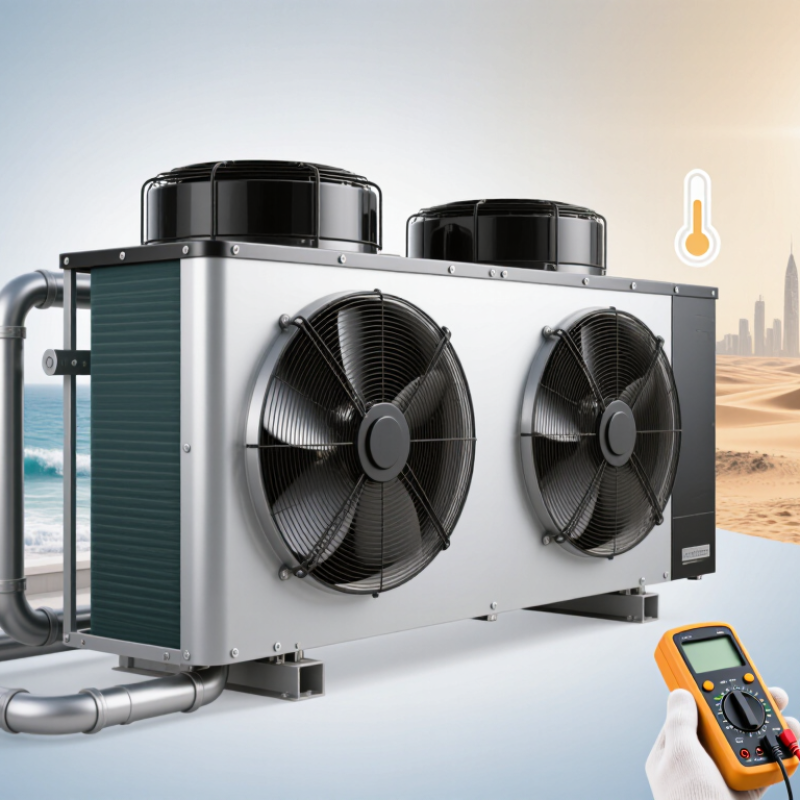
Choosing the right Ac Condensers begins with climate, load, refrigerant, and long-term service access. Global buyers face different realities. A coastal hotel may battle salt spray, while a warehouse in Dubai may endure extreme summer heat. A compact rooftop unit needs different priorities than a large industrial system.
HVAC educator David Richardson offers a practical reminder: “A system performs only as well as its measurements and maintenance.” That principle matters when comparing Ac Condensers across international markets. Buyers should examine cooling capacity, airflow, coil construction, fan efficiency, sound levels, and control compatibility. Stainless-steel fasteners, corrosion-resistant coatings, and washable filters can become decisive details near the sea. They are not decorative upgrades.
Reliability comes from evidence. Request performance data under realistic ambient temperatures, not only ideal laboratory conditions. Check applicable safety standards, refrigerant requirements, warranty terms, spare-part availability, and local technician training. A low purchase price can lose its appeal after one unavailable fan motor. That is an uncomfortable possibility.
Energy efficiency also deserves careful attention. Variable-speed fans may reduce operating costs, but only when controls are correctly commissioned. Oversized Ac Condensers can cycle poorly and waste energy. Undersized models may run continuously during peak demand. Neither choice is automatically better.
This guide compares leading Ac Condensers for global buyers through a practical lens. It considers performance, construction, maintenance, climate suitability, and supplier reliability. Some product data may change by region. Verify every specification before purchasing. Mistakes happen, even in careful procurement. The goal is not a perfect promise, but a defensible decision.
AC Condenser Basics and Its Role in Air Conditioning Systems
What Are the Top AC Condensers for Global Buyers?
AC Condenser Basics and Its Role in Air Conditioning Systems
An AC condenser is the outdoor section that releases indoor heat into the surrounding air. Hot, high-pressure refrigerant enters its coil as vapor. The coil then helps convert that vapor into liquid refrigerant. This heat-transfer cycle keeps indoor rooms cool.
The condenser usually includes a coil, fan motor, protective casing, and control components. Air-cooled models suit homes, offices, and many commercial buildings. Water-cooled designs can perform well where water systems are available. Copper tubing transfers heat efficiently, while aluminum fins provide a lighter structure. However, material choice alone does not prove quality. Fin spacing, coil protection, airflow, and assembly accuracy matter just as much.
Tips: Check cooling capacity, voltage, refrigerant type, operating temperature, and local certification requirements. Inspect the coil for bent fins, uneven brazing, and weak frame joints. Coastal buyers should consider corrosion-resistant coatings. Dusty regions may need wider fin spacing and easier cleaning access. I would not select a condenser by price alone. A lower-cost unit may consume more power or require frequent service. Product data can also be incomplete, so buyers should request performance testing and warranty terms. Slight uncertainty remains when laboratory ratings do not match harsh outdoor conditions. That gap deserves careful attention.
What Are the Top AC Condensers for Global Buyers? - AC Condenser Basics and Its Role in Air Conditioning Systems
| Condenser Type | How It Rejects Heat | Typical Applications | Common Construction Materials | Main Advantages | Key Limitations | Maintenance Considerations | Buyer Suitability |
|---|---|---|---|---|---|---|---|
| Air-Cooled Fin-and-Tube | A fan moves outdoor air across refrigerant tubes and fins. | Residential split systems, packaged units, light commercial air conditioners. | Copper or aluminum tubes with aluminum fins; galvanized or coated steel frames. | Widely available, comparatively simple installation, no condenser-water system required, and easy service access. | Performance decreases as outdoor temperature rises; the coil requires adequate airflow and outdoor space. | Clean fins, inspect the fan motor and electrical connections, and check for corrosion or refrigerant leakage. | A practical general-purpose choice for global residential and small commercial projects. |
| Microchannel Air-Cooled | Parallel flat multiport tubes transfer heat to air through compact louvered fins. | Modern packaged air conditioners, rooftop units, heat pumps, and vehicle or specialty cooling systems. | Aluminum tubes, manifolds, and fins, usually assembled as a brazed all-aluminum coil. | Compact footprint, low internal refrigerant volume, light weight, and efficient heat transfer when properly selected. | Narrow air passages can be difficult to clean; damaged sections are not always easily repaired in the field. | Use low-pressure cleaning methods, keep the face free of debris, and specify corrosion protection for coastal environments. | Well suited to buyers prioritizing compact equipment, reduced weight, and modern high-efficiency designs. |
| Water-Cooled Shell-and-Tube | Cooling water flows through tubes while refrigerant condenses around the tube bundle, or through the opposite arrangement depending on design. | Large chillers, industrial process cooling, central plant systems, and buildings with cooling towers. | Steel shells, copper-nickel or copper tubes, tube sheets, and corrosion-resistant internal components. | Stable condensing performance, suitable for large capacities, and generally quieter at the equipment location than large air-cooled units. | Requires a water circuit, pumps, water treatment, additional installation work, and protection against scaling or fouling. | Monitor water quality, clean tubes when fouling increases, inspect tube integrity, and maintain pumps and cooling towers. | Best for buyers managing medium-to-large commercial or industrial facilities with available water infrastructure. |
| Water-Cooled Brazed Plate | Refrigerant and water flow through separate channels formed by brazed corrugated plates. | Compact chillers, heat pumps, refrigeration packages, and space-limited mechanical rooms. | Stainless-steel plates brazed with copper or another compatible brazing material. | Small footprint, low weight, high heat-transfer effectiveness, and relatively low water volume. | Sensitive to dirty or hard water; internal passages are difficult to mechanically clean and may require chemical cleaning. | Install filtration where necessary, control water chemistry, and prevent freezing or excessive differential pressure. | A strong option when installation space is limited and clean, properly treated condenser water is available. |
| Evaporative Condenser | Water evaporation over a wetted surface removes heat while air passes through the condenser. | Large refrigeration systems, industrial cooling, cold storage, and process applications in suitable climates. | Galvanized or stainless steel casing, refrigerant coils, spray systems, fans, pumps, and drift eliminators. | Can operate with lower condensing temperatures than many dry air-cooled systems and may reduce fan energy in appropriate conditions. | Consumes water, needs water treatment, creates a wet operating environment, and may be subject to local health or environmental regulations. | Control scale, corrosion, biological growth, and water drift; inspect spray nozzles, pumps, fans, and basin condition. | Suitable for high-capacity buyers where water is available and routine water management is acceptable. |
| Remote Air-Cooled Condenser | A separate outdoor condenser rejects refrigerant heat through a fan-driven air coil. | Cold rooms, supermarkets, commercial refrigeration, and systems requiring the condensing unit to be installed away from the evaporator. | Copper or aluminum refrigerant tubing, aluminum fins, steel frame, fans, and protective guards. | Flexible equipment placement, easier heat discharge outdoors, and suitability for distributed refrigeration layouts. | Requires correctly sized refrigerant piping, attention to oil return, adequate airflow, and protection from weather or vandalism. | Clean coils, inspect fan controls, verify piping insulation, and check refrigerant charge and connection joints. | Appropriate for commercial buyers needing installation flexibility and separated indoor and outdoor equipment. |
Selection should be based on required cooling capacity, outdoor design temperature, ambient humidity, water availability, corrosion exposure, refrigerant compatibility, noise limits, service access, energy performance, and applicable local regulations. Actual performance depends on the complete system design and operating conditions.