2026 Top Laser Quenching Machine Manufacturers worldwide
Laser quenching can transform a component’s surface while leaving its core largely unchanged. But results depend on more than the laser source. Beam delivery, scanning speed, spot size, temperature monitoring, and part geometry all affect the hardened layer. A slight change in focus can alter the treatment track. A missed edge may require costly rework.
This guide to 2026 Top Laser Quenching Machine Manufacturers worldwide compares capabilities rather than treating “top” as a universal ranking. It will examine machine configuration, process control, application experience, integration, service support, and the quality of technical documentation. Buyers should ask for trial results on representative parts, not rely on brochure claims alone. Repeatability matters. So does access to trained support when a line stops.
Professor Reinhart Poprawe is a recognized laser-technology researcher. The following is an editorial paraphrase, not a verified direct quotation: “Controlled energy delivery matters more than headline power.” That principle is useful when comparing systems, but it cannot replace independent testing. Manufacturers may describe accuracy differently, and published figures may reflect specific conditions. Readers should verify measurement methods, production requirements, and maintenance needs before choosing a machine. This overview aims to make those questions clearer, while acknowledging that no single supplier suits every factory.
Laser Quenching: Process, Equipment, and Industrial Applications
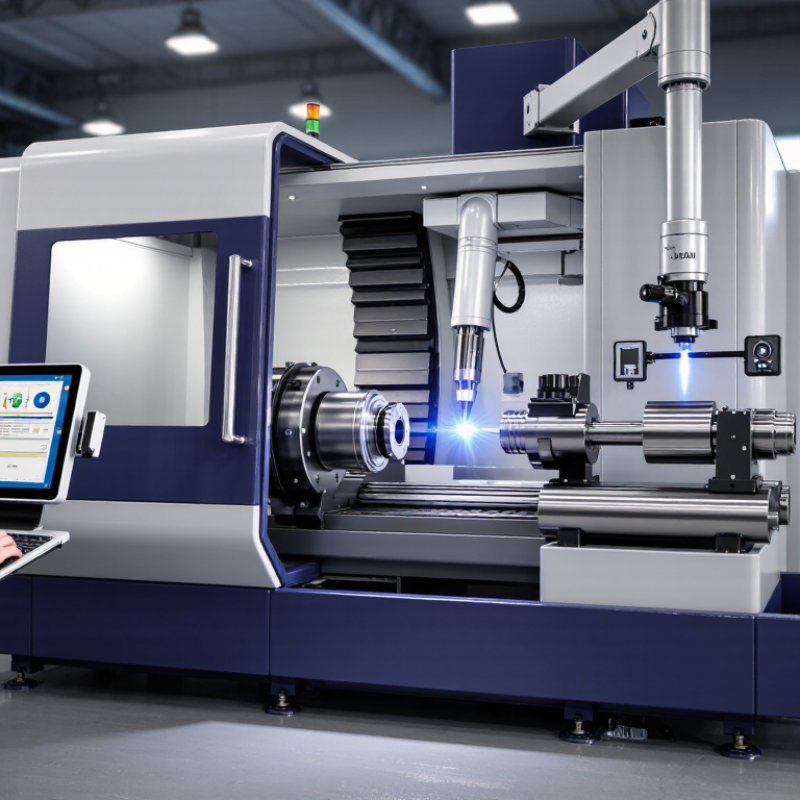
Laser quenching, also called laser transformation hardening, heats a selected steel surface above its transformation range. The surrounding, cooler metal draws heat away, rapidly hardening the treated layer without a separate liquid quench. On a gear tooth, an optical head follows the curved face while sensors monitor temperature and travel speed. Heat stays local.
Equipment typically combines a laser source, beam delivery optics, a motion system, temperature monitoring, and process-control software. Engineers tune power, spot size, scan speed, and overlap for the alloy and part geometry. ASM Handbook coverage of heat treating describes laser hardening as a surface-treatment process; actual hardness and case depth depend on material condition and settings. A bright, reflective surface can also complicate temperature readings, so monitoring needs careful validation.
Grand View Research estimated the broader global laser-processing market at USD 19.8 billion in 2023. That figure includes many processes, not laser quenching alone, so it should not be treated as a quenching-market estimate. For industrial buyers, the practical test is repeatability: measure hardness across the track, inspect distortion, and document settings on real production parts. A polished sample may still mislead.
How to Evaluate Laser Quenching Machine Manufacturers
2026 Top Laser Quenching Machine Manufacturers worldwide
How to Evaluate Laser Quenching Machine Manufacturers
Choosing a laser quenching machine manufacturer starts with your parts, not its brochure. Share the alloy, surface shape, target hardness, and required case depth. Ask how the supplier controls laser power, beam focus, scanning speed, and part movement. These settings affect heat input and consistency. Request test results from a sample close to your own component, including hardness measurements and cross-sectional inspection. A smooth demo is useful. It is not enough.
Tips: Ask for a written trial plan. Check how results are measured and recorded. Confirm what happens when parts vary in size or surface condition. Review operator training, maintenance intervals, safety features, and response times for technical support.
Compare manufacturers using the same test criteria. Look for clear specifications, traceable test records, and realistic explanations of process limits. Ask about cooling, fixture design, and integration with your production line. Then verify key claims with a controlled trial. It is easy to focus on machine power and overlook repeatability. That deserves a second look. No supplier can promise identical results for every geometry without testing.
Leading Laser Quenching Machine Manufacturers Worldwide in 2026
Leading Laser Quenching Machine Manufacturers Worldwide in 2026
Choosing a laser quenching machine manufacturer means checking more than laser power. Strong suppliers specify beam size, scanning speed, cooling requirements, and achievable case depth. They should also help validate settings on your actual steel parts. A gear tooth and a long shaft do not heat alike. Ask for sample-treatment records, hardness profiles, and repeatability data before comparing quotations.
Automation matters. The International Federation of Robotics’ World Robotics 2024 report recorded 541,302 industrial robot installations in 2023, a 10% annual increase. It also reported 4.28 million robots operating worldwide. These figures point to growing factory automation, making robot-ready loading, process monitoring, and safety interlocks useful evaluation criteria for machine makers. Still, installation growth does not prove that every line needs full automation. That distinction is easy to miss.
Tips: Request a trial on your own component. Measure hardness at several points, not just the surface. Small variations can reveal uneven heating. Manufacturers should explain the result plainly, including what the process cannot control.
Comparing Manufacturer Capabilities, Technologies, and Global Support
Comparing laser quenching machine manufacturers means looking beyond rated power. A 6-kilowatt source does not guarantee consistent case depth across different part geometries. Ask how the system controls beam size, travel speed, and overlap. Numbers can mislead. Request sample data from parts similar to yours, including hardness readings and measured treatment depth.
Strong systems combine stable optics, programmable motion, and monitoring suited to the process. Some use pyrometers or thermal cameras to track heating, but readings depend on surface condition and setup. Ask how recipes are validated after a material change. Also check whether the machine can handle your real components, such as a toothed gear, a narrow shaft, or a curved track. A polished demonstration part may hide awkward access problems.
Global support matters after installation. Confirm local service coverage, spare-parts lead times, operator training, and remote diagnostic options in writing. Ask for a realistic maintenance schedule, not only a warranty summary. Manufacturers may offer impressive automation, yet integration with existing production lines can still require extra engineering. That detail is easy to underestimate. A factory visit or witnessed acceptance test can reveal setup practices, documentation quality, and how quickly technical questions receive clear answers.
2026 Top Laser Quenching Machine Manufacturers Worldwide — Comparing Manufacturer Capabilities, Technologies, and Global Support
Representative wavelengths commonly associated with industrial laser sources used in materials processing. These are technology reference values, not manufacturer-specific specifications or a measure of quenching performance. Actual equipment configurations and service coverage vary by supplier and application.
Choosing a Laser Quenching Machine for Your Production Needs
2026 Top Laser Quenching Machine Manufacturers worldwide
Choosing a Laser Quenching Machine for Your Production Needs
Choosing a laser quenching machine starts with the part, not the power rating. The process heats a defined surface area, while the surrounding material helps cool it. Match beam shape, power range, and scanning speed to the alloy, geometry, target hardness, and hardened depth. A narrow beam may suit a gear tooth; a broad track may fit a flat wear surface. Check how the machine monitors temperature and handles changes in part position.
The International Federation of Robotics’ World Robotics 2024 report recorded 4,281,585 industrial robots operating worldwide in 2023, with 541,302 installed that year. This is not a laser-quenching forecast, but it highlights the value of integration. Check robot interfaces, cycle-time logging, recipe control, and traceability. Ask for trials on representative parts, then measure hardness, depth, distortion, and repeatability across shifts. A polished demo part proves little. Fixture variation can undo a well-tuned recipe.
Tips: Send a real component, not just a drawing. Test different alloy batches and include one awkward geometry. Confirm calibration intervals, service response, and spare optics before purchase.