
Top 10 Powder Feeder Suppliers for Global Buyers

Powder handling is becoming more demanding as manufacturers pursue tighter dosing, cleaner production, and higher material efficiency. Grand View Research estimates that the global powder metallurgy market was worth approximately USD 2.5 billion in 2023, with continued growth expected through 2030. MarketsandMarkets reports similar expansion, although its forecast range differs because market definitions are not identical. These figures do not measure feeder sales directly. They show the industrial pressure behind better powder control.

A reliable Powder Feeder can influence blend uniformity, discharge stability, waste levels, and operator workload. In a pharmaceutical line, a few grams of variation may affect batch consistency. In additive manufacturing, unstable feeding can leave visible gaps in a metal or polymer layer. Small details matter. Screw geometry matters. Hopper design matters. Moisture control matters.

This guide examines ten leading Powder Feeder suppliers serving global buyers. The comparison considers dosing accuracy, material compatibility, cleaning access, automation, technical support, and documented operating experience. Data is drawn from supplier specifications, industry reports, certification information, and publicly available customer evidence. However, supplier claims are not always measured under identical conditions. That limitation matters. A feeder tested with free-flowing powder may perform differently with cohesive, abrasive, or moisture-sensitive materials. Buyers should validate performance using their own powder, throughput, and production environment. No ranking fits every plant. This list is a practical starting point, not a substitute for trials, engineering review, or qualified procurement decisions.
Top 10 Powder Feeder Suppliers for Global Buyers

Powder Feeders: Definition, Functions, and Industrial Applications

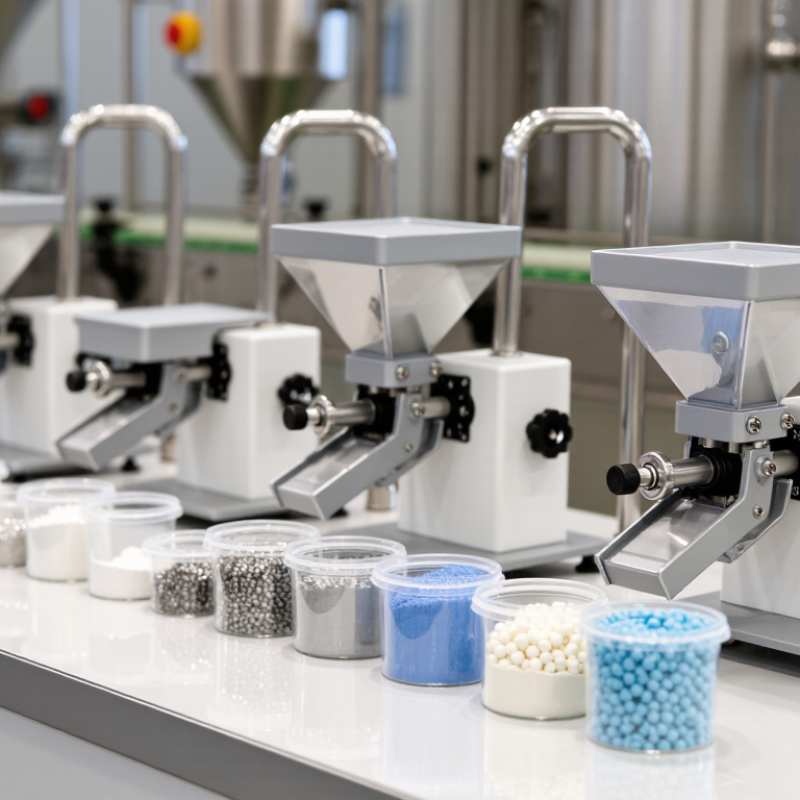
Powder feeders are machines that measure and transfer dry materials into a process. They may handle fine minerals, pharmaceutical excipients, food powders, or ceramic compounds. A typical unit uses a hopper, agitator, screw, and controlled drive. These parts work together to maintain a stable feed rate.

Their main function is accurate dosing. Operators can adjust output by changing screw speed or selecting a suitable feeding mode. Loss-in-weight systems monitor hopper weight during operation. Volumetric feeders measure material by volume and suit powders with stable bulk density. Consistency matters. Poor flow can cause bridging, pulsation, or sudden discharge. Humidity, particle size, and electrostatic behavior also affect performance. In practice, test data is more useful than a catalogue promise.

Industrial applications include blending, extrusion, coating, tablet production, additive manufacturing, and wastewater treatment. Food processors may require smooth surfaces and easy cleaning. Chemical plants often need sealed designs and dust control. A buyer should check accuracy, feed range, contact materials, maintenance access, and control compatibility. Safety certification must match the installation site and local requirements. This sounds simple. It is not.

Experienced engineers usually test the actual powder before approving a feeder. A unit that performs well with free-flowing granules may struggle with cohesive dust. Even careful specifications can miss real production behavior. Reviewing trial results, calibration records, and service support helps reduce that risk. A thoughtful selection process improves reliability without treating any single specification as a guarantee.

Main Powder Feeder Types and Their Operating Principles

Top 10 Powder Feeder Suppliers for Global Buyers

Powder feeders control how solids enter a process, coating head, or reactor. Their design affects flow stability, dosing accuracy, and material waste. The main types include volumetric screw feeders, gravimetric loss-in-weight feeders, vibratory feeders, rotary-disk feeders, and fluidized feeders.

Volumetric screw feeders move powder through a rotating auger. They are simple and economical, but bulk-density changes can reduce accuracy. Gravimetric feeders continuously measure weight loss from the hopper, then adjust screw speed automatically. This principle suits critical dosing. Vibratory feeders use controlled vibration to move powder along a tray. They handle many free-flowing materials, though cohesive powders may bridge. Rotary-disk systems meter material through fixed cavities. Fluidized feeders introduce air, reducing friction and improving flow.

Selection should follow the powder’s behavior, not only its price. Particle size, moisture, density, and electrostatic charge matter. The Wohlers Report 2024 reported a 13.5% expansion in additive manufacturing, reaching 20.035 billion US dollars in 2023. This growth increases demand for controlled metal and polymer powder delivery. However, that figure measures the wider industry, not feeder sales.

In field testing, gravimetric control often performs better during density changes. Still, calibration can drift. That detail is easy to overlook. Buyers should request repeatability data, cleaning procedures, and trials using their actual powder. A feeder that works perfectly with glass beads may struggle with fine, cohesive powder. The specification sheet is not enough.

Key Criteria for Comparing Global Powder Feeder Suppliers

When comparing the top powder feeder suppliers, start with application evidence, not attractive brochures. A reliable supplier should explain how its equipment handles flowability, moisture, particle size, and bulk density. Ask for test results using a powder similar to yours. Published accuracy may reflect ideal laboratory conditions.

Look closely at feed-rate stability across low, medium, and high output ranges. Check whether the system uses gravimetric control, loss-in-weight monitoring, or another measurable method. Clear calibration procedures matter. So does cleanability. A feeder with narrow corners can leave residue and increase maintenance time. Review drawings, contact materials, sealing methods, and integration options for existing production lines. Good documentation is a practical sign of expertise.

Global buyers should also compare technical support, spare-parts availability, training, and response times. A capable supplier can discuss installation conditions, temperature changes, vibration, and operator habits. Request references from facilities with similar powders and production volumes. Evaluate warranty terms and the total cost of ownership, not only the purchase price. A lower quote may hide frequent recalibration or difficult cleaning. Be cautious here. No feeder performs perfectly with every powder. Suppliers should openly state operating limits, test assumptions, and known weaknesses. A short pilot trial can reveal more than a polished presentation.

Top 10 Powder Feeder Suppliers for International Buyers

International buyers need more than a powder feeder catalogue. They need stable dosing, export experience, clear documentation, and responsive technical support. A feeder that performs well in one factory may struggle with humidity, powder bridging, or different voltage standards overseas.

ISO’s 2023 Survey recorded more than 1.26 million ISO 9001 certificates worldwide. This figure shows why certified quality systems matter during supplier screening. However, certification alone proves little about powder handling performance. Buyers should request test results using their actual material, including bulk density, particle size, moisture content, and target feed rate. Check accuracy at both low and high speeds. Small errors can become costly across continuous production.

Tips: Ask for spare-parts lead times, installation drawings, electrical standards, and remote support coverage. Confirm whether manuals are available in your operating language. Review packing methods for long-distance transport. A factory acceptance test is useful, but it cannot reproduce every climate. I would also request references from buyers with similar powders and comparable production volumes. That step takes time, yet it often reveals weaknesses hidden in polished sales documents. According to the International Trade Centre’s 2023 trade data resources, international shipments depend heavily on accurate product classification and customs documentation. Therefore, buyers should verify tariff codes, origin documents, and shipping responsibilities before signing. Mistakes happen. Good suppliers explain them early.

Purchasing Factors: Quality, Compliance, Delivery, Service, and Cost

Selecting among the top ten powder feeder suppliers requires more than comparing catalog prices. Quality begins with repeatable feed rates, stable screw geometry, and documented calibration. Ask for test data using your actual powder, not a convenient substitute. Request accuracy across low, medium, and peak throughput. Short trials expose bridging, segregation, and dust leakage.

Important details. ISO 9001 certification supports process control, but it does not prove feeder accuracy. That assumption deserves scrutiny.

Compliance should match the destination and the powder’s handling risks. Require material declarations, electrical documentation, guarding details, and traceable change records. Where food or pharmaceutical production applies, verify relevant hygienic design and validation documents. Do not accept a generic certificate.

Delivery deserves measurable commitments. The World Bank’s 2023 Logistics Performance Index assessed 139 economies across customs, infrastructure, tracking, and timeliness. Use those realities when setting landed-cost buffers and installation dates. UNCTAD’s Review of Maritime Transport 2024 notes that ships carry over 80% of world trade by volume. One delayed component can therefore disrupt commissioning.

Service quality appears after purchase. Compare response times, spare-parts locations, remote diagnostics, and technician coverage. Ask who owns troubleshooting when the feeder, controller, and upstream mixer interact.

Total cost includes calibration visits, consumables, training, energy, downtime, and rejected batches. An inexpensive feeder may become costly when support is distant. Still, premium pricing is not proof of value.

Score suppliers with weighted evidence, then challenge your own assumptions. Procurement teams sometimes reward polished proposals over usable data. That mistake is preventable.

Article Source: