
Best Wedge Anchors in 2026 for Global Buyers
For global buyers, choosing a Wedge Anchor is not just a matter of comparing prices or picking a familiar size. The anchor must suit the base material, fixture, installation conditions, and expected load. Concrete strength, hole diameter, embedment depth, and edge distance can all affect performance. Small details matter. That sounds simple. It isn’t always.
A useful comparison starts with clear product data. Check the anchor’s dimensions, material and coating, installation instructions, and published load information. Consider whether the product is intended for indoor or outdoor use, and how moisture or corrosive conditions may affect the finish. For large projects, request traceable test reports and confirm that the documentation matches the exact model being quoted. A neat catalog table can still leave questions unanswered.
Global sourcing adds practical considerations. Packaging, consistent production, lead times, and communication with the supplier can matter as much as the quoted unit cost. Buyers should also verify that product claims and technical documents meet the requirements of their project and destination market; requirements can differ. Do not assume that two anchors with the same diameter are interchangeable. Compare installation details carefully, and ask the manufacturer or a qualified engineer when load conditions are uncertain. This guide examines leading wedge anchor options through those buyer-focused criteria. It aims to make comparison clearer, while recognizing that no single product is best for every concrete, environment, or application.
Understanding Wedge Anchors and How They Work
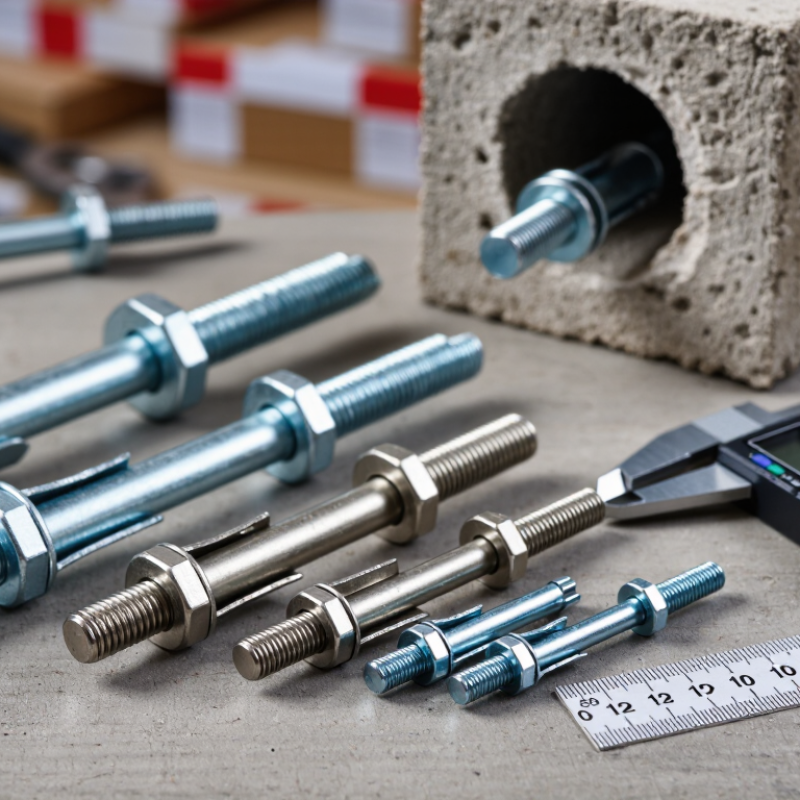
Wedge anchors are mechanical fasteners designed mainly for solid concrete. A threaded steel stud has an expansion clip near its lower end. After the anchor enters a drilled hole, tightening the nut pulls the stud upward. The clip presses outward against the concrete walls, helping resist pullout. Simple mechanism. Reliable performance still depends on the concrete and installation.
For example, a 12-millimeter anchor needs a correctly sized hole, drilled straight and deep enough for its specified embedment. Brush and blow out the dust; debris can interfere with expansion. Then insert the anchor, fit the fixture, and tighten the nut to the specified torque.
In practice, hole cleaning is easy to underestimate. I would check it twice.
Buyers should also compare anchor diameter, embedment, corrosion resistance, and published load data with the project conditions. Wedge anchors are generally unsuitable for brick or hollow block unless the product documentation specifically allows that use. Concrete strength, edge distance, and nearby anchors can affect capacity, so a catalog number alone is not a design check. For unfamiliar concrete or overhead loads, have a qualified professional verify the selection and installation.
Key Components, Materials, and Performance Specifications
Best Wedge Anchors in 2026 for Global Buyers
Key Components, Materials, and Performance Specifications
A wedge anchor typically includes a threaded stud, expansion clip, nut, and washer. As the nut tightens, the clip presses against the concrete hole, creating a mechanical hold. The clip’s fit and the stud’s thread quality affect installation and load transfer. Small details matter. A rough or oversized hole can weaken the connection.
Material selection depends on the environment. Zinc-plated carbon steel is common for dry indoor settings, while stainless steel can better resist corrosion in damp or exposed locations. Coated steel may suit some applications, but coating performance varies. Check the stated corrosion resistance rather than relying on a finish’s appearance. Even stainless steel is not immune to every chemical environment.
Compare diameter, anchor length, embedment depth, and required hole size. Also review minimum edge distance, spacing, concrete strength, and installation torque. These values are product-specific; avoid treating one anchor’s data as universal. On site, a clean, correctly drilled hole is easy to overlook, yet it can change performance. Catalog tables help, but they do not replace the installation instructions or an engineer’s assessment for safety-critical connections. The right choice is not always the largest anchor.
Comparing Wedge Anchor Types for Different Applications
A wedge anchor’s application depends on concrete strength, load direction, exposure, and installation space. Standard zinc-plated anchors suit many dry, indoor jobs, such as fixing a machine base to a sound concrete floor. For damp exterior settings, hot-dip galvanized or stainless-steel versions may offer better corrosion resistance. Stainless steel is not automatically necessary everywhere. Match the material to the exposure and specified load.
Anchor length and diameter matter too. A larger anchor does not fix weak concrete or poor placement. Keep the required distance from edges, drill the specified hole diameter, and clear dust before installation. Tighten to the stated torque. Too much force can damage the connection. Wedge anchors are designed for solid concrete, not hollow block or brick. For cracked concrete, check whether the selected anchor has suitable test data or approval.
Coating choices and anchor dimensions are only part of the comparison. A thin slab may call for a shorter embedment, while a heavy fixture may need a longer anchor and verified load capacity. Check the fixture holes, concrete thickness, spacing, and expected tension or shear loads together. In practice, the choice can be less tidy than a comparison chart suggests. A catalog rating cannot replace checking the actual concrete and installation conditions.
Best Wedge Anchors in 2026 for Global Buyers: Comparing Types for Different Applications
Compare common wedge-anchor materials and finishes by typical application environment.
Relative application fit is a qualitative guide, not a load rating or standardized test result. Actual suitability depends on the specific anchor’s approval, concrete condition, installation, and exposure; verify the product documentation and applicable codes.
Choosing Wedge Anchors for Global Projects in 2026
For global projects in 2026, choose wedge anchors by matching the fastener to the concrete and the installation conditions. Check whether the concrete is cracked or uncracked, and confirm its strength from project documents. A specification that works in a dry indoor slab may not suit a coastal structure exposed to salt and moisture. Small details matter. Review anchor diameter, required embedment, edge distance, and spacing against the manufacturer’s published data and the project design.
Installation is part of the selection. The hole must match the specified drill-bit diameter, remain clean, and reach the required depth. Installers should use a calibrated torque wrench when the instructions call for one. A rushed crew can undermine an otherwise suitable anchor. For international purchasing, request current test reports, material details, and installation guidance in a language the site team can use. Confirm that documentation fits the project’s local approval process; requirements differ by location and application. One point deserves honest review: choosing by unit price alone can hide costs from incompatible tools, extra inspection, or premature corrosion. Even careful planning cannot replace checking the actual concrete on site.
Best Wedge Anchors in 2026 for Global Buyers - Choosing Wedge Anchors for Global Projects in 2026
| Selection factor | Common option or reference data | Where it may be suitable | What buyers should verify |
|---|---|---|---|
| Base material | Sound, solid concrete | Structural and equipment fixings where the anchor has been selected for the concrete condition and applied loads. | Wedge anchors are intended for concrete. Do not assume they are suitable for hollow block, brick, or cracked concrete unless the specific product is approved for that use. |
| Common nominal diameters | 1/4 in (6.4 mm), 3/8 in (9.5 mm), 1/2 in (12.7 mm), 5/8 in (15.9 mm), and 3/4 in (19.1 mm) | A range of light- to heavy-duty fastening applications, subject to product data and engineering design. | Confirm the product’s actual dimensions, permitted loads, edge distances, spacing, and concrete strength. Diameter alone does not determine capacity. |
| Drill-bit diameter | Typically matches the anchor’s nominal diameter for standard wedge anchors. | Useful for planning drill bits and installation tooling across common anchor sizes. | Follow the product installation instructions; use the specified bit type and hole-cleaning procedure. Do not substitute a bit based only on a general size chart. |
| Anchor length and embedment | Length is selected to accommodate the fixture thickness, washer and nut, and the product’s required embedment. | Applications with different fixture thicknesses or required embedment depths. | There is no universal embedment depth for all wedge anchors. Check the approved product data, minimum concrete thickness, hole depth, and required thread projection. |
| Zinc-plated carbon steel | Carbon steel with an electroplated zinc finish. | Generally considered for dry, indoor environments with limited exposure to moisture and corrosive agents. | Zinc plating is not equivalent to stainless steel or a heavier protective coating. Confirm corrosion requirements and applicable product approvals. |
| Hot-dip galvanized carbon steel | Carbon steel with a thicker zinc coating than typical electroplated finishes. | May be considered for some outdoor or damp applications when the product and environment are compatible. | Check coating specifications, nut and thread compatibility, exposure conditions, and any project-specific corrosion requirements. |
| Stainless steel | Common grades include 304 and 316 stainless steel; 316 generally offers better resistance to chloride exposure than 304. | Corrosive or exposed environments where stainless-steel fasteners are specified. | Verify the exact grade, strength properties, corrosion exposure, and compatibility with connected metals. Stainless steel does not eliminate every corrosion risk. |
| Cracked concrete and seismic loading | Use only a wedge-anchor product with documented qualification for the required condition and load category. | Projects where structural design requires performance in cracked concrete or under seismic loading. | Check the evaluation report and local code requirements. A standard, unqualified wedge anchor should not be assumed suitable for these conditions. |
| Load capacity and design | Capacity depends on anchor size, embedment, concrete strength and condition, edge distance, spacing, and load direction. | All applications where the connection must meet specified tension, shear, or combined-load requirements. | Use published design data and the project’s governing code. Do not compare anchors using an isolated load figure without its test and installation conditions. |
| Installation and quality control | Drill the specified hole, clean it as instructed, install the anchor to the required depth, and tighten to the specified torque. | Site installation where repeatable performance and inspection are important. | Confirm tool access, installation instructions, inspection needs, and availability of compatible nuts and washers before procurement. |
| International procurement | Dimensions may be listed in inch or metric units; product documentation and approvals vary by market. | Global projects involving multiple suppliers, locations, or local building regulations. | Request traceable material and coating specifications, test or evaluation documentation, consistent unit conversions, and approval for the installation jurisdiction. |
Selection note: This table is a general purchasing guide, not a substitute for manufacturer installation instructions, project engineering, or applicable local codes. Product-specific dimensions and capacities can differ.
Installation Requirements, Safety Checks, and Standards
Choosing a wedge anchor for a global project starts with the base material, not the package label.
Use anchors only in sound concrete unless the product approval permits other conditions. Check concrete thickness, edge distance, anchor spacing, embedment, and fixture-hole size against the installation instructions. These values vary by anchor design. Drill perpendicular with the specified bit, then clean the hole as directed. Fine dust left at the bottom can prevent full seating. Do not guess.
Insert the anchor through the fixture and tap it to the required embedment. Tighten with a calibrated torque wrench to the specified value; excess torque can damage concrete or threads. Keep anchors clear of cracks, joints, and reinforcement unless the design accounts for them.
Inspect for concrete spalling and steel coating damage before loading. Small details matter. Buyers should request traceable test data, installation instructions, and approvals accepted in the destination market. Compare the stated standard edition and load conditions, not just a general compliance claim.
A checklist can still miss a soft or poorly cured patch, so site inspection remains essential.
