
Top Oil Drilling Equipment Suppliers Worldwide?
Oil Drilling depends on equipment that performs reliably under pressure, heat, vibration, and demanding operating schedules. A drilling package may include a rig, top drive, mud pumps, tubular handling systems, and well-control equipment. Each component affects safety, uptime, and the pace of work. The strongest supplier for one project may not suit another.
This guide examines suppliers with established equipment portfolios and international market presence. It considers engineering capability, product range, documented quality practices, service coverage, and access to replacement parts. A pump’s rated output matters, but so does the time needed to repair it in a remote location. Details count.
Supplier claims deserve careful checking. Product specifications, service commitments, and references should be reviewed against the planned operating conditions. Public information can be incomplete, and market rankings rarely tell the whole story. No list is perfect.
The comparison also recognizes that equipment choices involve trade-offs. A familiar brand may offer broad support, while a regional supplier may provide faster access to technicians or parts. Buyers should confirm current capabilities directly and assess lifecycle costs, not just purchase prices. The aim is a practical overview of notable worldwide suppliers, not a universal verdict. Readers can use it to frame questions, compare options, and identify where further technical review is needed.
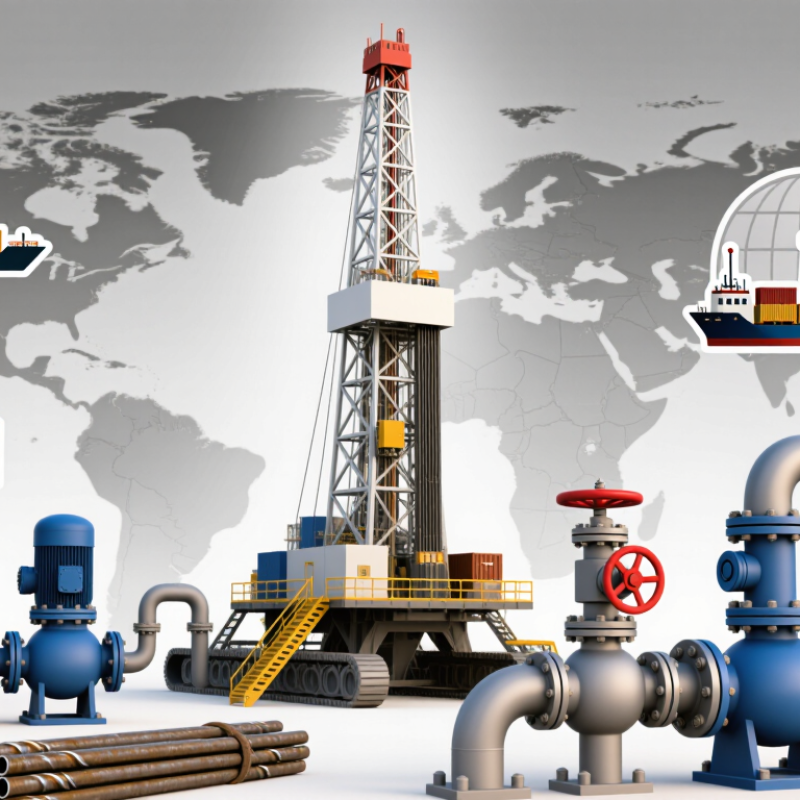
Oil Drilling Equipment and Its Role in Exploration
Drilling equipment converts a subsurface idea into measurable evidence. A rig’s hoisting system lowers drill pipe, while rotary equipment turns the bit through rock. Mud pumps circulate drilling fluid to cool the bit and carry cuttings back to the surface. Sensors near the drill bit can record direction, pressure, and rock properties, helping geologists adjust a well path as conditions change. Small errors matter. A few degrees of deviation can shift the borehole away from a narrow target.
The International Energy Agency’s World Energy Investment 2024 report estimated upstream oil and gas investment at about $570 billion for 2024. That figure covers more than exploration, so it should not be mistaken for a drilling-equipment budget. The IEA’s Oil 2024 report projected global production capacity would rise by nearly 6 million barrels per day by 2030, exceeding expected demand growth. Such forecasts make precise exploration valuable, but they do not guarantee commercial discoveries. Equipment selection depends on water depth, rock strength, well design, and access to maintenance. A powerful rig is not automatically the right rig. Plans still change. In practice, unexpected pressure zones or worn components can slow work, and even a careful model may miss local geology. Teams need to treat early measurements as evidence, not certainty.
Oil Drilling Equipment and Its Role in Exploration
This chart compares average 2023 crude oil and lease condensate production in five leading producing countries. Drilling rigs, drill bits, and related equipment help operators access oil reserves; production figures provide context for the scale of activity, not a ranking of equipment suppliers.
Source: U.S. Energy Information Administration (EIA), international crude oil and lease condensate production data. Values are rounded.
Main Categories of Drilling Equipment Used Worldwide
Drilling equipment is commonly grouped by the job each system performs. A land or offshore rig provides the structure and power needed to drill a well. Its hoisting system raises and lowers heavy tubular sections, while the rotary system turns the drill string. Pumps move drilling fluid through pipes and back to the surface. These systems must work together, often in harsh conditions.
The drill string includes drill pipe, collars, and connections that transfer force to the bit. Drill bits cut rock; the right type depends on formation hardness and well design. Drilling fluid carries cuttings upward and helps manage heat and pressure. It also supports the borehole walls. Well-control equipment, including blowout preventers, helps operators respond to unexpected pressure changes. Instrumentation and control systems track pressure, flow, and equipment performance, though readings still require careful interpretation.
Tips: Match equipment to the formation, depth, and operating environment. Check inspection and maintenance records, and confirm that crews understand operating limits. Small wear can matter. No single equipment list fits every well, so planning should account for local conditions and expert review.
Top Oil Drilling Equipment Suppliers Worldwide? – Main Categories of Drilling Equipment Used Worldwide
| Equipment Category | Typical Equipment | Primary Function | Where It Fits in Drilling Operations |
|---|---|---|---|
| Rig Structure and Hoisting | Derrick or mast, drawworks, crown block, traveling block, drilling line, and hook | Supports the hoisting system and raises or lowers the drill string and other tubulars. | Used throughout drilling and tripping operations; rig design and capacity vary with the well plan and operating environment. |
| Rotary and Drive Systems | Top drive, rotary table, swivel, and associated drive equipment | Transmits rotation to the drill string while allowing drilling fluid to flow through the circulating system. | Top drives are widely used on modern rigs; rotary tables and kelly systems remain in use in some operations. |
| Drill String and Bottom-Hole Assembly | Drill pipe, heavy-weight drill pipe, drill collars, stabilizers, and drilling jars | Transfers rotation and drilling fluid downhole and helps apply weight to the bit. | Components are selected and arranged to suit the well trajectory, formation, and drilling program. |
| Drill Bits and Downhole Tools | Roller-cone bits, polycrystalline diamond compact bits, mud motors, and rotary steerable tools | Breaks formation rock and, with suitable downhole tools, helps control the direction and performance of drilling. | Bit and tool selection depends on formation properties, well objectives, and operating conditions. |
| Drilling Fluid Circulation | Mud pumps, fluid lines, standpipe, rotary hose, and return flowline | Circulates drilling fluid through the drill string and back to the surface annulus, helping transport cuttings and support well operations. | Fluid is circulated during drilling and other operations that require a continuous or managed flow path. |
| Drilling Fluid Storage and Mixing | Storage and mixing tanks, mud hoppers, agitators, and transfer pumps | Stores and conditions drilling fluid and supports the addition and mixing of fluid materials. | Surface equipment is arranged to prepare, hold, and transfer drilling fluids to the circulation system. |
| Solids Control | Shale shakers, desanders, desilters, and centrifuges | Separates drilled solids and other unwanted particles from returning drilling fluid. | Typically positioned along the surface return-flow process; equipment configuration depends on fluid and drilling requirements. |
| Well Control | Blowout preventer stack, accumulator unit, choke manifold, and kill manifold | Provides equipment for shutting in a well and managing pressure and fluid flow during well-control operations. | Installed and configured according to the well design, applicable requirements, and operating program. |
| Tubular Handling | Pipe-handling equipment, catwalk, elevators, slips, tongs, and powered make-up tools | Moves, supports, connects, and disconnects drill pipe and other tubulars. | Used when assembling or breaking out the drill string and handling casing or other tubulars. |
| Measurement and Logging | Measurement-while-drilling and logging-while-drilling tools, telemetry equipment, and surface monitoring systems | Collects and communicates downhole measurements that support drilling decisions and formation evaluation. | Tool packages vary by well objectives and may provide directional, drilling-performance, or formation measurements. |
| Rig Power and Control | Engines or generators, electrical drives, variable-frequency drives, and control systems | Supplies and manages power for rig machinery and supports monitoring and control of drilling functions. | Power and control arrangements vary by rig type, location, and equipment configuration. |
How Global Suppliers Serve the Oil and Gas Industry
Top Oil Drilling Equipment Suppliers Worldwide?
Global oil and gas operations depend on equipment that performs reliably in demanding environments. Suppliers support projects with drilling rigs, mud pumps, tubular handling systems, well-control equipment, and replacement parts. Their work extends beyond shipping hardware. Engineering teams review operating depth, pressure ratings, temperature ranges, and site constraints before recommending configurations. A small mismatch can cause delays. Details matter.
For onshore crews, delivery speed and access to service technicians may shape supplier selection. Offshore projects add limited deck space, weather windows, and coordination between contractors. Suppliers may provide installation guidance, inspection records, maintenance plans, and operator training. These services help teams spot wear before it causes an interruption. Still, documentation alone cannot guarantee performance in every field condition.
Experienced buyers compare technical suitability, parts availability, repair capability, and lifecycle cost—not just purchase price. They may ask how quickly a critical valve or pump component can reach a remote site, and who will troubleshoot it. Global networks can help, though coverage may look better on paper than in practice. Direct references and clear service commitments offer a more realistic picture of support.
Leading Oil Drilling Equipment Suppliers by Region
North American suppliers are often associated with land-rig systems, pressure-control equipment, and digital monitoring. Their strengths may include established service networks and access to replacement parts. Buyers should still check local repair capacity; a nearby sales office is not the same as a stocked workshop. Details matter.
European suppliers often focus on precision engineering, offshore equipment, and subsea applications. In Asia, broad manufacturing capacity can support components, drilling tools, and shorter production runs. Middle Eastern suppliers and service teams may offer practical regional support, including equipment suited to heat, dust, and long operating hours. These are general patterns, not fixed rules. A neat regional ranking can mislead.
For a fair comparison, ask how a supplier handles maintenance, spare-part lead times, and field troubleshooting. Request technical documents that match the proposed rig configuration, rather than relying on a general product catalogue. Check whether technicians can reach the site quickly and whether critical parts are available nearby. The lowest initial price may not reflect downtime costs. Not always. Conditions differ by well design, geology, and operating schedule, so regional reputation should guide research—not replace it.
Factors for Comparing Equipment Suppliers and Their Products
Comparing oil drilling equipment suppliers requires more than checking price and delivery dates. Start with the operating envelope: pressure, temperature, corrosive fluids, vibration, and expected service hours. Then compare documented performance, maintenance intervals, spare-parts availability, and field-service response times. Ask for test records and failure data from equipment used in similar wells. A polished datasheet is not proof of dependable field performance.
Safety and environmental controls matter, too. Check whether equipment complies with applicable API and ISO specifications, and verify traceability for critical components.
These figures make reliability and emissions-control capability practical comparison criteria, not decorative claims.
Request like-for-like quotations that separate equipment, installation, training, warranties, and lifecycle service costs. Compare realistic lead times and local support, not just quoted delivery windows. Ask how suppliers handle unexpected failures. Then check references.
One caution: published uptime figures may use different definitions, so compare the underlying measurement method before treating them as equivalent.
