Top Commercial LED Outdoor Lighting Manufacturers For Global Buyers
Commercial Led Outdoor Lighting now shapes how cities, campuses, ports, and industrial sites operate after dark. The International Energy Agency reports that lighting accounts for about 15% of global electricity consumption and 5% of global greenhouse gas emissions (IEA, “Lighting,” 2023). Those figures make efficiency more than a purchasing detail. They also explain why global buyers compare manufacturers on energy use, durability, controls, and service support—not price alone.
The right product depends on the site. A road junction needs reliable optics and glare control; a loading yard needs broad, even illumination. Coastal installations face salt and moisture, while cold regions test seals, drivers, and maintenance access. Small details matter. A photocell placed poorly can leave a fixture switching at the wrong time. For buyers comparing manufacturers, useful evidence includes tested photometric data, ingress-protection ratings, warranty terms, and documented performance under relevant conditions. The U.S. Department of Energy’s lighting research also highlights the importance of evaluating real-world performance, rather than relying on rated efficacy alone.
This guide introduces established manufacturers serving international projects and the practical differences buyers should examine. Not every brand suits every specification, and published claims do not remove the need for project-level verification. That part is easy to overlook. Use the comparisons as a starting point, then confirm local requirements, compatibility, and after-sales coverage before making a final selection.
What Commercial LED Outdoor Lighting Manufacturers Produce
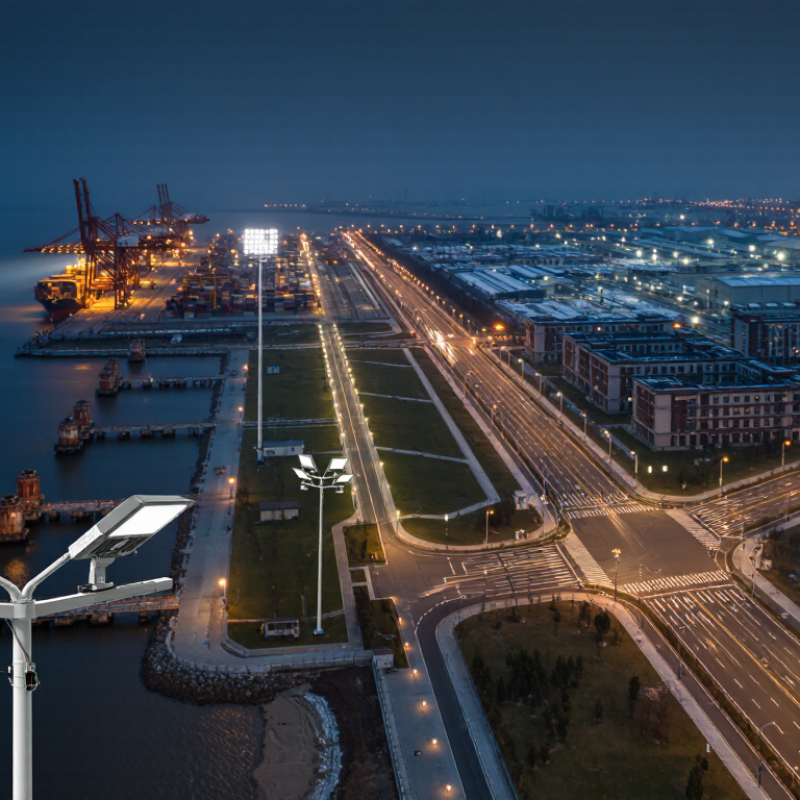
Commercial LED outdoor lighting manufacturers produce complete systems, not just lamps. Their catalogs often include roadway luminaires, floodlights, wall packs, canopy fixtures, and bollards. Each product starts with an optical design that directs light toward roads, loading bays, paths, or façades. A well-shaped beam can reduce dark gaps while limiting glare into nearby homes. Small details matter.
Manufacturers also make housings, heat sinks, drivers, lenses, and mounting hardware. For outdoor use, these parts must manage rain, dust, vibration, and temperature changes. Some facilities assemble fixtures in modular sections, making driver replacement or lens changes easier during maintenance. Many offer controls such as photocells, dimming interfaces, or motion sensors for scheduled operation. Performance data should identify lumen output, efficacy, color temperature, ingress protection, and test conditions. Numbers need context.
Project support can include photometric files, layout guidance, sample testing, and choices for pole height or spacing. These services help buyers compare products with actual site conditions, rather than relying on wattage alone. Yet a catalog cannot predict every tree, reflective surface, or neighboring window. A careful review—and sometimes a field adjustment—remains part of dependable lighting work.
Main Product Categories and Their Outdoor Applications
Commercial outdoor lighting starts with the task, not the fixture’s appearance. Roadway luminaires distribute light along streets, access roads, and parking lanes. Their optics should limit dark gaps and reduce glare for drivers. For broad parking areas, area lights mounted on poles help illuminate stalls, walkways, and loading zones. Mounting height and pole spacing affect uniformity, so a bright fixture alone may not solve the problem.
Floodlights suit building façades, yards, and outdoor work areas where beams need careful aiming. Wall packs provide light near entrances and service doors, while bollards guide pedestrians along paths and landscaped edges. Each category faces different exposure: rain, dust, salt air, vibration, or long operating hours. Check the fixture’s ingress protection, housing material, thermal design, and available control options against the site conditions. Details matter. A sealed housing cannot compensate for poor installation.
For buyers comparing specifications, review photometric files and confirm the light distribution matches the actual layout. Ask how drivers, lenses, and mounting hardware can be serviced. Sensor dimming may reduce unnecessary output, but controls need sensible settings and commissioning. It is tempting to choose the highest lumen package. Not always. Excessive output can create glare, waste energy, and leave neighboring areas unevenly lit. A site walk at night often reveals problems that a product sheet misses.
Leading Commercial LED Outdoor Lighting Manufacturers Worldwide
Commercial LED outdoor lighting manufacturers worldwide serve projects that face different climates, voltage standards, and maintenance conditions. Strong manufacturers do more than assemble bright fixtures. They provide photometric data, clear installation guidance, and documented testing for ingress protection and operating temperatures. Details matter.
For buyers, the first useful comparison is the application: roads, parking areas, façades, or industrial yards each need different beam patterns and mounting heights. Review efficacy, glare control, surge protection, and expected service life together. A high lumen figure alone can hide uneven coverage or excessive glare. Ask for test reports and confirm that quoted performance matches the exact fixture configuration.
Manufacturing scale matters, but so does communication. Suppliers should explain lead times, spare-part availability, warranty conditions, and how replacements will remain compatible. Test the fit. Request a sample or a lighting simulation using actual site dimensions when practical. Results may vary after installation; nearby buildings, trees, and reflective surfaces can change the effect. Not every specification sheet tells the whole story, so record project requirements before comparing proposals. A small mismatch in optics can mean dark edges, even when the product appears suitable on paper.
How Global Buyers Compare Manufacturers and Products
Global buyers compare commercial LED outdoor lighting by looking beyond lumen claims and unit prices. A parking lot, loading bay, and public walkway each need different beam patterns, mounting heights, and glare control. Request photometric files and check whether the proposed layout suits the actual pole spacing. A bright fixture can still leave dark patches.
Manufacturer evaluation should include product testing, production consistency, warranty terms, and access to replacement components. Ask for test reports, driver specifications, surge protection details, and clear information about dimming controls. Check that regional documentation matches the project’s requirements. Small details matter. A fast reply is useful, but clear answers to technical questions are more revealing than polished sales material.
Compare total project cost, not just the fixture quote. Shipping time, spare-part availability, installation needs, and energy use can change the calculation. A sample unit can help buyers inspect housing quality, finish, and wiring before ordering at scale. Still, a convincing report cannot guarantee good performance at every site; soil, weather, aiming, and installation can all affect results. Buyers should question assumptions and confirm critical details in writing.
International Standards, Procurement, and After-Sales Support
For global buyers, compliance begins with the destination market, not a generic certificate. Ask manufacturers for current test reports covering electrical safety, electromagnetic compatibility, and ingress protection. Check that the report names the exact fixture model and configuration. A rating such as IP66 matters only when the product has been tested accordingly. Requirements differ by country, so confirm them with qualified local specialists.
Procurement documents should describe the installation, not just the wattage. Share mounting height, pole spacing, ambient temperature, and exposure to salt or dust. Request photometric files to review road or site coverage before ordering. Check color temperature, controls, surge protection, and expected lumen maintenance. Then evaluate a sample or pilot area. It takes extra time. But it can reveal glare or uneven light that a specification sheet misses. Warranty length alone is not enough; clarify exclusions, claim evidence, and replacement timelines.
After-sales support becomes critical when a driver fails during a busy season. Ask whether replacement drivers and other key parts will remain available, and how technical cases are handled across time zones. Keep installation records, serial numbers, and commissioning photos. These details can speed diagnosis. Even a careful checklist can miss a site-specific issue, so confirm who will help troubleshoot after installation. A polished document is useful, but responsive, technically capable support is what buyers need when conditions change.
Related Posts
-
Global Solutions for Best Parking Lot Lights from a Powerful Chinese Manufacturer
-
World Class Manufacturing Shining Bright with Best Parking Lot Lights Exported from China
-
Top 10 Types of Commercial LED Outdoor Lighting
-
7 Reasons Why Best Exterior Led Lighting is Essential for Sustainable Urban Development
-
Top 10 Commercial Outdoor Lighting Solutions for Your Business?
-

Top Commercial Outdoor Lighting Solutions for Your Business Needs?